


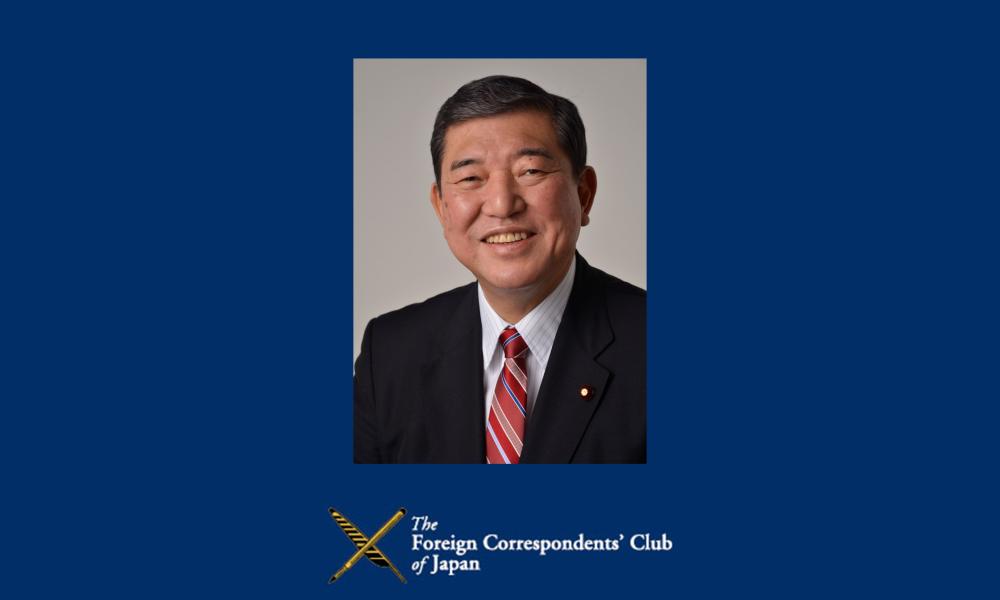
KIM DAE JUNG: One - Kim Dae Jung and the strugglef or democracy in Korea
Probably nobody – outside his family and a legion of old “Cholla boys” from the southwest corner of Korea where he was born – gives a damn for Kim Dae Jung, dead on Aug. 18 at 83.
DJ had a miserable last few years. His memory is not hallowed. To be sure, he had a great moment in June 2000 when he finally managed to visit North Korea – DJ flung himself on the ground and kissed the soil of North Korea, so he told Jack Burton of the Financial Times – and was received by Kim Jong Il.
But from 2001 onward, DJ was on a slippery slope. It’s a dire tale for a man with a record of 40 years of democratic heroism in opposition to authoritarian military rule backed by the United States. There was corruption, reaching all the way up into the Blue House and the First Family. Two of DJ’s three sons were involved.
All memories of the trip to Pyongyang – an attempt to put Korea on the road towards reunification – were besmirched by revelations of money deals. The impression created was that DJ had bought his way into North Korea. Huge sums were mentioned in the Seoul press.
What a shame! A lifetime of struggle and achievement was left stained and in tatters. He had spent a lifetime denying accusations of complicity with the North, and here he was being found to have been in collusion with Kim Jong Il to set up a political road show.
A winner of the Nobel Peace Prize, DJ was not honored in his own country. He had shamed the office of the president of the republic. The one great beneficiary of DJ’s exercise in North Korean diplomacy was Kim Jong Il. We read these reports that the North Korean leader personally received hundreds of millions of dollars in tribute money as a condition for DJ’s visit. When, in due course, those two sons of DJ were flung into prison for taking bribes, no one was surprised. This was old-style Blue House politics, and then some.
What the folks up in Pyongyang made of these events can only be surmised. There were no more tickets to ride north. As for Kim Jong Il’s promise to visit the South, forget it. You’ve got to hand it to him. His sting operations brought in billions – he successfully blackmailed the rest of the world, with threats from his minuscule but menacing armory of rockets and nuclear warheads.
Kim Jong Il, however sickly he looks of late, is a survivor. He lives on in Pyongyang. His regime is powerful. His father built up an extraordinary apparatus. Just once I met the old man, Kim Il Sung, up at his mountain villa, with two other hacks. That was in June 1980. There he was, living it up in a kind of Berchtesgaden, a rustic retreat amid the pine forests. Someone furnished me with a photo of us shaking hands. I remember the touch of his hand. It was puffy. I immediately felt that he was a sick man and would not live more than a few years. In fact, he lived on for another dozen years, surrounded by attendants and leading a quiet life for the most part.
But DJ never ranked such a mountain retreat as the old man’s. Yes, Kim Il Sung left an impression. That was the difference between Kim Il Sung and his South Korean counterparts. The old man had a lifetime license to rule. His Versailles-style palace back in Pyongyang – with its wide moats, ornate black iron gates and loads of space – said it all.
The Blue House belongs in suburban Surrey by U.K. standards. It is a fair-sized house with a bit of a garden and a mountain at the back. The occupants have changed every few years. Kim Il Sung – and his family – lived it up like Louis XIV in comparison. What a drug it must be to have supreme power over tens of millions of slaves. What an aphrodisiac!
THE HURT IN THE KOREAN SOUL
DJ, we can now see clearly, was not much more than a humble toiler in the field in comparison with the Kims of Pyongyang, father and son. The latter always had one big thing going for them: They were not dependent on foreign troops to prop them up, as were any leaders in the South. There is such ambivalence in Seoul toward the U.S. – but not in the North. There, the attitude is that foreign troops are unwelcome.
You could see this in the case of the North Koreans and the Chinese. Pyongyang said goodbye to Chinese troops in February 1958, some five years after an armistice was in place in 1953. Yes, they had pride, the North Koreans; they still do.
This is what a visit to North Korea taught me in June 1980. It was that the ruling family in Pyongyang – however absurd and inflated they might look from afar – still had this inestimable prestige, because they didn’t rely on a foreign power to do their fighting. By contrast, the South Koreans quite clearly depended on the U.S. Since the armistice, there were always tens of thousands of U.S. troops in place, some of them stationed in that crucial space north of Seoul and south of the DMZ, and acting as the proverbial “trip wire.”
The U.S. presence, like it or not, was and is the cross that the South had to bear in the eyes of DJ – and not only his. What hurt and still hurts in Korean souls is the sheer derogation from sovereignty. To a proud people such as the Koreans, not to control its own soil is a shame. DJ was trapped in this box that is South Korea, and he really never got out of it. That flinging of himself to the ground in North Korea stands out in my mind as an ultimate statement. Here was a Korea that was not dependent on Washington. Here was a piece of soil that was forever Korea!
Does it hurt to be Korean? I guess so. We did our best to report the fact. I belong to a generation of hacks that made a practice of checking in at DJ’s compound, first thing, on arriving in Seoul on the way up from Tokyo. I refer to the ’70s all through, the ’80s all through, and the ’90s up to the time when DJ finally made it to the presidency in 1998. So that was three full decades during which time he was the prime port of call, the perceived destination.
Obviously, we liked and respected him. Why? He talked the talk. He was a democrat, with a small “d.” The simplicity of his values, as seen by the South Korean presidents who wanted to kill him, was appalling. The military lot who sat at the top – basically a bunch of army officers, mostly generals – mostly had no answer to his patter, nor did their lackeys, the guys in civvies who were seen loitering in the bar at the Chosun. It must have baffled the likes of Park Chung Hee and Chun Doo Hwan – the generals who were on top from 1961 onward for a quarter of a century – that they could never depend on their KCIA and the ex-journalist apparatchiks like Park Shinil to shape up and cajole the Western press to see things their way in Seoul, that city of bald mountains and harsh liquor.
THE MYSTERY OF DJ
For nearly 30 years, DJ was the one who carried the can in Korea. Not that we were always there to cover him. The press covers only a fraction of what is going on. We were not present in that little Seoul compound of DJ’s for more than a tiny part of the man’s existence. We were usually not there at the crucial moments in his life. (“Not seen here” could have been our motto.) Come to think of it, I barely followed his first presidential campaign in 1971, when he got a whopping 40 percent-plus of the votes and annoyed the long-serving president, Park Chung Hee, the winner.
I wasn’t in Seoul in 1971 – though I had made a first trip to Korea for The Times in 1968. Fast forward to 1973. Very few of us were chasing the story on the ground in 1973 – I know of no one – when DJ, by this time in precarious exile in Japan, was kidnapped from a Tokyo hotel. We still don’t know what was the exact route taken out of Japan by the kidnappers; all we have by way of information is a widely circulated account that says it was KCIA kidnappers who bound and gagged Kim, and took him on a trip to the Japan Sea. There, they put him on a boat, sailed out to sea and were just about to heave him overboard when a miraculous intervention took place. Some say that the sound of a helicopter was heard – the Americans coming to the rescue.
Whatever. This saga ended with DJ being dumped on his doorstep back in Seoul a few days later. Who dropped him off at his house and what this was all in aid of I have not the foggiest clue. Others must know more.
Here’s my point. There is so much of DJ’s half-century odyssey that we don’t know, and indeed never will. This came home to me – that we were doing an inadequate job of covering DJ – during the years 1979-80, and most notably during the Kwangju uprising of May 1980. I was there at the end of that uprising, and so were quite a few colleagues who are still around: Bradley Martin, Terry Anderson, Norman Thorpe, John Needham. This was a crucial turning point for DJ. Let’s paint in the essentials and revert to my point about reporting (or lack thereof). I shall go back in time.
STEALING THE PRESIDENCY
On Oct. 26, 1979, a bizarre event took place in Seoul. On the evening of that day, President Park met with his spy chief, Kim Jae Gyu, the head of the KCIA, at an agency safe house in Seoul. There was a heated discussion about the way the authorities – the KCIA very much included – were handling anti-government protests in the southern port cities of Pusan and Masan. Without warning the KCIA chief whipped out a pistol and shot Park dead.
Here was a piece of violence that DJ could not be blamed for, but, crudely speaking, stood to benefit by – after all, his chief political rival, Park, had been eliminated, and there was no obvious successor in sight. Park had been a dominant figure for nearly two decades in Seoul and tolerated no rivals. It was a situation made to order for a military coup d’etat. This duly materialized on Dec. 18, 1979, when a youngish army officer, a darling of Park’s called Chun Doo Hwan, a two-star general, seized power in Seoul.
What followed was fascinating, and shaped the future of politics on the Korean Peninsula. Koreans of all stripes kept their lines of communication open. Reporters in search of stories could meet up with the military, with church leaders and with politicians – among whom, once again, the most impressive was DJ. Any child could see, however, as the weeks sped by and a weak acting president held office in the Blue House, that the scene was being set for a clash between the South Korean military and DJ.
And who had the weapons and the support of the U.S. behind the scenes? Why, it was none other than that naughty Gen. Chun. He was going to steal the presidency for himself. As a New York Times reporter, supported by an office in Seoul run by Shim Jae Hoon, I had opportunities to meet with the players on all sides, including Chun. The latter was all muscle and brawn. Bluff, smiling, stocky, he projected the classic attitudes of the South Korean military as schooled by Park. He was prone to see a North Korean agent behind every tree in the peninsula, the chief of them being DJ. (I might seem to be parodying the situation, but, if anything, I understate the paranoia in the South, given their fears, totally shared by U.S. commanders in Seoul, that the North might use this opportunity of confusion in Seoul, to launch an attack across the DMZ. In fact a North Korean squad had, on one occasion, penetrated into the city a few years earlier, and there was always a risk that this ploy might be repeated. One never knew with the North.)
To make the story short: when the seeming inevitable happened and Chun struck for power, declaring martial law with himself as martial law commander in mid-May 1980, he took the precaution of arresting DJ and putting him in jail under military lock and key. It was all done very swiftly, but it set off an absolute thunderstorm in the South Cholla city of Kwangju, the capital of the province and a stronghold for DJ. This was where DJ came from, and this was where civilians, gathering spontaneously on the streets of that city of 300,000 people, stormed television stations and seized control of the foremost building in the city, the prefectural main office. This was the clearest possible challenge to Chun, and he sent in paratroops, backed by tanks on the ground and helicopters in the air. By this time, Cholla activists had broken into local armories and seized a small supply of weapons, mostly old rifles that were little better than toys.
CHASING THE KWANGJU STORY
After a day of hesitation and consultation with New York, I decided to go see for myself. With the help of my Seoul hotel, I hired a taxi with a driver and put Shim Jae Hoon in front to give the orders to the driver. We set out on the 290-km drive to Kwangju, passing through a scattering of military roadblocks by showing our credentials. Thus we arrived in the city of a May evening, some days after clashes between the citizens and the paratroopers had cost some 200 lives – a casualty list on a scale not seen in any part of Korea since the civil war of 1950-53. At that point, all I could do by way of reporting was to make a short trip to a student stronghold, hastily set up in the prefectural government building that was clearly the focus of the action.
I had a problem. In those days we did not have cell phones to connect us with our editors in New York. To find a phone, I would have to leave the city. But that meant leaving the story, as viable phones were half a dozen miles away or more, and a curfew was due to start in the early evening. I was caught and had to make a choice: To stay with the story or leave the city, plainly about to be hit by a government night attack.
I decided to let Jae leave Kwangju, still at that point under the control of the citizens. Jae left Kwangju, with our car and driver, while I found a room in an old inn. The idea was that Jae would set up communications that would let me send my story the following day.
These arrangements did not work well. Our NYT story of the attack that indeed took place that night was a miserable shriveled-up thing in the next day’s paper. Others were ahead of me. One was Terry Anderson, who was doing a great job filing for AP. An ex-Marine, he knew how to cover a military story. Bradley Martin, writing for The Baltimore Sun, sent in a powerful second-day story that ran on the front page of his paper.
I was trailing behind them and for the next few months I found myself engaged in a horrible process of catching up on the story. It was a lesson. If you once get behind on a major running story and lose the momentum, you are in trouble. The work is no joy.
Thus, in the summer of 1980, when Chun declared himself president, and as the autumn drew on – and U.S. presidential elections (Carter vs. Reagan) loomed – I was trying to catch up, the main story being the fate of DJ. Charged with responsibility for the Kwangju uprising, he faced a death sentence in court. I knew, by gut instinct, that Chun intended to hang DJ, come what may.
With all the strength I could muster I wrote stories to portray the dangers. DJ’s execution, I felt, would send a signal to the North that they could indulge in war. Maybe I was oversimplifying things, but that was what I felt. Fortunately, someone in the Reagan foreign-policy team got the message, from whatever source. Reagan’s people took the initiative, and offered Chun a chance to be the first state visitor to the White House under the new president, in return for an implicit understanding on DJ. He would not hang. He would be freed in due course, and sent to America. That happened. DJ’s life, in this way, was saved by Reagan. It was a great start to a U.S. presidency!
Here, I am revealing nothing new, nothing of great importance, as the information is old. What matters to me is that injustice was done on the grand scale, and we, the Western press, hardly touched the story. So many people died in Kwangju. Who were they? Why were the paratroopers – fresh boys trained for action in Vietnam and for murderous combat – unleashed on unarmed civilians, en masse? Citizens were slaughtered like pigs or chickens. Men and women.
To see what happened in Kwangju, consult The Kwangju Uprising, a collection of small pieces written by 20 journalists who were there – 10 Westerners and 10 Koreans. I edited the book, with my friend Lee Jae Eui collating the Korean pieces. It is in the press club library. There are pieces there by witnesses such as Norman Thorpe, Gebhard Hielscher and Brad Martin.
We all came away with the same feeling; the truth had to be told or teased out even 20 years after the events. We owed it to those who died, and to thousands more who had their lives ruined. Some of us felt that Chun was primarily to blame; others among us placed moral responsibility on the U.S. military under Gen. John A. Wickham. Either way, great injustices had been done by the U.S.-supported Korean military.
It is all very well for us to have gathered reminiscences the way we did. Fair enough. But why was this necessary? Because there were harsh controls on the press in Chun’s Korea. Disclosure could mean death. I myself was under a death threat from Chun’s people, as were many Koreans. Is it time for us to recognize that we underreport events so terribly? How would the folly of the 2003 Iraq War have been possible had reporters pressed for more information? Afghanistan, too, is a case of a war embarked on without sufficient thought, and for which no one may be made responsible in the end.
Journalists are doing a lousy job. I remember how in the months after the uprising in Kwangju I kept banging on with my reporting when everyone else had gone home. Readers of the press around the world do not know on what slim foundations our news reporting is built. ❶