



日本語の案内が英文の下に続きます。
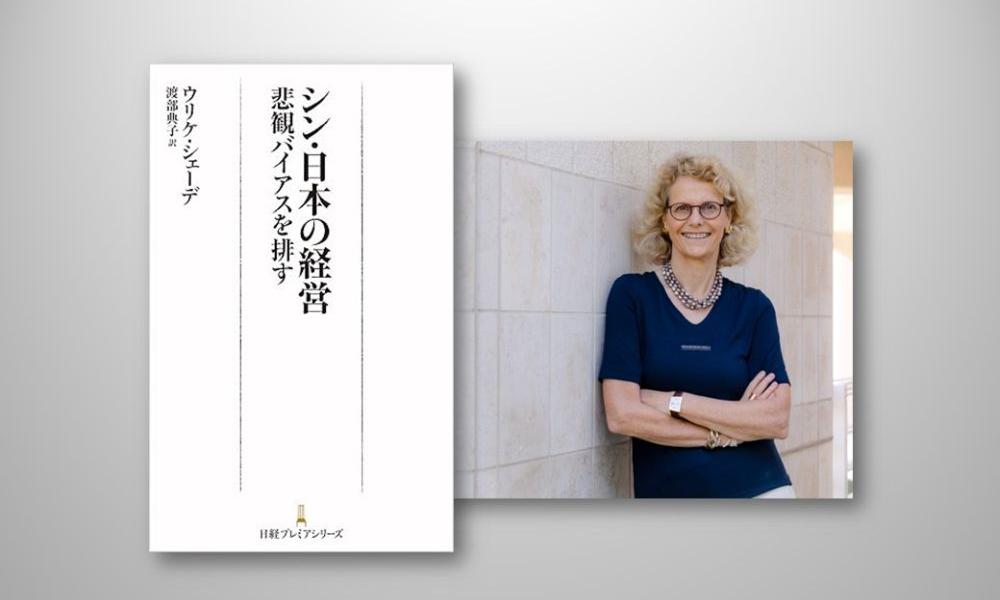
After 30 years of dismal macro-economic news, how is Japan still a technology leader and ranking among the largest world economies? To solve this puzzle, we need to descend to the firm level and look at how Japan’s most successful companies have transformed over this period. These frontrunners have pivoted away from diversified conglomerates with ill-defined goals, toward much more focused and nimble competitors at the innovation frontier. By moving upstream in global value chains in areas such as advanced materials, components and precision machinery, they have adopted a “Japan Inside” strategy. This is difficult to see but all the more powerful, because it anchors many of Northeast Asia’s supply chains. Schaede’s recent bestsellerシン・日本の経営:悲観バイアスを排す (Shin Nihon no Keiei: Hikan Bias o Haisu, Nikkei Business Publications, 2024) will be published in English as Japan-Emerges later this year.
Ulrike Schaede is Professor of Japanese Business at the University of California San Diego, School of Global Policy and Strategy (GPS). She is the Director of JFIT (Japan Forum for Innovation and Technology), and organizes a regular “Japan Zoominar” on current issues on Japan. Her research focuses on Japanese business strategies, management and employment practices, corporate culture, financial markets, and innovation. Her book The Business Reinvention of Japan (Stanford University Press, 2020) won the 37th Masayoshi Ohira Memorial Prizes (The Japanese edition is再興 THE KAISHA日本のビジネス・リインベンション, published by Nikkei BP, 2022).
Schaede holds a PhD in Japan Studies and Economics from Marburg University, Germany, and has been invited to visiting professor positions at many universities in the U.S. and Japan, as well as the research institutes of the Bank of Japan, METI, MOF, and DBJ. All told, she has spent over nine years of research in Tokyo.
Doors open at 5:45 pm with a casual “meet the author/cocktail time” from 6:00 pm. Dinner will be served from 6:30 pm and the talk begins at 7:15 pm.
The menu is Mexican Salad, Sautéed Salmon Mushroom Mustard Sauce, Bread, Today's Dessert, Coffee/Tea and One beverage of choice (orange juice, oolong tea, red or white wine, beer). A vegetarian option is available. Please inform the club of food restrictions when reserving. Price: 3,000 yen for members, 4,000 yen for non-members.
The member reservation deadline is 2 pm December 9, non-members must reserve and pay by Wednesday, December 4, 2024.
Online attendance (Zoom) is available by reservation at 550 yen per person.
No cancellations after Friday, December 6.
(The talk will be in English)
Library, Archives & Workroom Committee
過去30年にわたる厳しいマクロ経済ニュースにもかかわらず、なぜ日本は依然として技術大国であり、世界経済の中で大きな存在感を維持しているのか――。この謎を解くためには、企業レベルで、最も成功した日本企業がどのように再興してきたかを見ていく必要がある。これらの先進企業は、目標が曖昧な多角的なコングロマリットから脱却し、革新の最前線で、より集中し、機敏な競争者へと転換した。先端素材、部品、精密機械などの分野でグローバルバリューチェーンの上流に移行することで、こうした企業は「ジャパン・インサイド」戦略を採用。これは、目には見えにくいものの、強力であり、北東アジアのサプライチェーンの基盤となっている。近著『シン・日本の経営 悲観バイアスを排す』(日経BP, 2024年)の英語版『Japan Re-Emerges』も出版予定。
ウリケ・シェーデは、カリフォルニア大学サンディエゴ校グローバル政策戦略大学院(GPS)の日本ビジネス教授。日本革新技術フォーラム(JFIT)のディレクターを務めるほか、定期的に日本の時事問題に関する「Japan Zoominar」を主催している。日本のビジネス戦略、経営・雇用慣行、企業文化、金融市場、そしてイノベーションに焦点を当てた研究を行っている。
著書『The Business Reinvention of Japan』(スタンフォード大学出版、 2020年)は、第37回大平正芳記念賞を受賞(『再興 THE KAISHA: 日本のビジネス・リインベンション』(日経BP, 2022年)している。
ドイツ・マールブルク大学で日本研究と経済学の博士号を取得。米国および日本の多くの大学や日本銀行、経済産業省、財務省、そして日本政策投資銀行の研究機関で客員教授として招聘された。東京に拠点を置く研究活動は9年以上に及ぶ。
午後5時45分 開場
午後6時 “meet the author/cocktail time”(略式)
午後6時半 お食事開始
午後7時15分 開会
午後8時30分 閉会
午後9時 閉場
お食事のメニュー:メキシカンサラダ/ サーモンのソテー きのこマスタードソース/ ブレッド2種/ 本日のデザート/ コーヒーまたは紅茶/ドリンク1杯(オレンジジュース、ウーロン茶、白または赤ワイン、ビール)
ベジタリアンをご希望の方はご予約の際にお知らせください。
料金(お一人様につき):3,000円/4,000円/550円(会員/一般/オンライン)
一般のご予約・お支払いは12月4日(水)まで。会員のご予約は当日(9日)午後2時まで受け付けます。キャンセルの受付締切日は12月6日(金)。
(使用言語:英語)
Library, Archives & Workroom Committee