


PRESS CONFERENCE
Taiwan's 'third force' battles for presidency
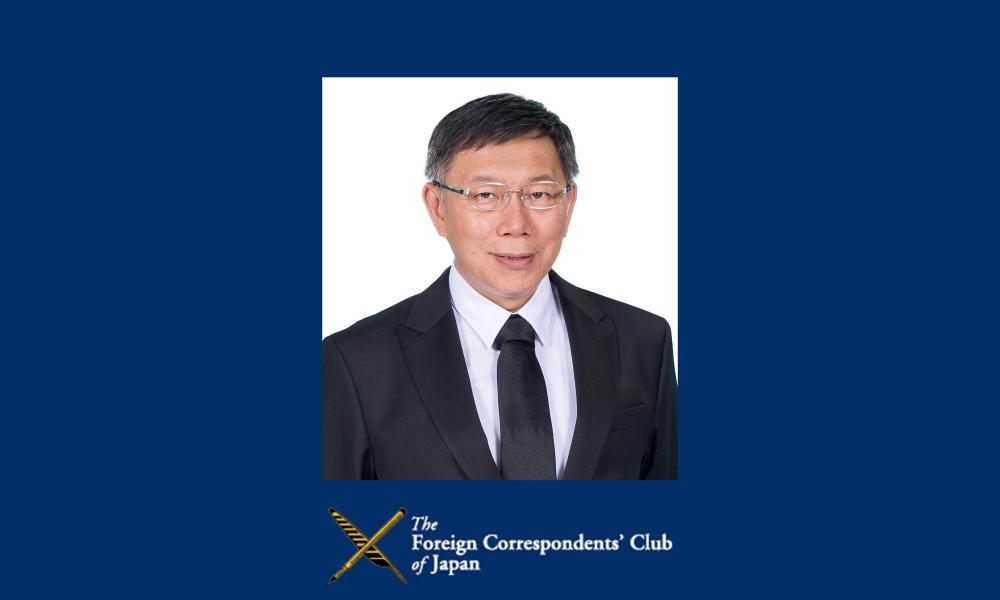
Wen-Je Ko, Taiwan People's Party Chairman
June 8,Thursday, 14:00-15:00(Press Conference)
(The speech will be in English and Q & A will be in Taiwanese Mandarin with English interpreter.)
Next January, Taiwanese voters will pick the island's next president in an election that will have regional and global consequences.
A physician-turned-Taipei mayor, Ko Wen-je is the Taiwan's People's Party (TPP) candidate for poll. He positions the party he founded as Taiwan's political "third force" – he recently criticized the ruling Democratic Progressive Party for being "pro-war" for its strong stance against Chinese pressure, and blasted the main opposition Kuomintang (KMT) as "too deferential" to Beijing.
Recent polls show Ko has an outside chance of upsetting the two main parties in the election. He will come to the FCCJ to discuss recent developments in Taiwan, and what he plans to do should he become president.
How to attend:
Please register at front@fccj.or.jp with your name, the name of your media outlet, and FCCJ membership number. Due to space restrictions attendance will be limited. Doors open 15 minutes before the event. Please sign in, giving your name and contact details at the reception, and have your temperature taken before proceeding.
How to watch online: https://www.youtube.com/c/FCCJchannel/live
Livestreaming of the press events will be available and video of this event will be uploaded to our FCCJ YouTube channel.
How to ask questions: https://forms.gle/MPn4eALq1gKSJJw48
Members watching the event online can submit questions for the speakers in advance using this submission form.
TV crew: Please make a reservation at front@fccj.or.jp. Doors open for TV crews only at 30 minutes before the event.
Professional Activities Committee