



Deep Dive Series 2023: "Japan's economy on recovery track - how far, how fast and how long?"
Robert Feldman*: Senior Advisor at Morgan Stanley MUFG Securities, Tokyo
Jesper Koll: Leading Japan Strategist/Economist
Tohru Sasaki: Managing Director and Head of Japan Markets Research;
JPMorgan Chase Bank, N. A. Tokyo, JPMorgan Securities Japan Co.
(The speeches and Q & A will be in English.)
*added the third speaker
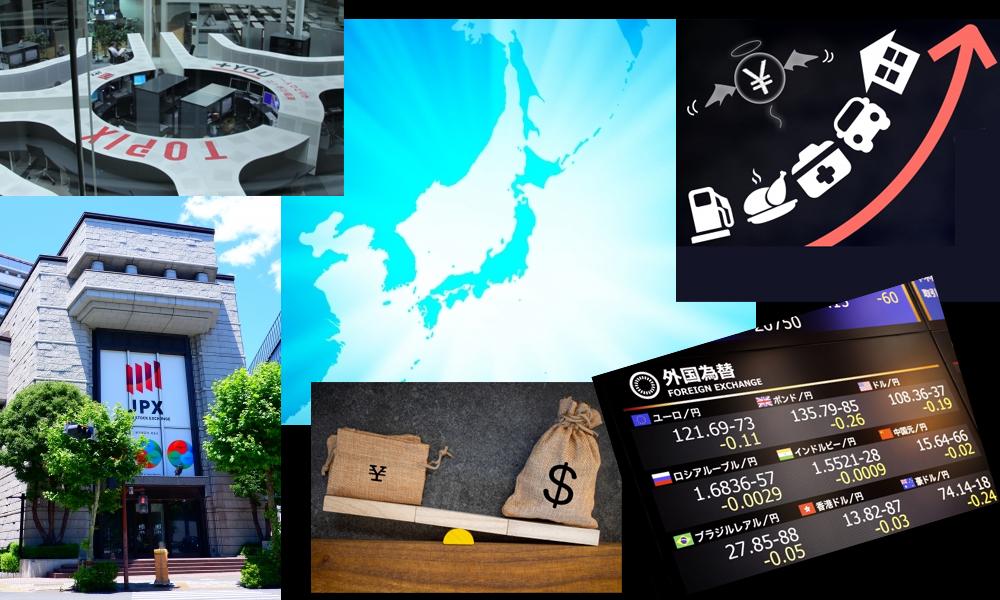
The world's third biggest economy is not exactly "on a roll" but it is finally breaking out of a long period of deflationary stagnation and gloom it seems. Growth is rising with the IMF upgrading its forecast for GDP expansion in Japan to reach 1.8 percent in 2023. Wages are rising and so too are prices while inflation remains under control.Tokyo stock prices have meanwhile reached their highest levels in three decades.
As the government has relaxed COVID-19 related restrictions and reopened borders, growth has been boosted by pent-up demand, supply chain improvements and policy support. But the external environment is not supportive and export demand is lagging.
What will be the net impact of these positive and negative factors and how will they impact stock prices and the value of the yen?
Deep Dive will probe the outlook with the aid of its expert panelists.
*Robert Feldman is Senior Advisor at Morgan Stanley MUFG Securities where he has worked since 1998. In addition to his Morgan Stanley work, he was professor in the Management of Technology program at Tokyo University of Science, from 2017-23. From 2000-2020, he was a commentator on Japan's nightly business program, World Business Satellite, and has served on the US-Japan Friendship Commission. He holds a Ph.D. in Economics from the Massachusetts Institute of Technology, and BAs in Economics and in Japanese Studies from Yale. He has published nine books in Japanese, and two in English.
Jesper Koll: Over the past decades, Jesper Koll has been consistently recognized as one of the top Japan strategists/economists, having worked as Chief Strategist and Head of Research for U.S. investment banks J.P. Morgan and Merrill Lynch. He currently serves as Expert Director for the Monex Group and the Japan Catalyst Fund (Japan's 1st retail investor based corporate engagement/activist fund).
Tohru Sasaki is a Managing Director and Head of Japan Markets Research with JPMorgan Chase Bank, Tokyo and JPMorgan Securities Japan Co., Ltd. Prior to joining J.P. Morgan in April 2003, he held several positions with the Bank of Japan, where he had worked since 1992.
In-person attendance
Please indicate when signing up whether you will attend on-line or in-person.
Members: 450 yen (including tax), coffee or tea included
Non-members: 1,650 yen (including tax), coffee or tea included
On-line attendance (via Zoom)
Members: free of charge
Non-members: 550 yen (including tax)
Details on how to join online will be sent to individual emails by Wednesday May 31.
All participants can reserve at the reception desk by email front@fccj.or.jp.
Members should Log in to confirm attendance.
Payment by Non-Members must be made in advance by 3 PM, Wednesday, May 31.
No refund is available unless the event is cancelled by FCCJ.
Member reservations cancelled less than 24 hours before the event will be charged in full.
We kindly ask for your cooperation with Covid-19 prevention measures at the reception and to wear a mask on club premises.
Thank you
Professional Events Task Force