


Issue:
July 2023 | Obituary
Remembering Fernando Mezzetti (1942-2023)
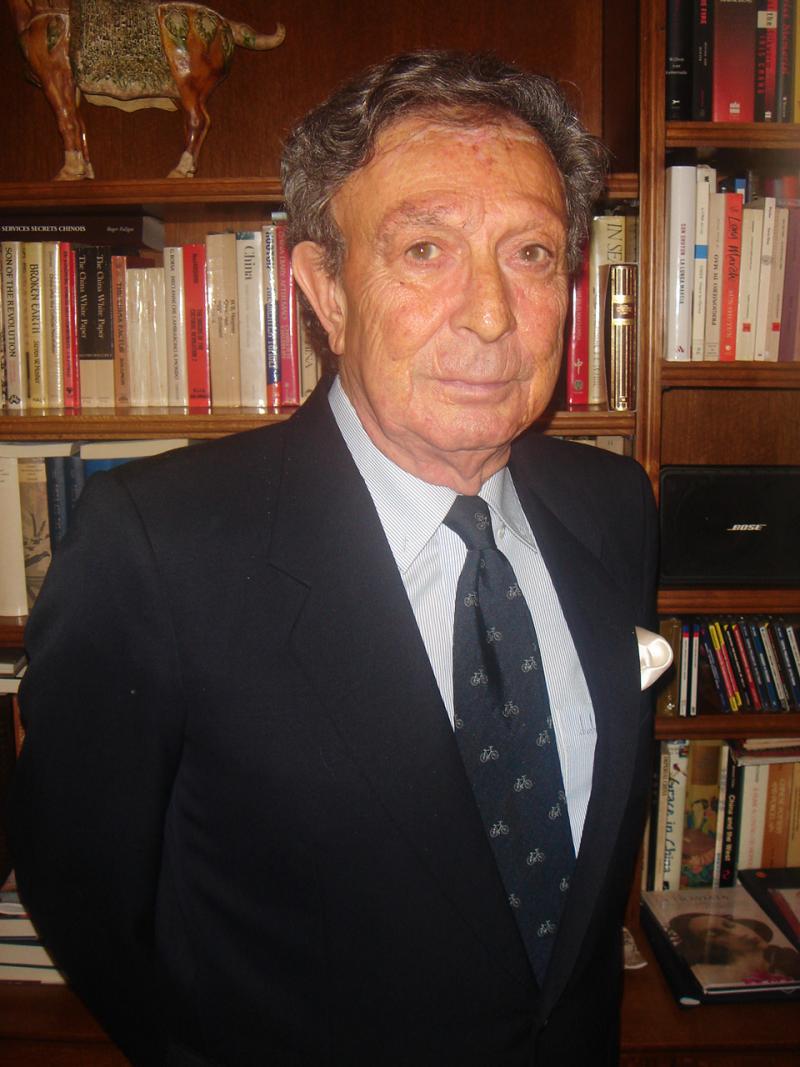
“The train to Paradise leaves Peking Station at 8:00 p.m.” So begins a report describing a visit to North Korea in 1982 by the Beijing correspondent of the Italian daily, Il Giornale. At a circus performance, his hosts insist that every act had been created under the guidance of the Dear Leader, Kim Jong-il, heir apparent of the personality cult of his father, the Great Leader, Kim Il-sung.
“So is the Dear Leader an expert in acrobatics?”
“Yes, of course.”
“And what about clowns?”
“He is the best.”
The reporter passes on the answer to his readers without comment.
The above lines, the gist of a much longer Italian-language series, give a taste of the unique reporting style of Fernando Mezzetti, who passed away on May 11 at the age of 81 in Tradate, Italy, after a long illness. After Beijing (1980-1983) Fernando moved to Moscow (1983-1987) also for Il Giornale to cover the decline of Soviet communism. He was Tokyo-based correspondent of La Stampa (1987-9191).
Fernando took humor seriously; it seemed to be part of his job, which he also took seriously. In March 2016, in Tokyo for an FCCJ event on the future of journalism in the digital age, Fernando stated: “In my view the foreign correspondent is more important than ever. He knows his country; he knows the situation.”
It was Fernando’s faith in the value of the trained observer that gave him the confidence to extend his stay in Beijing in May 1989 until June 4, well after colleagues who had flown with him from Tokyo to cover the visit to China of Mikhail Gorbachev, the first in 30 years by a Soviet leader, had given up and gone home. In 2014, in an interview with historian Jeff Kingston published in the Japan Times on the 15th anniversary of Tiananmen, Fernando said: “Many of my colleagues mistakenly thought this was a rerun of the 1968 protests in Europe, but for the Chinese Communist Party it was a matter of regime survival.” Fernando had been "alarmed by the masses gathering on the streets, disarming and taunting soldiers, and reports about tank and troop movements”.
Two years later, Fernando flew from Tokyo to Moscow for a three-month special assignment to report on the aftermath of the failed “August Coup” in Moscow that led to Gorbachev’s replacement by Boris Yeltsin.
If Fernando had one fault, it was modesty. When signing his books, he would add, “Good thing you don’t read Italian.” But when his works did cross the language barrier, they unfailingly had a far-reaching impact. An English translation of his North Korea series was picked up by the Washington Post, the Asian Wall Street Journal, Die Welt, and aired in Chinese and Korean by Voice of America.
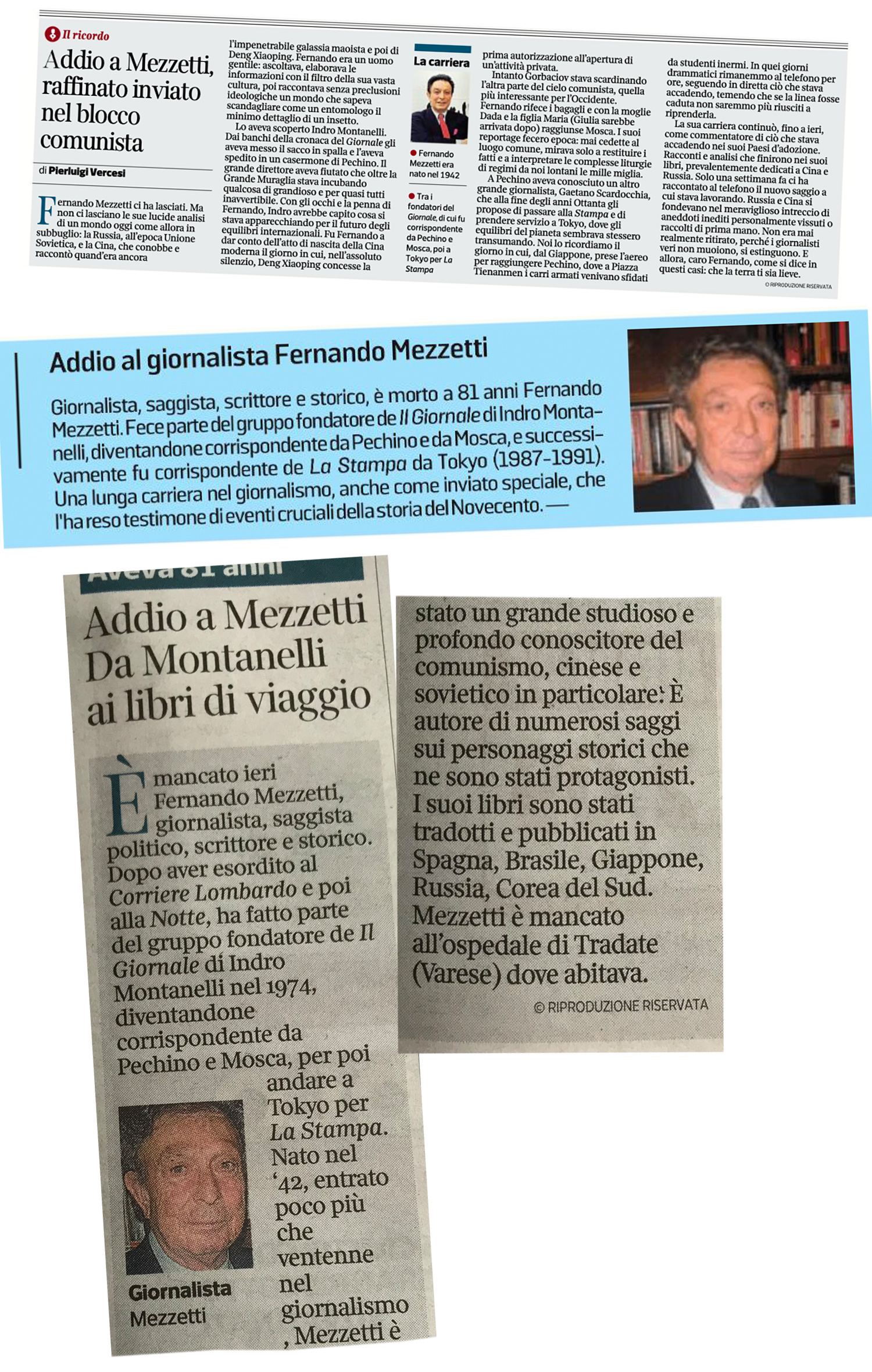
In Italy, Fernando’s passing was marked by an outpouring of praise in major and many regional news outlets. A leading national daily, Corriere della Sera, remembered him as “… a man of refinement (uomo gentile): he observed and interpreted the world without ideological preconceptions and with the same precision as an entomologist recording the smallest detail of an insect’s anatomy”. A regional paper referred to him as “un maestro di giornalismo”.
Writing thousands of news reports and editorials might be normal for a journalist whose career spanned five decades, but Fernando was the author or co-author of a dozen books, including the 600-page De Mao a Deng (From Mao to Deng), translated into Portuguese and published by the University of Brasilia. Among his other notable works were biographies of Gorbachev and, later, Vladimir Putin, a lengthy introduction to a book by the brother of Trotsky’s assassin, and three volumes on fascist themes, including the biography of an Italian diplomat in Moscow in 1941.
Fernando never fully retired, continuing to contribute front page editorials for regional papers pegged on events requiring knowledge of Russia and China. However, he was not all work and no play.
Fernando would join an informal group of ex-FCCJ correspondents for culinary trips to various parts of Europe known for their food and wine. One year, he co-organized a trip to Italy that included a dinner at a Piedmont winery, known for its high quality Barolos. But when his editor phoned asking for an interpretive piece, Fernando moved to an empty table, opened his laptop and produced the commentary in time for the morning edition. He then rejoined his companions, who by then had emptied 13 bottles.
William Horsley (BBC Tokyo 1983-90) recalled Fernando “as master craftsman in the art of life and thought in a high European tradition that sets the most exacting standards”.
Having known Fernando for more than 30 years, I can attest that he never allowed his distaste for what he called “morbid regimes” to stop him from sympathizing with people who had to live under them.
Fernando is survived by his wife Adriana (Dada) Inverni, daughters Maria and Giulia, and granddaughter Letizia
Readers are encouraged to access the website of the Association of European Journalists for a detailed In Memoriam by Anthony Robinson, the former Rome and later Moscow bureau chief of the Financial Times, and lifelong friend of Fernando. https://aej-uk.org/2023/06/12/4356/
Andrew Horvat is Senior Fellow at the Centre for Japanese Research, University of British Columbia. Previously, Horvat worked as Tokyo-based correspondent for Canadian, U.S., and U.K. news media. He is a past president of the FCCJ.
