



英文の後に日本語の告知文が続きます。
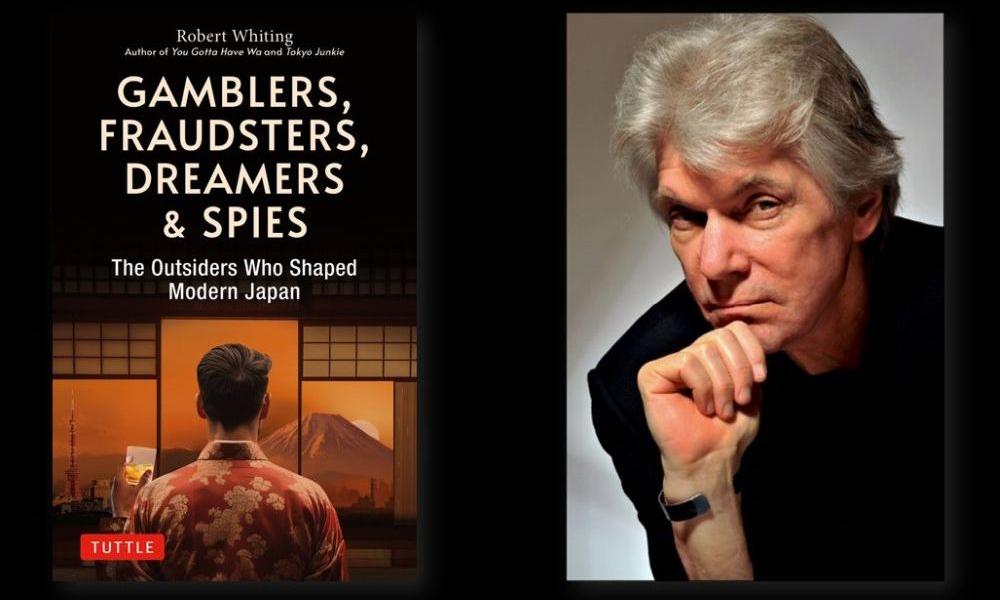
Gamblers, Fraudsters, Dreamers & Spies is a new work by Robert Whiting. It deals with a fascinating swath of Japanese history – from the occupation to the present day (up to the assassination of former prime minister Shinzo Abe) – focusing on foreigners who have made a impacts on Japan for better or for worse. Within this book are 15 histories of individuals who have made their mark on history including Jack Canon, who headed the infamous Black Ops group of the 1940’s the Canon Agency; Ted Lewin, the Mafia gambler and WWII hero who survived the Bataan Death March to introduce casino style gambling in Tokyo; CIA Agents who bribed the LDP and foisted the Korean Unification Church on Japanese politics; renowned con artist Craig Spence; Baseball manager Bobby Valentine; and Nissan’s Carlos Ghosn and Greg Kelly.
Robert Whiting is a Tokyo-based writer who had authored many critically acclaimed books. He is the author of the best-selling You Gotta Have Wa, named by Esquire Magazine as one of its “best baseball books ever written”; Tokyo Underworld; and Tokyo Junkie. His books have been optioned by Hollywood multiple times. The California native has written for TIME Magazine, Sports Illustrated, The New York Times, Smithsonian and other publications. His first book, The Chrysanthemum and the Bat, was praised by James Fallows of The Atlantic, as “the most illuminating book on Japan I have ever read, and the funniest.”
Whiting was a recipient of the 2023 Henry Chadwick Award, which honors those who write about baseball. He first arrived in Tokyo in 1962 and has lived here for much of the time since then.
Doors open at 6:00 pm. Dinner is served from 6:15 pm. The presentation starts at 7:15 pm. Dinner includes coffee or tea and one beverage of choice including orange juice, oolong tea, white wine, red wine and beer. Price: 3,000 yen for members/4,000 yen for non-members. Cancellations accepted up to 72 hours before the event.
Please reserve at the reception desk or by email (front@fccj.or.jp). Non-members must pay by Friday, September 20th, 2024.
Online attendance (via Zoom) is available at 550 yen per person, by reservation.
Attendees with food restrictions should inform the club when reserving. Thank you.
(The talk will be in English)
Library, Archives & Workroom Committee
日米比較文化論の旗手、ロバート・ホワイティングが、日本人の知らない「異端児」たちの戦後史を暴く新著『新東京アウトサイダーズ』(KADOKAWA、翻訳: 松井みどり)を語る。同著は、戦後日本の政治・経済・スポーツを「在日外国人」=アウトサイダーたちの視点から掘り下げる無類の意欲作。主人公である彼らの目を通して、いまだ閉鎖的な空気が強い日本の暗部を鮮やかに照らし出した。
占領軍、キャノン機関、王貞治、ボビー・ヴァレンタイン、オリンパス、日産、そして統一教会――政界・財界・スポーツ界の〈異端児〉たちは、日本社会の差別と不正に巻き込まれつつ、それを巧みに利用してきた。累計20万部突破『東京アンダーワールド』の著者が半世紀以上追い続けた、この国の〈裏街道〉を余すところなく書き尽くした。キャノン機関、戦後のヤミ経済、王貞治、日本外国特派員協会(FCCJ)、外国人経営者、ボビー・ヴァレンタイン、現代のヤミビジネス、MKタクシー、統一教会…、その裏側に迫る。
ホワイティングは、数々の話題作で知られる東京在住の作家。Esquire誌の「野球に関する最も優秀な著作のひとつ」に選ばれたベストセラー「You Gotta Have Wa」(和訳『和をもって日本となす』)の他、「Tokyo Underworld」(和訳『東京アンダーワールド』)、「Tokyo Junkie」(和訳『TOKYOジャンキー 東京中毒』)などの著作がある。その作品はハリウッド映画化の候補として何度も取り上げられている。米国カリフォルニア州出身。TIME誌、スポーツ・イラストレイティッド誌、 ニューヨーク・タイムズ紙、スミソニアン誌などの様々な媒体に執筆。最初の著作『菊とバット』は、アトランティック誌のジェームズ・ファロウズから「日本についての著作の中で最も啓発的で面白い」と評された。優秀な野球の研究者に授与される2023年ヘンリー・チャドウィック賞を受賞。1962年の初来日以来、東京を主な生活の拠点としている。
午後6時 開場
午後6時15分頃~ お食事のサービング開始
午後7時15分 開会
午後8時半 閉会
お食事のメニュー: 未定(ドリンク1杯付き:オレンジジュース、ウーロン茶、白または赤ワイン、ビール)。
料金(お一人様につき):3,000円/4,000円/550円(会員/一般/オンライン)。
一般の方のご予約はメールで受け付けます(front@fccj.or.jp)。お支払いは9月20日(金)までにお願いいたします。
キャンセルの受付は9月23日(月)午後6時まで。アレルギー等の理由でお召し上がりになれない食材がございましたら、ご予約の際にフロントにお知らせください。
(使用言語:英語)
図書委員会