



(Japanese translation follows English, 日本語訳は英文の後に続きます。)
March 2026 Exhibition
Remembering Minamata, South & North Korea
Photography by Kuwabara Shisei
February 28 - March 27, 2026
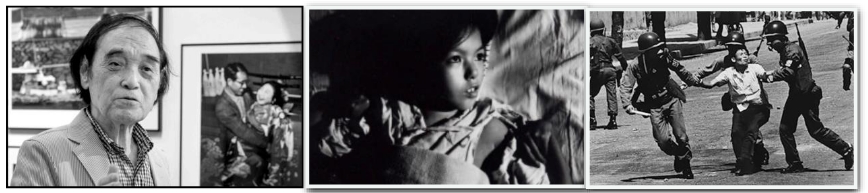
The year 2026 marks two significant anniversaries in Japan. It’s 70 years since the Minamata disaster in Kumamoto, and 60 years since the restoration of diplomatic relations between Japan and South Korea.
This month, we are displaying images by veteran photojournalist Kawabara Shisei, best known for his depiction of the effects of mercury poisoning on people in and near Minamata, as well as his timely work on South Korean and North Korean upheavals.
Exhibition Reception & Talk Show by Kuwabara Shisei
Date: Thursday, March 5, 2026 6.30-8.30pm (doors open 6.00pm)
Entry Fee: Members/ Journalist 1,000 yen, Non-members 2000 yen (one drink incl)
Advance reservations recommended. Call 03-3211-3163 front@fccj.or.jp or online reservation.
Cancellations less than 48 hours in advance will be charged in full.
The Minamata disaster was a severe, long-term environmental poisoning event in Minamata, that was first recognized in 1956, caused by the Chisso Corporation’s chemical factory releasing methylmercury into Minamata Bay from as early as 1950. The mercury bioaccumulated in seafood, causing over 3,000 human cases of severe neurological damage, congenital disabilities, and death. It became known as "dancing cat fever" due to unusual behavior in cats, and deformities in fish, before being recognized as a human neurological disease.
Kuwabara started reporting on Minamata in early 1960 and published his works in a solo exhibition in 1962 that won him the newcomer’s award of the Japan Photo Critics Association. American photographer Eugene Smith gained worldwide attention in 1972 when his photographs, MINAMATA, were published in LIFE magazine. However, it is reported that Kuwabara, who had photographed the area earlier, had made a significant impact on Smith.
Recognised for over 50 years of Minamata coverage, Kuwabara received the Domon Ken Award in 2014. Over the years, he has also documented the South Korean democratization movement, life in North Korea, the Vietnam War, and the collapse of the Soviet Union. While Kuwabara's work will be exhibited in the Eugene Smith exhibition at the Tokyo Photographic Art Museum this spring, the FCCJ will display various works by Kuwabara – who celebrates his 90th birthday this autumn – focusing on Minamata, South Korea, and North Korea, ahead of that exhibition.
Peter Lyon - Chair, Exhibition Committee
2026年3月の展示会
水俣・韓国・北朝鮮
写真家 桑原 史成
展示期間: 2月28日-3月27日
2026年は水俣病という公害の存在が公式確認されてから70年、そして日韓国交回復から60年という節目の年です。
1936年生まれの桑原 史成は、報道写真家として、世界4大公害病と言われるに至る「水俣病」を1960年代から記録してきました。
節目という事もあり北朝鮮と韓国の間に起こった激動の時代を追った作品も同時に展示いたします。
『報道写真家の仕事は、「時代」という大きな獲物を狙うようなものです。
ドキュメントは、同じテーマを丹念に追い続けることに価値があり、 長い時間をかけて撮影し続けた写真には、何物にも替え難い記録性があるのです』。桑原 史成
展示会レセプション &桑原史成による トークショー
3月5日(木)午後6:30 - 8:30(開場6:00)開演6:30pm
参加費: 会員1,000円、取材目的のメディア 1,000円、非会員 2,000円 (ワンドリンク付き)
御予約は 03-3211-3161 front@fccj.or.jp またはオンライン予約でお願いいたします。
なおイベント開催日48時間以内のキャンセルは、全額請求となりますのでご了承下さい。
1950年代、熊本県の水俣湾周辺では、戦後日本の中核企業であったチッソ社の水俣工場が海に排出したメチル水銀が原因で、中枢神経がおかされる中毒性神経疾患を発症する人が増え、1956年 5月に52人の患者が初めて水俣病として確認されました。認定患者だけで3000人、補償対象者は 7万人と言われます。
桑原は1960年に、いち早く水俣に入り取材を開始し、作品を発表。アメリカの写真家・ユージン・スミスは1972年に写真・MINAMATAをLIFE誌に発表して世界で一躍注目を受けましたが、そのスミスにインパクトを与えたのが、先に撮影していた桑原と言われています。
50年を超える水俣取材が評価され、桑原は土門拳賞を受賞。他にも韓国民主化運動、ベトナム戦争、ロシアなどを記録してきました。今春からの東京都写真美術館でのユージン・スミス展でも、桑原の作品が展示されますが、FCCJではそれに先立ち、今秋卒寿を迎える桑原 史成の、水俣・韓国・北朝鮮を追った作品を集めました。
Peter Lyon - Chair, Exhibition Committee