


Issue:
November 2026
The Asian Games featured some of the youngest athletes in
international competition. But concerns over their safety are growing
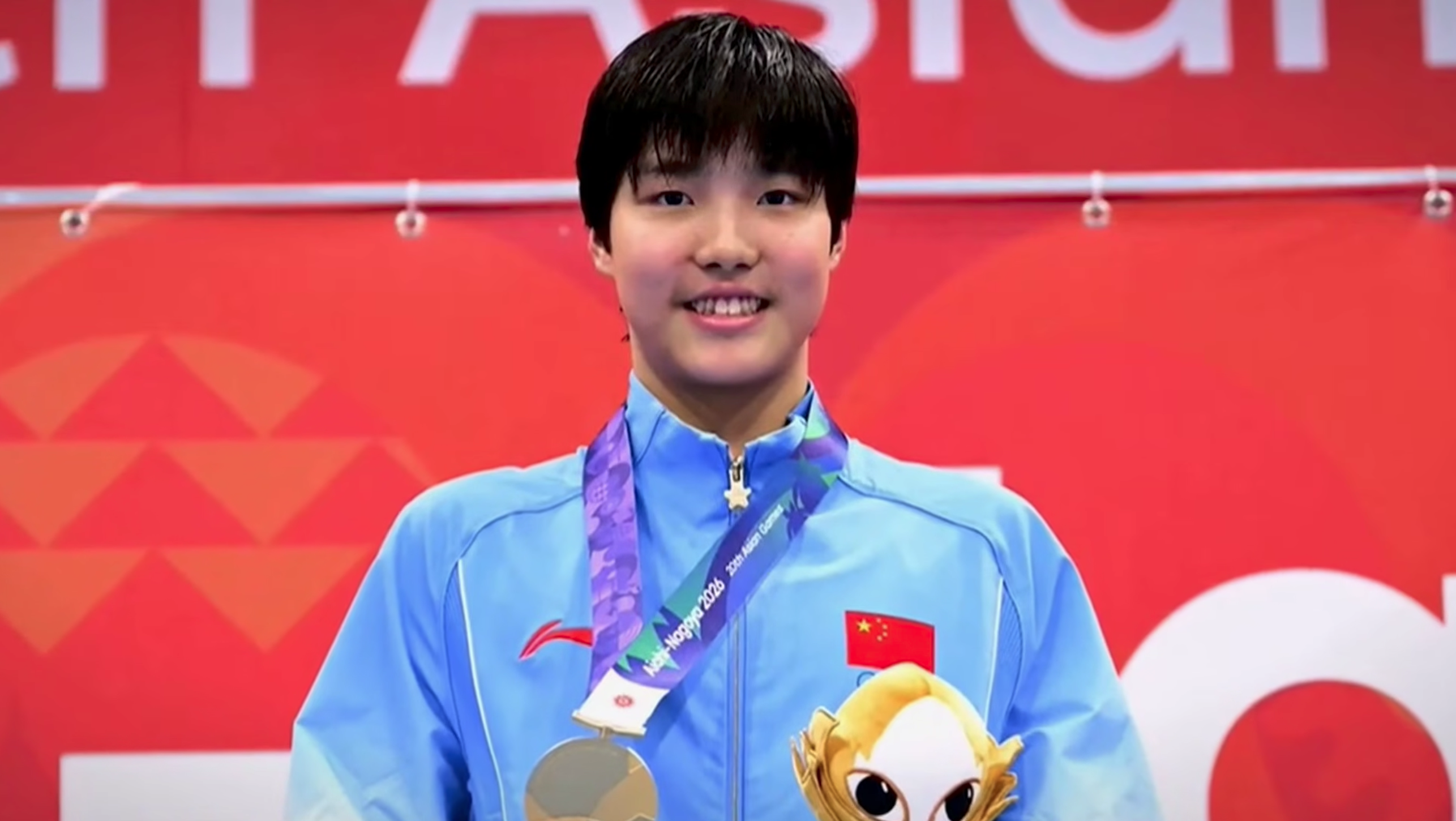
Chinese swimmer Yu Zidi took the Asian Games by storm with her stunning victories in the swimming pool. The 13-year-old won three gold medals to solidify China’s place as the dominant swimming nation in Asia.
Yu wasn’t the only youngster turning heads at the Games, which were held in Nagoya from Sept. 19 to Oct. 4. The continental showpiece had a number of young athletes who, like Yu, were looking to make a name for themselves and gain international recognition.
The Asian Games can feature athletes considerably younger than those eligible for some Olympic sports. Japan’s Yuki Kurihara is just 11 years old. He won a gold medal in the esports competition to become the youngest gold-medal winner ever at the Asian Games.
Despite the time he puts in on the keyboard, Japanese media reported that he has no trouble keeping up with his studies. However, the ability of preteens and teens to take part in such high-level sporting competitions is causing concerns about possible abuse. Mazel Paris Alegado of the Philippines was only 9 years old when she competed in skateboarding at the Hangzhou Games in 2023.
Alegado was back at the Asian Games this year and said she felt much more mature even though she had recently turned 12.
“When I first competed in the Asian Games, I was quite nervous because it was my first really big event,” Alegado said in an interview before the competition. “Now, I’m way more excited, I’m not nervous, I’ve gotten better at skating and am more ready.”
Now 18, Indian squash player Anahat Singh won the U-11 title at the British Junior Open in 2019 and later said there are drawbacks to competing at such a young age.
She attended the British School New Delhi and has been accepted to Harvard but deferred her first semester in order to participate in the Asian Games.
“Of course, I don’t get to hang out with my friends and family as much because I’m traveling much of the year, but I’m really grateful that I get a chance to travel around the world.”
Are younger athletes at greater risk?
The World Skate Federation is the governing body for skateboarding, a sport that attracts very young athletes. Starting this year, it is phasing in minimum ages for its World Skateboarding Tour: 12 in 2026, 13 in 2027 and 14 from 2028 onward.
It’s easy to see why the federation would want to set guidelines. Some young athletes have suffered serious injuries preparing for major tournaments.
At age 12, British-Japanese skateboarder Sky Brown suffered a fractured skull and a broken wrist after a fall on a halfpipe ramp in 2020 while training in California.
She was flown to a hospital reportedly unresponsive. Her father said afterwards she was lucky to be alive.
With the move, skateboarding joins other sports with age limits. The minimum age for competing in gymnastics is 16. For boxing, it’s 18.
The International Olympic Committee introduced tighter age restrictions after Russian figure skater Kamila Valieva tested positive for a banned substance at the 2022 Winter Games in Beijing. Valieva was 15 at the time.
It’s not just about what can happen to young athletes while competing or training. They can also face abuse online.
In October, the International Skating Union signed the “United Against Online Abuse Charter” and extended its existing Cyber Protection Program to defend skaters from harmful online content.
At a press conference announcing the charter, French figure skater Kevin Aymoz spoke of receiving homophobic abuse and death threats online.
“The only thing I want to do is skate and represent my country,” said Aymoz, who made his senior international debut at the age of 17. “I never signed up to receive death threats.”
Kanae Doi, Japan Director of Human Rights Watch, said ahead of the Asian Games that “moments of triumph do not come easily. They are built on years of disciplined training, often beginning in childhood.”
Doi wrote in The Japan Times that Human Rights Watch found that “many athletes (in Japan) described abusive coaching as an accepted part of sport, with few reporting any meaningful consequences for the coaches responsible.”
“Japan should also be committed to ensuring that every person who participates in sport can do so safely and without fear,” she added.
Protecting young athletes is in the best interest of every organization, but with the allure of money and fame, it’s just about impossible to prevent youngsters from pursuing their dreams.
Jim Armstrong bio
