


Issue:
November 2026
Toyota Group is the world’s biggest automaker, but Japan seems to have fallen out of love with cars. A veteran auto reporter looks back at what happened
I attended my first Tokyo Motor Show in 1987. I had returned to Japan several years earlier and pitched a story to a former employer. First impression: glamor, glitter and glitz.
There were fashion models standing in front of many exhibits to greet passers-by. More than 900 vehicles were on display including dozens of concept cars along with cars from such major American and European brands as General Motors, Ford, BMW, Mercedes-Benz and Volkswagen. It was a time in Japan when young people saw a car as an extension of their personality and self-worth.
The Japan Mobility Show, as the show was rebranded in 2023, has been none of those things. And this year — a smaller event compared to odd-numbered years — it was largely a networking event with automotive CEOs joining panel discussions on subjects ranging from humanoid robots to artificial intelligence and automated driving.
There were fewer than 20 motorcycles and cars on display, mostly technology concepts, as organizers shared the floor with CEATEC 26, Japan’s largest electronics trade show.
Nothing I have seen in any of the four shows to date suggests there will ever be a return to the glory days of the past when showgoers came to see cars and dream about how owning one might change their lives.
The Tokyo Motor Show dates back to 1954 when the Japanese auto industry still was in its infancy, with brands like Datsun, Prince Motors and Toyopet. Honda had yet to build its first car, and three-wheeled trucks by Daihatsu and Toyo Kogyo Co. (predecessor to Mazda) outsold cars by three to one.
The show ran annually for the first 20 years, then biennially for the next quarter century. From 1999, organizers split passenger vehicles and trucks every other year.
The event moved from Hibiya Park to the Harumi Fair Grounds in 1959, where it stayed for the next 28 years before moving to Makuhari Messe in Chiba in 1989, then to Tokyo Big Sight in 2010. This year, it was back at Makuhari Messe.
Attendance peaked at 2 million in 1991, putting Tokyo on a scale with motor shows in Frankfurt, Paris and Detroit. The show ran for 65 years until 2019. It was canceled in 2021 due to COVID-19, then was reborn in 2023 as the Japan Mobility Show.
The mobility show's mission is to transcend the traditional car while moving into fields like artificial intelligence.
Organizers decided to use a new word, “mobility.” Whether that can restore interest in cars is to be determined. Take a walk around Tokyo and you can see a lot of boxy cars, both minis and larger models, which may fail to inspire interest.
Shortly before the pandemic, I spoke to Osamu Masuko, Mitsubishi Motors’ CEO, about the state of the Japanese car market, specifically about why there are so few interesting cars. Masuko, who passed away in August 2020, was surprisingly blunt.
“Cars are no longer a source of dreams,” he said. “Back when I got into this business, a car helped define who you were as a person. They’re no longer essential. Your phone is, not your car for many people, particularly people living in cities and old people.”
Masuko added that Japan’s population is declining and aging (nearly 30% are over 65 and 10% over 80). As a result, automotive demand is expected to diminish.
Post-1987
Following the 1987 show, there would be little change in the show’s format and objectives for the next decade. The focus, as in the immediate past, would be on clean powertrains, safety and stylish new models.
There were still no hybrid and electric cars on the market in the early 1990s. There were still no alliances between Japanese and foreign carmakers.
Two big international auto stories of the day involved American oil tycoon and corporate raider T. Boone Pickens, who tried and failed to buy a Toyota affiliate, and U.S. efforts to force Japan to limit exports.
Voluntary restraints were the result of a surge in exports following the 1973 and 1979 oil “shocks” as yearly exports grew to a still-record 6.7 million units in 1985 and 2.2 million to the U.S.
The export restraint agreement triggered a massive transfer of capital and technology across the Pacific as Honda, Nissan, Toyota, Mazda and Subaru all set up U.S. production facilities in the 1980s. In Toyota’s case it was two, first in California in a joint venture with GM, then in Kentucky by itself.
Today, the total has grown to 31 vehicle and powertrain plants in nine states with capacity of more than 3 million cars and trucks annually. Cumulative investment: $70 billion. Counting suppliers, the investment total is probably double that.
Standout shows
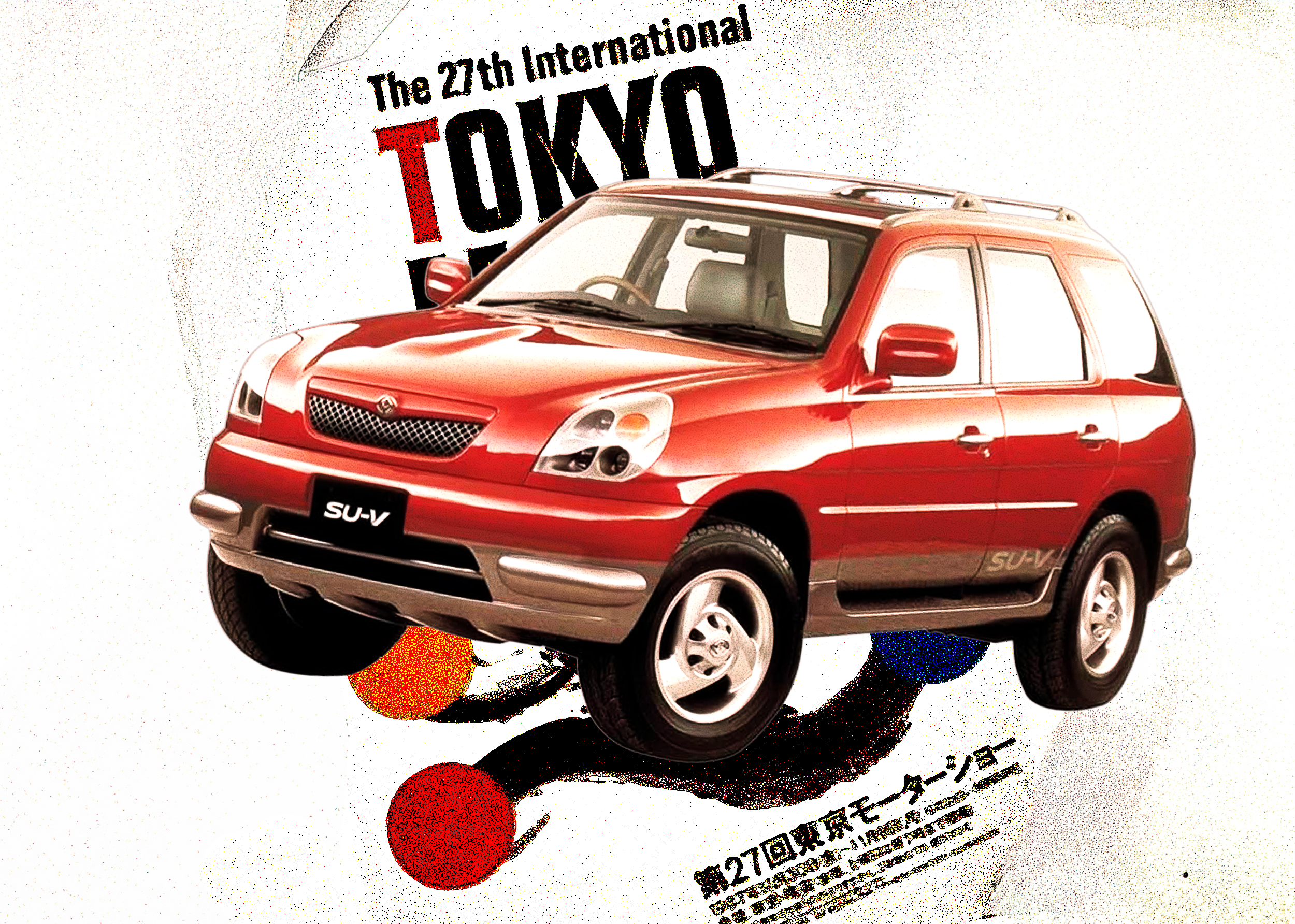
My most memorable shows were 1995 and 1999. One had to do with cars, the second was about the industry. The 1995 Tokyo show featured the first-generation Prius, the world's first mass-produced hybrid-electric car. It also displayed the production model of the RAV4 and two concept offerings in the compact utility vehicle segment: the Honda CR-V and Mazda SU-V, kicking off Japan's lead in the emerging CUV segment.
Mazda, in fact, displayed three cute concept cars at the 1995 show — the BU-X and CU-X, compact passenger cars, and the SU-V, which initially had been named the SU-X. A foreign ad copywriter caught the obvious: Mazda couldn't exhibit a car named “Mazda SU-X” and thus it was changed to SU-V.
The SU-V was the cutest of the lot in this writer's opinion. Mazda could have brought it to market in two years’ time. It was never given a chance because Ford, by then running the Hiroshima-based carmaker and having placed a fix-it team in senior management, decided to replace the SU-V with a Ford-design model, the Tribute. The Tribute flopped for Mazda, but as a Ford car named the Escape it was a success.
The 1999 show also was the occasion for the Nissan Revival Plan, Nissan’s rescue plan following years of financial losses and debt.
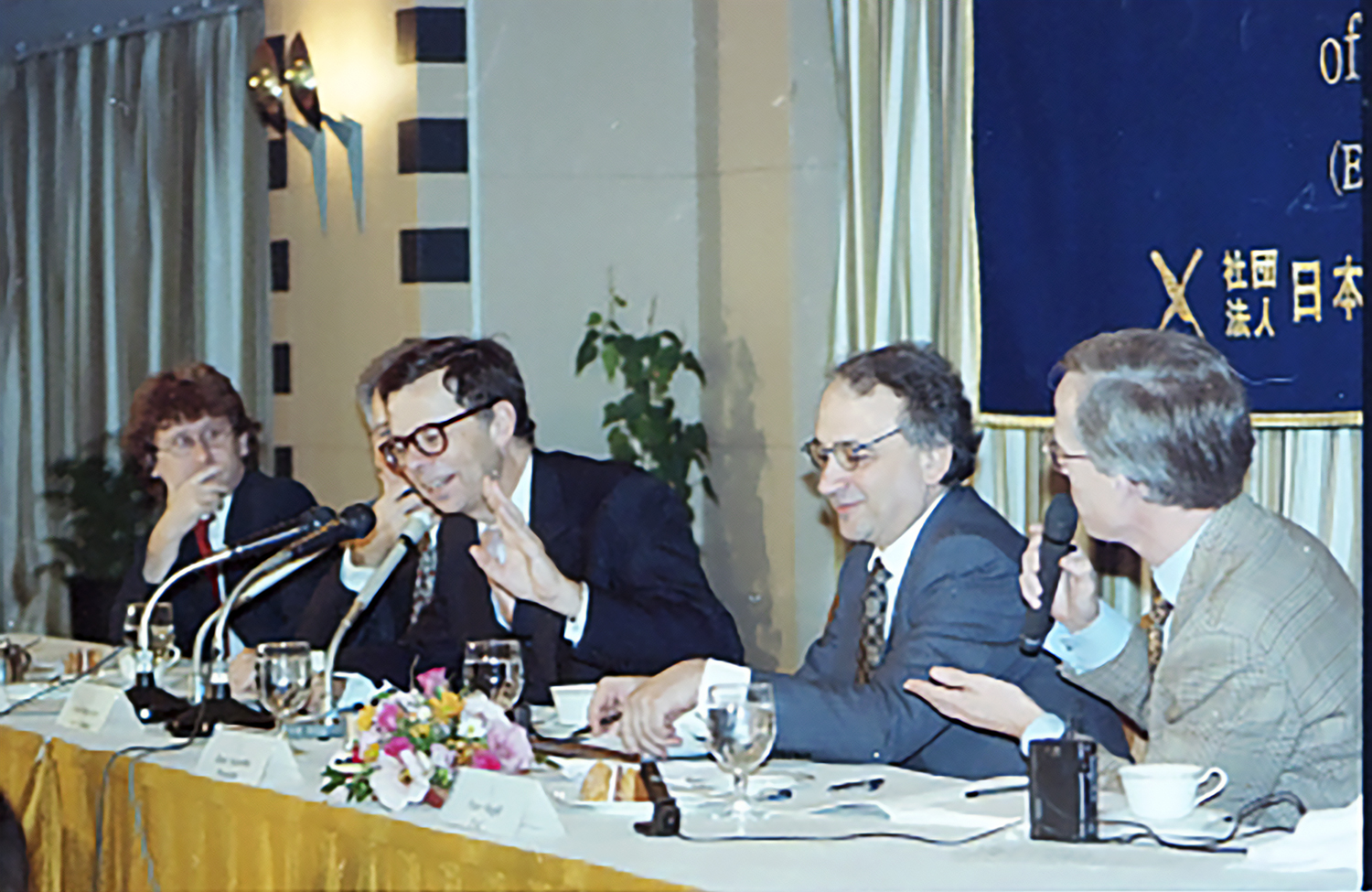
Louis Schweitzer, Renault's chairman and CEO, came to the FCCJ while Carlos Ghosn, his handpicked president at Nissan, made the rounds telling industry watchers how he was going to restructure the Japanese carmaker.
One year later, Ghosn came to the FCCJ to brief members on the turnaround plan and Nissan’s meeting its earnings targets ahead of schedule.
It was a fully packed dinner speech with every seat in the dining room of the old club filled as Ghosn used a colorful metaphor — "burning platform" — to characterize Nissan when he arrived in June 1999.
Nissan wasn't the first foreign-Japanese alliance. That would be Ford and Mazda in 1996, then DaimlerChrysler and Mitsubishi Motors one year after Renault and Nissan.
Early hits
Of the early hits at the show, Toyota's Corolla is top of the list. Since its 1966 debut, the Corolla has become the world's all-time best-selling car, passing the Volkswagen Beetle in 1997.
The Mazda Cosmo Sport, powered by a Wankel rotary engine, and Nissan's Fairlady Z sports cars were displayed in 1964 and 1969.
Two cars first exhibited outside Japan were Mazda’s MX-5 Miata in Chicago and the LS400, the first Lexus model, in Detroit, both in 1989. The Miata is the best-selling sports car in history.
Ghosn would speak again at the FCCJ several days before the 2009 Tokyo show in October. The Leaf had debuted in August and was scheduled to be launched in December of the following year.
At his club talk, he made the case for why the industry should switch to electric cars, including Nissan’s plan to produce batteries in-house.
At the show, Nissan exhibited the Leaf while its battery supplier, Automotive Energy Supply Corp., displayed its lithium battery technology. The Leaf would be the best-selling electric car in the early part of the 2010s, ahead of Tesla.
What’s next for the show and the industry
In the 1960s, MITI, the former Ministry of International Trade and Industry, tried to shrink the industry to two dominant groups — Toyota and Nissan.
It failed in part because companies like Honda and Suzuki saw synergies between their car and motorcycle businesses. Subaru and Mitsubishi Motors needed to find new businesses in the postwar era, in the case of Mitsubishi from heavy machinery and weapons; Subaru, the former Fuji Heavy Industries and Nakajima Aircraft Company, from being an aircraft manufacturer during the war.
Toyo Kogyo, a major company in Hiroshima before the war, saw car production as a way to rebuild the company and the city, which had been devastated by the atomic bomb. Toyo Kogyo was renamed Mazda in 1984.
The Tokyo Motor Show has been a reflection of the Japanese industry since the time of its inception in 1954. It is more so today as there is only one truly global manufacturer, Toyota, as Nissan and Honda have fallen into the second tier.
Mazda and Subaru have become affiliates of Toyota. Mitsubishi Motors, in the wake of the Carlos Ghosn coup at Nissan and the death of Osamu Masuko, has become rudderless.
But even Toyota faces challenges from China in the global market, notably because its electric car business has fallen behind.
Concept cars shown by Toyota, Nissan and others at the Japan Mobility Show have focused significantly on electric cars and hybrids, some even using BYD batteries.
Based in Shenzhen, BYD is the world’s leading manufacturer of electric cars and second-ranked producer of lithium batteries. It sells EVs in Japan and supplies batteries to both Toyota and Suzuki. It has exhibited at the mobility show since 2023.
Time will tell whether Japan’s early mobility show concepts will turn the industry’s fortunes around. The betting from this seat is no.
Roger Schreffler is a veteran business correspondent and former president of the FCCJ.
