


Issue:
November 2026
When ex-Nissan CEO Carlos Ghosn fled Japan while under arrest in 2019, it was a sensational justice system failure. But Japan has a long history of fugitives running from the law
Once in the late 1970s, I was waiting in the outbound immigration queue at the recently opened Narita Airport when I found myself standing beside American TV and film actor David Janssen (1931-1980). From 1963, Janssen starred in the wildly popular ABC TV drama "The Fugitive," said to have been inspired by Victor Hugo's epic novel "Les Miserables."

Janssen played Dr. Richard Kimble, a surgeon sentenced to death for murdering his wife. En route to prison he escapes police custody following a catastrophic train wreck, and, over four seasons, endured brushes with the law while attempting to hunt down the real killer.
“Tobosha,” the show's Japanese title, was said to be so popular that TV Guide magazine reported the public bathhouses each Saturday would empty out before 8 p.m. as bathers rushed home to view the latest episode. As our line shuffled forward, Japanese travelers sporadically slipped out of adjacent lines to approach Janssen and shake his hand. He good-naturedly obliged, flashing his characteristic bittersweet smile.
Prison escapes in Japan these days are a relatively rare phenomenon, but such was not always the case. According to Kiyohiko Sato's book “Datsugokushatachi: Kanri Shakai e no Chosen” (“The Escapees: Challenges to the Controlled Society,” Seikyusha, Tokyo, 1995) escapes were fairly common occurrences during the Meiji era (1868–1912). There were a record 1,821 successful getaways in 1881, and annual figures remained in the hundreds well into the first decade of the 20th century.
By the mid-1970s, however, the number had tapered off and has never exceeded one digit since. Perhaps it's a sign that criminals have become more submissive; or that Japanese prisons have become more accommodating.
The fascinating tale of Kai Watanabe is right out of a Victor Hugo novel. He did not merely go on the lam: After assuming a new identity he passed the civil service examination, and when police finally apprehended him, he had become a judge presiding over a rural Nagasaki court, handing down sentences on criminals.
Born in Edo (Tokyo) in 1859, Kai Watanabe was the eldest son of a samurai family from the domain of Shimabara in Nagasaki. After studying at the School of Commerce (the forerunner of Hitotsubashi University) he returned to Nagasaki and was hired by Mitsui Bussan, a major trading house. At age 22, Watanabe became infatuated with a geisha. To support her expensive tastes, he embezzled a considerable sum of money. His pilferage was discovered and in July 1880, a court sentenced him to life at hard labor.
As one of the few literate men in the prison, Watanabe was assigned rather light duties. Taking advantage of this, he joined three other felons in a failed escape attempt, which earned him a transfer to the Miike coal mine, where prisoners toiled under horrendous conditions and fatalities were frequent.

During the second year of his sentence, Watanabe managed to evade prison guards by hiding in a toilet. He made his way to his father, who, through his position as a low-ranking court official, helped procure a false identity under the name of Kota Tsujimura. Empowered with legitimate status, Tsujimura (Watanabe) passed the civil service examination and was assigned to collect taxes for the Oita prefectural government. He gradually moved up the civil service ladder to the post of judicial clerk, at a salary that allowed him to marry into an influential family.
A judge took close note of Tsujimura’s acumen and advised him to take the examination to become a judge. In late 1887, he passed with a high score, and the following year was appointed an assistant judge with a generous monthly wage of 25 yen. He was also transferred to Fukue Island in his old home prefecture of Nagasaki. Realizing his presence so close to home raised the risk of discovery, he considered resigning, but the position was too attractive to turn down.
Within three years Tsujimura had been promoted to full judge, which meant he also heard criminal cases, further increasing the chances of exposure. This occurred on February 19, 1891, when he was approached by a Nagasaki prosecutor named Uehara.

"Your honor," he said, "I wonder if you remember me. I believe your real name is Kai Watanabe. I prosecuted your case when you forged exchange documents at Mitsui Bussan."
Judge Tsujimura hotly denied the accusation, claiming he was Watanabe's younger brother.
He was placed under arrest and underwent interrogation for the next four days, finally breaking down and tearfully confessing to being Watanabe.
Then 33, Watanabe was ordered back to the coal mine to serve out his life sentence. But perhaps because embezzlement was punished with less severity by that time, he received a pardon and was released in autumn of 1892. Returning to his home town of Shimabara, he went into business carving personal seals, making signs and working as a paperhanger. The remainder of his life was otherwise uneventful until his death in 1922 at age 64.
Of all the sensational incidents during the Taisho era (1912–1926), one singular event stands out. In 1926, a feisty fugitive in northern Chiba captured the nation's attention by eluding authorities for 42 days.
The antihero was Kumajiro Iwabuchi, a 35-year-old wagoner. Although only about 155 cm tall, Iwabuchi was strong as an ox. While not particularly bright, he was cheerful and diligent, and was liked by those he encountered, who addressed him as "Kuma-san" (Mr. Bear).
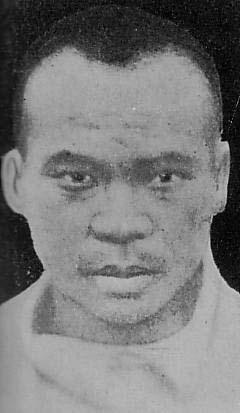
Bear, unfortunately, was fond of strong liquor, and had overactive gonads. He had fathered five children by his wife Yone, and was on intimate terms with two other ladies. One, Kei Yoshizawa, decided she was tired of playing third fiddle and took up with another man. This infuriated Iwabuchi, who, in a drunken rage, pummeled several people and was sentenced to three months in jail.
Shortly after his release, on August 18, Iwabuchi went to Kei's home and bludgeoned her to death with a piece of firewood. After meting out similar treatment to Kei's mother, he set off to confront Toramatsu Sugazawa, her would-be suitor. Sugazawa was absent, so Iwabuchi burned his home to the ground and then fled into the sticks.
Policemen were dispatched from five local stations, their ranks buttressed by civilian volunteers and firemen, who scoured an area measuring 17.5 km from east to west and 15 km from north to south. But Iwabuchi, by now renamed “Onikuma” (Devil Bear) by the media, was not to be found. Perhaps out of sympathy for the underdog, local farmers offered him food and led him to hideouts, enabling him to evade the manhunt.
The media, meanwhile, lambasted the police. "For nearly half a month," satirized the Tokyo Nichinichi Shimbun of Sept. 6, "Iwabuchi has eluded four thousand police and five thousand firemen. Once it's all over, we can hardly wait for the cinema spectacular, starring 'Lord Kuma the wagonmaster' and a cast of thousands!"
On Sept. 11, Iwabuchi killed a 24-year-old patrolman named Kotaro Kono by slashing him with a scythe. The media had better luck tracking him down. On the night of Sept. 27, a man named Tada offered to lead two newspaper reporters, Sakamoto and Baba, to Onikuma's hideout.
As they approached, the Devil-bear exclaimed, "Who's there? I'll kill you!" With his disorderly hair and scruffy beard, he appeared to be every bit as wild as his reputation. Tada calmed him down and introduced the reporters, who placated him by saying, “Zuibun gokuro sama” (You must be tired).
"Ah, Mr. Sakamoto," confessed Iwabuchi. "I'm so sorry. I’ve done some terrible things. Killed people. Set fires. It's unforgivable."
He spread out some matting and, setting the deadly sickle beside him, guzzled “shochu” (grain spirits) from a teacup. He informed them that he had decided to commit suicide. After several more cups, he took the two reporters' hands in his and blubbered, "I've been so bad. Please write it all down and tell everybody how sorry I am.
"But whatever you do," he pleaded, "don't turn me in to the cops." Pledging cooperation, the two rushed off to file their stories.
By Sept. 28, the police had conducted 25 sweeps, searching empty houses, storage sheds, caves and other likely hideouts. They knocked on 1,917 doors. Yet Iwabuchi boasted to the two reporters there were only two days on which he didn’t eat.
The next day, three firemen found Iwabuchi lying on the ground before his family grave. He had attempted suicide by slashing his own throat, and when that failed he drank a lethal dose of strychnine. Instead of informing the police, the three carried him to the home of his older brother, Seijiro, where he died, having never regained consciousness. The 42-day hunt for Iwabuchi involved the mobilization of 13,540 men and cost the state some 57,630 yen -- the equivalent of several million U.S. dollars. And they never caught him.
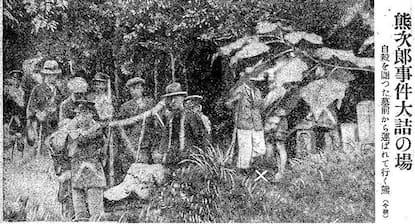
In the annals of Japan’s escape artists, no one comes close to matching Yoshiei Shiratori, an indomitable figure who could rate the title of the Japanese Houdini.
In 1933, Shiratori, then 24, was arrested as an accomplice in a murder-robbery in Aomori City. He appealed his conviction but the court took no action and he languished in Aomori Prison for two years. Impatient for the wheels of justice to turn, he decided to escape.
Obtaining a piece of wire, he jimmied the lock on his cell and, after having observed the timing of guard patrols closely, crept out just after midnight on June 18, 1936, exiting via the prison's rear gate. All hell broke loose when he failed to respond to morning roll call.
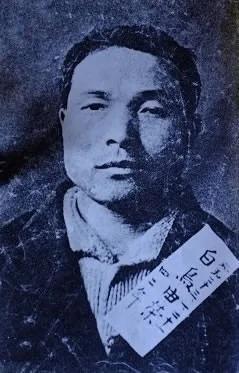
Shiratori was captured two days later in a nearby cemetery, looking gaunt and very hungry. The guard was dismissed from his job and Shiratori punished with an indefinite sentence, to be served in Tokyo’s Kosuge Prison.
In October 1941, Shiratori was transferred to Akita Prison, where his reputation as a jailbreaker had preceded him. Taking no chances, authorities put him in a tiny high-security cell with a small opaque window in the ceiling. After shivering through the winter, he began preparations for an escape.
First, Shiratori began developing his muscles by using his hands and feet to boost himself up the walls. He would work his way to the ceiling where, using a rusty nail, he began to chip away at the window frame in 10-minute sessions between the guards’ rounds. Finally after midnight on June 15, 1942, Shiratori took advantage of a summer storm to make his escape. He managed to replace his prison clothing and, following the route of the railroad line, made his way to Tokyo. On Sept. 20, having walked for nearly three months, Shiratori appeared at the gate of Tokyo’s Kosuge Prison and turned himself in, saying the only reason he had escaped was due to his unnecessarily harsh treatment at Akita.
After a winter-long sojourn in Kosuge, in April 1943 he was transported to Abashiri Prison in frigid Hokkaido. Until it finally closed in 1984, Abashiri was used to confine the country’s most incorrigible offenders, and it was clear that the authorities intended to crush Shiratori’s spirit once and for all.
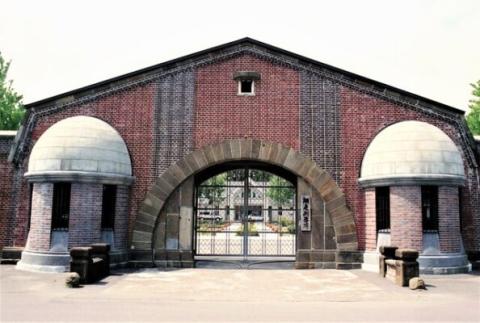
Shiratori was initially forced to wear manacles even in his cell. After he broke the first set and several subsequent pairs, his warders put him in leg chains and handcuffed his hands behind his back, locking them with a bolt. So tight were the cuffs, they cut through his flesh to the bone, and maggots squirmed from his open wounds. The sight was so horrible even his warders began to pity him.
Plotting his next escape, Shiratori each morning at breakfast spat miso soup on the door frame. The salt caused the metal to corrode and weaken. On the night of Aug. 26, 1944, taking advantage of the wartime blackout, he stripped to his “fundoshi” (loincloth) and, dislocating both his shoulders from their joints, squeezed himself through the slot in the door used by the guards to insert the food tray.
Shiratori's escape made front-page headlines in the Hokkaido Shimbun. He hid out in the mountains and was not aware that the war had ended until May 1946. While en route to Sapporo, he fought and killed a teenager who had challenged him and was arrested shortly thereafter. Shiratori claimed justifiable self-defense, but was sentenced to death.
Angered at what he perceived as yet another injustice, he once again made preparations to escape, this time from death row at Sapporo prison. Using his metal dish as a shovel, he tunneled beneath the concrete wall of his cell and made good on his fourth breakout on April 1, 1947. The next day's banner headlines read "Shiratori in 4th Escape!"
Shiratori was recaptured but won a reprieve. He spent the next 15 years without incident in Tokyo's Fuchu Prison, where he was treated with exceptional deference by the other inmates. In December 1962 he was given a provisional release. Refusing regular employment, which he felt would constrain his hard-won freedom, he worked as an itinerant laborer.
Japan’s last great escape artist died in a hospital of heart failure in 1979 at age 71.
Mark Schreiber is author of “Shocking Crimes of Postwar Japan” (Yenbooks, 1996) and “The Dark Side: Infamous Japanese Crimes and Criminals” (Kodansha International, 2001).
