


Issue:
November 2026
High costs and public opposition are slowing Tokyo redevelopments
Despite running along prime real estate between Roppongi Crossing and Azabu Juban, an area packed with specialty shops, bars and restaurants, Imoaraizaka is strangely deserted.
Imoaraizaka, whose name means ‘potato-washing hill,’ is said to have been named after potato wholesalers who worked there. Today, it is home to small businesses that give the area a retro atmosphere. There is a bar with pink walls where time seems to have stopped in the 1960s and a mom-and-pop seafood restaurant that greets guests with a “welcome back” sign.
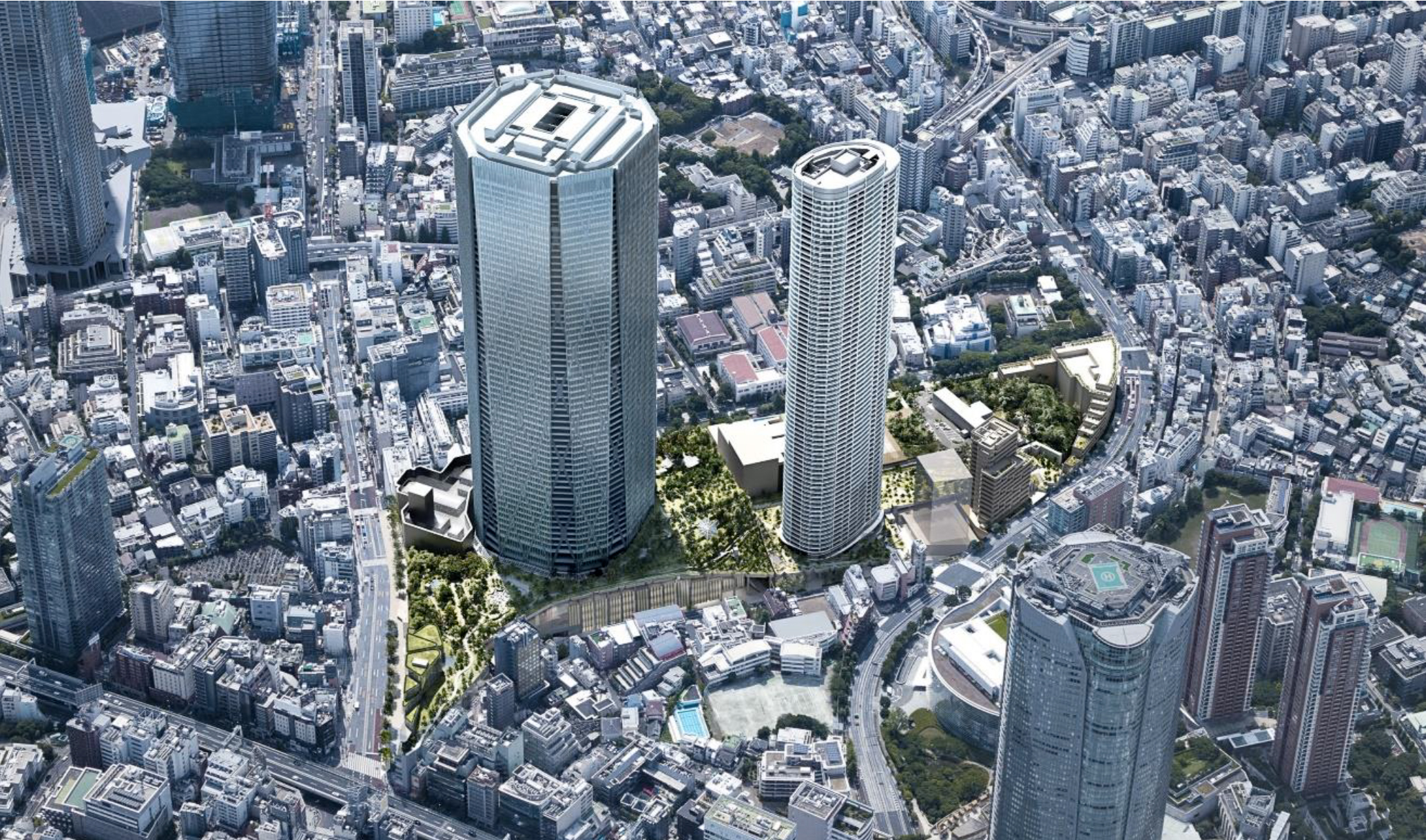
But there are closed shops and empty lots, signs that the area is set for redevelopment. The redevelopment plan, officially known as the Roppongi 5-chome West District Redevelopment Plan but more commonly known as the Second Roppongi Hills, will be one of the largest projects of its kind in Japan.
However, as with several other major redevelopment projects planned throughout the capital, rising costs and worker shortages are threatening to derail it.
Developer Mori Building has built an empire on creating cities within the city. Roppongi 5-chome will be adjacent to Roppongi Hills, Mori’s 11-hectare megaproject completed in 2003. It transformed the neighborhood from a hodgepodge of smaller buildings and residences into a glittering complex of office, residential and commercial towers housing designer boutiques, restaurants, a movie theatre, a museum and a Grand Hyatt hotel.
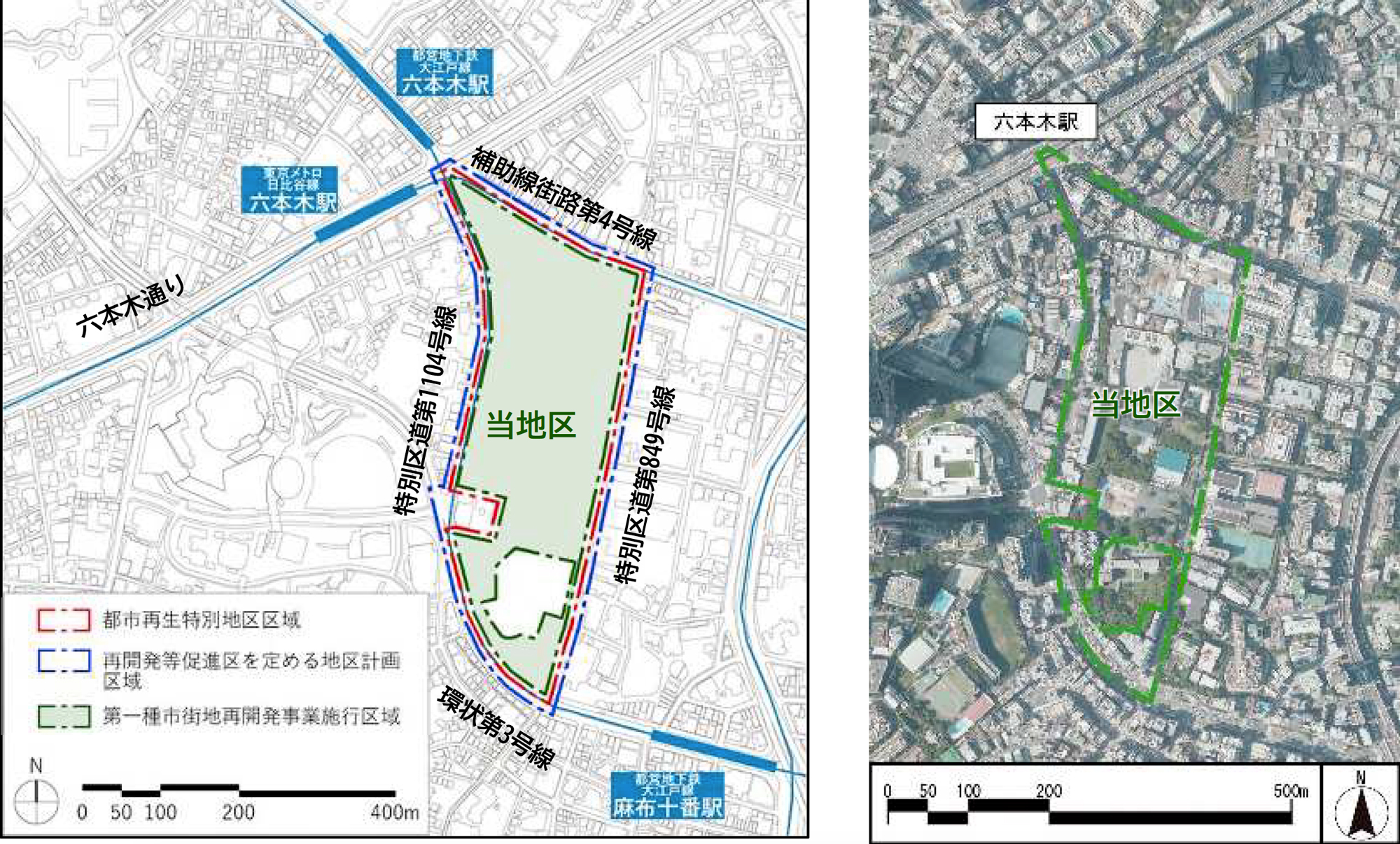
The Second Roppongi Hills will cover 10 hectares and include three skyscrapers, one of which will reach 330 meters. It will also have offices, commercial spaces, theaters, a Rosewood luxury hotel and residences. Part of the complex will be covered by an artificial platform topped by greenery to create a roof garden of 16,000 square meters.
Mori Building and its partner Sumitomo Realty & Development claim the project will strengthen the area’s disaster preparedness by creating 5,000 square meters of open space that could be used as an emergency shelter.
The Tokyo Metropolitan Government (TMG) approved the project in 2024 to help attain its goal of enhancing Tokyo’s competitiveness as an international business and financial center.
"For Japan's growth, it is crucial that the capital city, Tokyo, takes the lead and powerfully drives the nation's economic expansion by actively enhancing international competitiveness and strengthening urban resilience,” the TMG said in a statement to Nikkei Asia.
The TMG believes it’s necessary to develop areas that bring together business, commerce, housing, education, culture and international exchange, an objective it thinks the first Roppongi Hills achieved. Roppongi 5-chome will replace the narrow streets, dead-end roads and numerous buildings that do not meet current seismic standards.
Rising construction costs, the weak yen and a severe shortage of workers have delayed megaprojects such as the plan for Nakano Sun Plaza, an iconic music and events hall, which has been stalled for three years. The redevelopment of the Grand Prince Hotel Shin-Takanawa has also been delayed for the same reasons.
Building cities within cities is also riskier than before. Last December, Sumitomo Mitsui Construction agreed to merge with INFRONEER Holdings after incurring losses totaling 75.7 billion yen from the construction of a residential tower in Mori Building’s Azabudai Hills redevelopment project.
Both Mori Building and Sumitomo Realty declined to be interviewed for this article, but
have said that Roppongi 5-chome is likely to be delayed.
Meanwhile, megaprojects face mounting criticism from those who feel the proliferation of high-rise towers and glitzy commercial complexes is destroying communities and the unique character of Tokyo’s neighborhoods. A Sumitomo Realty spokesperson admitted last year that there were still some landowners who were opposed to the project.
Takafumi Horie, an entrepreneur and media commentator who once lived in Roppongi Hills, expressed doubts about the Second Roppongi Hills project. He called on the TMG to enact regulations against redevelopments to preserve historic neighborhoods.
“It’s true that the city has become internationalized, but I can’t help feeling that the features that have been built up since the Edo period and which made Tokyo attractive are being lost,” Junichiro Okata, professor emeritus at the University of Tokyo, told a symposium in May.
The megaprojects may have made Tokyo more attractive to multinational corporations and jet-setting high earners, but the gentrification has squeezed out mom-and-pop stores, hole-in-the-wall bars and other small businesses. Nearly 500 Tokyo shotengai shopping streets disappeared between 2001 and 2022, according to a 2023 report by the TMG’s Bureau of Industrial and Labor Affairs.
Although Japan’s aging population is a major reason for this, shotengai often fall victim to redevelopment, which replaces the small shops with commercial and residential towers. In central Tokyo, in particular, many small independent businesses are being replaced by shops selling expensive global brands and exclusive restaurants.
“I think it’s a pity that more and more neighborhoods are becoming… mega-towers that you can see everywhere and it’s quite boring,” says Jorge Almazán, an architect and professor at Keio University in Tokyo. “All the nice, independent shops, idiosyncratic businesses and everything that makes Tokyo so lovable… at least in the central wards, are becoming quite scarce.”
Riken Yamamoto, an architect and winner of the Pritzker Prize, often referred to as architecture’s Nobel Prize, says megaprojects like Roppongi Hills have prioritized the security and privacy of residents and destroyed the sense of community that once tied the neighborhood together.
“It’s a very dangerous situation in Tokyo now,” says Yamamoto. “Tokyo used to be very advanced in the sense that people helped each other out.”
Some claim that high-rise towers could become modern-day danchi, the large, government-built public housing complexes that were very popular in the postwar period but have seen rising vacancies due to aging tenants.
“We’ll see if Tokyo has enough wealthy people to keep the mega-towers in a good state because those towers require a lot of repairs and scaffolding is super expensive,” says Almazán, author of Emergent Tokyo, which examines Tokyo’s distinctive urban spaces.
Instead of replacing a neighborhood with a megaproject, its buildings could be replaced by smaller ones in an incremental way, Almazán says, adding, “We would keep a healthy mixture of old and new buildings, new and old residents, old and new businesses. And that kind of diversity is really positive.”
However, in Japan, people living near a planned redevelopment have little means to change or halt it. Deregulation introduced in 2002, which provided private developers with financial incentives and allowed for higher floor area ratios, has made it much easier to undertake megaprojects.
Unlike in many Western countries, there is no system in Japan whereby projects can be stopped if a certain percentage of the population opposes them, Almazán notes. Nevertheless, prominent public figures continue to demand an end to megaprojects.
“Japan is facing a crisis situation,” Yamamoto says. “I’m sure that in the near future these buildings will become ruined. When that happens it will be too late. We should not move forward with this type of redevelopment.”
Michiyo Nakamoto is a freelance journalist based in Tokyo.
