


Issue:
November 2026
Hiroshi Sukagawa is one of only a handful of Japanese TV journalists reporting from southern Lebanon
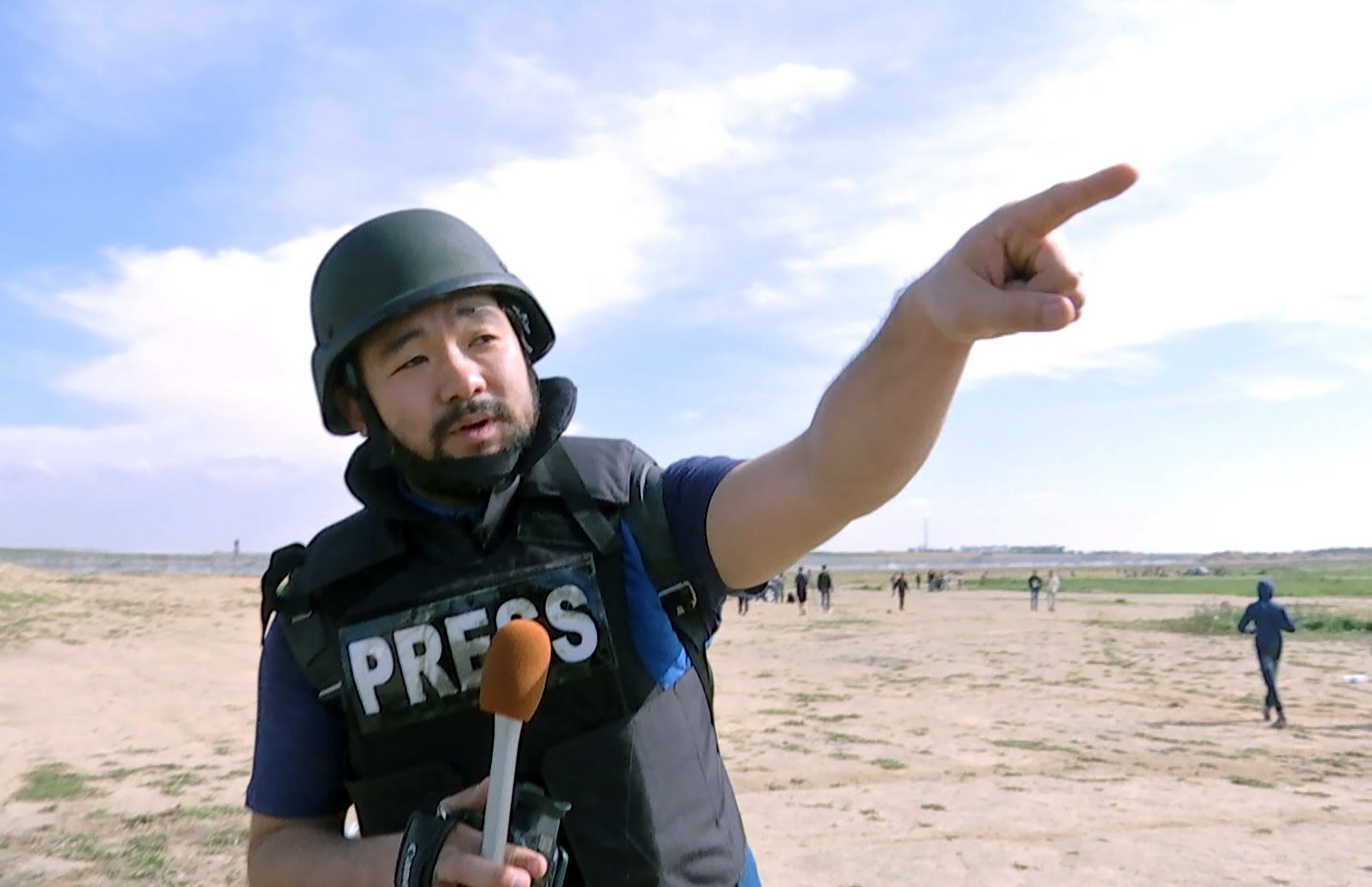
When Hiroshi Sukagawa went reporting last June in the southern Lebanon village of Ayta Ash Shab, he wore the Japanese flag on his bulletproof vest and taped his WhatsApp number to the roof of his sand buggy. The idea was to avoid being obliterated by Israeli forces.
The area is one of the world’s most dangerous places for journalists. Many have been targeted by Israeli jets, sniper fire and double tap strikes, according to the Committee to Protect Journalists and the Office of the United Nations High Commissioner for Human Rights.
Affiliation with a Japanese media outlet didn’t save Mohammed Mansour, a correspondent for The Asahi Shimbun who was killed by an Israeli missile strike in March 2025 – but he was from Gaza. The Asahi noted that Mansour and over 200 other journalists have died in the latest iteration of the Palestinian conflict since 2023.
In a grim irony, journalists such as Sukagawa who brave this kill zone must trust the precision of Israeli forces.
“IDF intelligence is so precise and strong,” he said in an interview during a trip home to Tokyo. “They track down each and every target — where they are, when and how they move.”
“In Gaza, they call people in buildings and tell them to leave before bombing. They know everything. So, I put my WhatsApp number on the roof of the car.”
Sukagawa found Ayta Ash Shab, a Shiite-majority village just north of the Israeli border, bombed to rubble. Every single piece of infrastructure was completely destroyed, he said. “There were about 20 or 30 people left.”
The buzz of IDF drones following the TV crew could be heard overhead. The contrast with Lebanese Christian villages was surreal, he said.
“They have nice resorts, big pools, and children playing. They’re having barbecues. And just over the mountain, you can see fires from explosions. The Israelis are not targeting Christian villages.”
Israel’s destruction of the south of Lebanon since it launched an assault on Hezbollah on March 2 has been “immense,” says a joint report by The Financial Times and Lighthouse, an investigative nonprofit based in the Netherlands.
The toll includes tens of thousands of homes, schools, farmland and forests, one million displaced people and more than 4,300 dead. It followed Hamas’ attacks on southern Israel on Oct. 7 2023 that killed 1,200 people. Israel has since seized “about 1,000 sq km from neighbouring Lebanon, Syria and Gaza, relocating populations and creating wastelands within these so-called buffer zones,” the report states.
Sukagawa calls the tactics of leveling villages such as Ayta Ash Shab “completely disproportionate.”
“They say they’re attacking Hezbollah because they hide under civilian infrastructure, which is true,” he said. “They dig tunnels under schools and hospitals. But that doesn’t give you a green light to wipe out the entire village.”
In doing his job, Sukagawa is gambling that his nationality will keep him alive.
“The IDF is very sensitive about killing foreign journalists because they know it will be a diplomatic issue,” said Sukagawa. “But they know they can kill as many Palestinian journalists as possible. They don’t make headlines.”
The contrast with non-Palestinians is striking, he adds, citing the case of Heidi Levine, a Washington Post journalist badly beaten by Jewish settlers in the occupied West Bank in October. The attack was news around the world and led to rare arrests.
Like most war journalists, Sukagawa follows a strict set of rules. His job takes him across the Middle East, as well as to Ukraine. He never stays in densely populated market areas for longer than 20 minutes.
“Someone sees a foreigner in the area, information gets passed around and the information becomes monetized,” he said. That makes him a target for kidnapping and ransom, the fate that befell Jumpei Yasuda, who was snatched by militants in 2015 during a reporting trip to northern Syria; he was released in 2018.
Cellphones must be shut off close to front lines, especially in Ukraine, said Sukagawa. The signals can be pinpointed by Russian forces, and remote FPV (firs- person-view) drones are a menace. For example, Bogdan Bitik, a Ukrainian journalist working with reporters for La Repubblica, was killed by Russian snipers in southern Ukraine in 2023. Sukagawa, who has two small children, said he never takes unnecessary risks. But the possibility of death is always there.
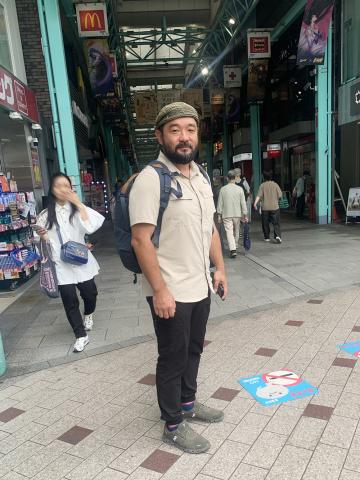
Photo: David McNeill
Sukagawa is one of a small number of Japanese television reporters active in the Middle East. He was with TBS for 19 years, becoming its Middle East bureau chief in 2019 before leaving to go freelance in 2023. He turned down a desk job and an offer to anchor his own news channel in Tokyo because of his zeal for reporting.
“I’ve always wanted to be on the field. That was my main passion. When I came back from my first trip to Gaza, I told my wife I’d found my lifework,” he said. Apart from TBS, he also produces reports for ReHacQ, a web media outlet founded in 2023.
Japanese television networks are reluctant to send journalists into war zones. One of the problems is that many correspondents are monolingual, he said. Sukagawa was born in Tokyo but raised in Australia and graduated from Keio Academy of New York. The result is that the Japanese networks lean heavily on local fixers and reports from foreign networks.
Sukagawa won attention in Japan in 2021 with vivid reports of clashes between Israel and Palestine. Then came Oct. 7, 2023.
“The night that Hamas breached the wall, it knew this was going to be hell,” he recalls (he had been in Gaza three months previously). “We knew Israel would retaliate. I was shaking watching it on TV.”
Israel has banned independent foreign journalists from Gaza. One of the few exceptions, apart from a small number of highly controlled reporting trips under IDF military escort, was CNN’s Clarissa Ward, who entered in late 2023 with an aid agency affiliated with the UAE, which has close security ties to Israel.
The country could easily dispel accusations of war crimes and genocide in Gaza by opening it up to reporters, said Sukagawa.
“The excuse they always give is, ‘It’s for your protection.’ But we’re well-experienced war journalists and we can take care of ourselves. If something happens to us, we take responsibility. So why don’t they open up? In their deep conscience they know what they’re doing.”
Sukagawa says he no longer disputes the term “genocide” in Gaza.
“I was really careful about using that word for the first couple of years. But we can only refer to numbers: 80% of buildings completely demolished; 95% of people displaced. Deliberately targeting human-aid workers.”
He cites a Lancet report from 2024, arguing that the Hamas authorities in Gaza had likely underestimated the death toll and that “186,000 or more” was a plausible figure.
David McNeill is co-chair of the FCCJ’s Freedom of the Press Committee. He was previously a correspondent for the Independent, the Economist and the Chronicle of Higher Education.
