


Issue:
October 2026 | Cover Story
Max D. Lederer Jr., former publisher of the Stars & Stripes U.S. military newspaper, says the Trump administration is trying to silence the free press.
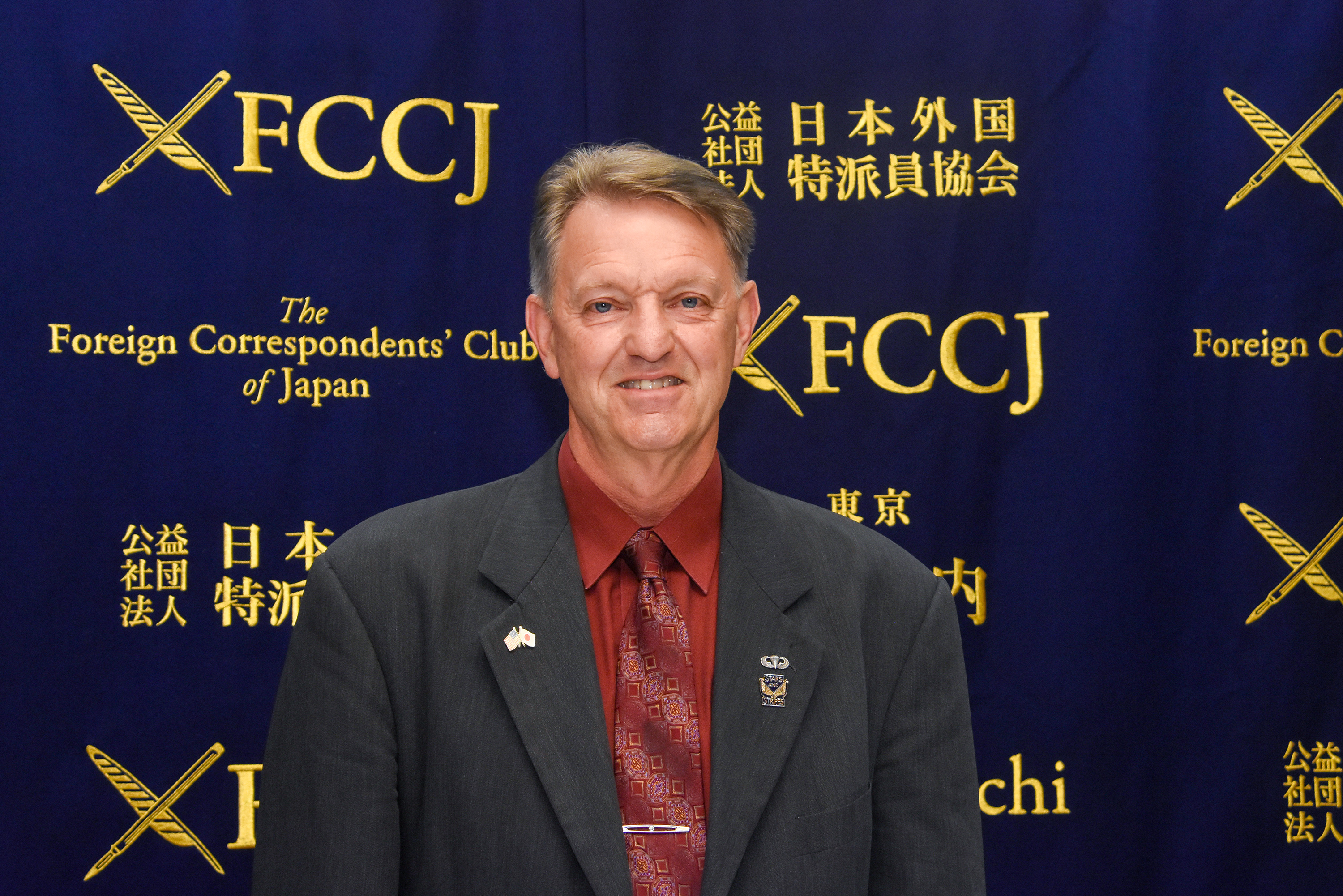
In August, the Pentagon fired the publisher of Stars & Stripes, Max D. Lederer Jr., along with two senior journalists. Lederer told the FCCJ that the dismissals were retaliation for the newspaper’s critical coverage of the ongoing war against Iran.
Lederer filed a lawsuit against the Pentagon on August 27 along with the paper’s editor-in-chief Erik Slavin and Middle East reporter Lara Korte. The suit claims Defense Secretary Pete Hegseth and other members of the administration have violated the three journalists’ First Amendment free speech rights.
The three were terminated on grounds of “insubordination,” according to the Pentagon. In early September, a federal judge denied their request for a temporary restraining order against the firings.
The catalyst for the firings, Lederer told the FCCJ, was the newspaper’s reporting of deteriorating conditions aboard the USS Abraham Lincoln. The aircraft carrier was deployed to enforce a Navy blockade of Iran and spent a record 286-day deployment at sea before docking in Thailand in early September.
The Trump administration was also upset, he said, by the newspaper’s reporting on the panicked evacuation of U.S. military personnel from Naval Support Activity Bahrain, a U.S. base in the kingdom, after Iranian missile and drone strikes in February.
“I believe the coverage was the real reason, the underlying cause of what happened,” Lederer said.
“This is not a personal dispute,” he continued. “It’s a dispute about the independence and the importance of what we serve to our military community… Will they continue to receive independent journalism or will they receive public relations dressed up as news?”
Political decisions to censor bad news had real consequences, Lederer said. The result was that the public was being misled about the extent of the damage to U.S. military bases in the Middle East, and about the overall purpose of the war.
“I believe the morale among service members and their families is poor,” Lederer said, adding that many are asking how long the conflict will continue. “We just finished two forever wars in Afghanistan and Iraq. People are not ready for another forever war.”
The Pentagon has denied claims of censorship, arguing that as government employees providing public commentary, any speech by employees of Stars & Stripes “is government speech, and the First Amendment does not apply.” The Pentagon pays roughly half of the newspaper’s budget, according to CBS.
In a post on X in January, Hegseth’s spokesman Sean Parnell said the newly renamed “Department of War” was returning Stars & Stripes to what he called its original mission. He described it as “reporting for our warfighters,” and aimed to refocus its content away from “woke distractions that syphon morale, and adapt it to serve a new generation of service members.”
Lederer said he had “no idea” what woke distractions meant.
“My best guess is that it is referring to diversity, equity and inclusion (DEI) – but I don’t see that in Stars & Stripes.”
He called the U.S. military a “microcosm of U.S. citizenship” – with minorities, men, women, and left and right. “We owe it to the service members to give them an honest, credible report.”
Court documents filed in the August lawsuit call Stars & Stripes “the U.S. military’s independent news source since the Civil War with a long history of editorial independence, free from news management or censorship by military command.”
The firing of Lara Korte showed that the Pentagon now wants journalists not to report news but to bend to its will, he suggested, explaining that a Navy captain had urged Korte to return to work under “disturbing conditions.”
“She had to apologize, she had to be contrite; she had to profess she would be loyal to the administrative positions. He wanted to tell the rest of the staff, ‘You do what you’re told or you get fired.’ That’s as chilling as it can get.”
The problems at the military newspaper are part of a broader attack on press freedom in the U.S. Reporters covering the Pentagon were issued new restrictions in 2025. News organizations rejected the strictures and challenged them in court.
Lederer called this and moves by the Trump White House including the dismantling of the Voice of America and cuts to federal funding for PBS part of an “accelerated process” to control the message and not give the audience a “transparent view of what’s going on.”
“It’s about press freedom as a whole in the United States,” he said. “The independence (of the Stars & Stripes) wasn’t invented by the three of us. It was built, defended and paid for across 150 years.”
Lederer said that 25 senior military officers had been “eliminated” by the Trump administration for not toeing the line, so speaking out could be costly. “We have been through bad times before,” he said. “We can come out of it. But it is only going to happen if people stand…if the media continues to be the voice of citizens, I’m confident that we will right our ship.”
David McNeill is professor of communications and English at University of the Sacred Heart in Tokyo, and co-chair of the FCCJ’s Freedom of the Press Committee. He was previously a correspondent for the Independent, the Economist and the Chronicle of Higher Education.
