


Issue:
August 2026
The dean of Columbia Journalism School says American news media should worry less about technology and more about the powerful political forces that threaten journalism.
In a world overflowing with information and disinformation - much of it machine-generated - the business of news and journalism finds itself in an existential quandary. Adding to the industry’s woes is artificial intelligence. The technology is slated to replace a host of tasks, and journalists are beginning to feel the pinch from AI-driven job cuts in newsrooms.
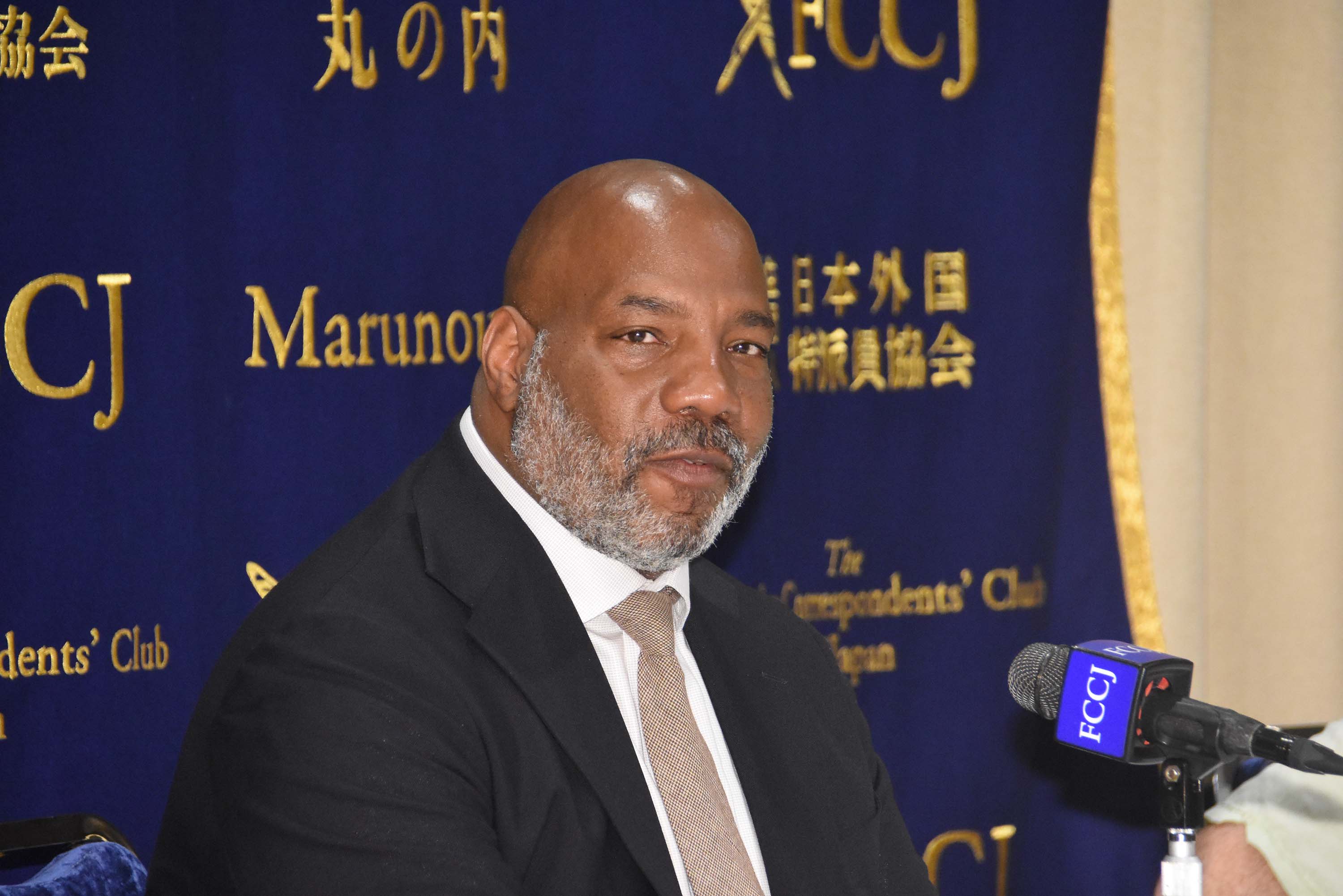
Yet, said Jelani Cobb, Dean of Columbia Journalism School in New York City, AI cannot replace the fundamental role of a reporter. “AI can only produce what's already known and we are literally in the business of finding out new things that people don't know,” he told reporters at the Foreign Correspondents’ Club of Japan on July 10.
Link to press conference: https://www.youtube.com/watch?v=ed70_C2CP-M
Cobb said Columbia’s approach to AI has evolved since Chat GPT debuted in 2022, though it teaches journalism students that “AI should be treated as an unvetted source”.
“We don’t know how this will shake out but we are in the business of creating options,” he said. “We’re trying to engage with these technologies in the most responsible ways, being mindful of the ways in which they can still have a deleterious impact.”
Cobb recalled a recent lunch date with A.G. Sulzberger, publisher of the New York Times, in which they discussed the “existential threat of AI”: wholesale violations of copyright law; the ability to create misinformation and disinformation; the way that time-consuming and expensive work can be replicated in “less than a second”.
“When you add that up, it looks like a pretty damning technological disruption of what is the most successful news organization in the United States right now,” said Cobb.
News under attack
But Cobb argued that there are even more insidious forces threatening the profession than AI.
“I think that it’s not controversial to say that the American news media is under siege from very powerful political and social forces,” he said.
He noted, for example, how the university had to defend its monument to journalists killed in Israel and Gaza since October 7, 2023, which generated criticism and accusations of political bias. “People thought we were making a statement because there were so many more journalists who died in Gaza than Israel but we were simply pointing out that journalists should not be dying in the way they are in conflicts around the world.”
Cobb’s tenure as dean of arguably the world’s most famous journalism school since 2022 has coincided with a tumultuous political climate.
The Trump administration has intensified its confrontations with the news media. In 2025, it restricted access by the Associated Press to White House events after it declined to refer to the Gulf of Mexico as the ‘Gulf of America'.
Last year, President Trump announced a $400 million cut in federal funding to Columbia University, accusing it of failing to protect Jewish students during on-campus pro-Palestine demonstrations.
Cobb said his position as dean feels more like that of an elected official than an educator.
“I came into office with a whole list of ideas I wanted to do, but those ideas collided with the reality of what I would have to do in order to address the changing and evolving climate.”
Dearth of mentorship
Cobb lamented that the number of applications for journalism schools has dropped significantly across the United States. While he declined to specify how badly Columbia Journalism School had been hit by this slump, he stressed that graduate education has become even more crucial.
“The person who can show you the ropes and tell you everything about why an organization operates the way it does, and the person who has worked their way up from delivering the paper to now being the managing editor, are becoming few and far between,” he said. “We are increasingly filling in the gap.”
Opportunities for unpaid news internships have always been fiercely competitive. But in the current climate of layoffs and buyouts of senior staff members, newsrooms have fewer resources to train incoming reporters.
So, what about the rise of news influencers? Cobb acknowledges the “consternation” caused by this new and growing branch of the media. But he adds that Columbia will host a ‘News Creator Summit’ in January 2027, which plans to bring members of legacy news media alongside practitioners and policy makers.
“I think a good number of people in this space constitute another part of the news ecosystem, " said Cobb.
He said the school believes there’s an urgent need to hold conversations around ethical and legal questions as well as the opportunities and pitfalls in this emerging arena of journalism.
“Many people who are operating in this space are people who came from legacy media, organizations that shut down, or people who left because of political decisions made by news organizations.”
Some experts argue that AI won’t steal jobs, saying it’s more likely that the nature of people’s work will change and will require higher AI literacy and retraining across all industries and sectors.
That’s why journalism schools also need to keep abreast of news innovation, Cobb said, to prepare students for continuous technological disruption, evolving business models and political interference.
Journalism is undergoing profound technological, political and economic disruption, but AI doesn’t threaten its core mission, and the skills required to practice it ethically.“The ground has not given way entirely beneath our feet,” Cobb said, adding that many of the skills journalists are learning from their mentors today will still be done 100 years from now.
Thisanka Siripala is an Australian-Sri Lankan journalist living in Tokyo.
