


Issue:
May 2026
From the Edo to Showa eras, Japanese society has been rocked by infamous serial killers
The term "serial murder" is credited to American FBI agent Robert Ressler (1937-2013), author of Whoever Fights Monsters (1992) and related works. Ressler coined the term in the 1970s while teaching the science of criminal profiling, a program that evolved into the FBI's famous Behavioral Science Unit.
"Serial murderers" had previously been referred to in law enforcement circles as "stranger murderers". Ressler thought that between their crimes, serial killers considered the means of "improving" the drama of their crimes, in a manner somewhat analogous to the old motion picture serials, in which cliffhanger endings lured viewers to return for the next episode.
The Japanese term renzoku satsujin (literally, continuous homicides) is a close approximation of the English. In recent years, shiriaru kiraa has also become popularized.
In the 17th century, a man known as Hirai (or Shirai) Gompachi became legendary for his crimes.
The member of low-ranked samurai family in Inshu (Tottori Prefecture), he trained in sword fighting and other martial arts as a youth. He was muscular and handsome, but had a hair-trigger temper and often became involved in brawls.
In autumn of 1673, while still in his teens, Gompachi killed a man and was forced to flee to Edo, where he found employment with several wealthy families. He soon discovered the carnal delights of the Yoshiwara brothel quarter, and began spending far beyond his means. His favorite courtesan, who went by the professional name Komurasaki (Little Purple) charged upwards of 10 ryo (silver coins) for overnight company. To fund his indulgences, Gompachi turned to armed robbery. He was said to have robbed and killed up to 130 men over a period of three years. He avoided arrest by claiming these deaths were the outcome of duels of honor, another practice that Edo authorities were determined stamp out.
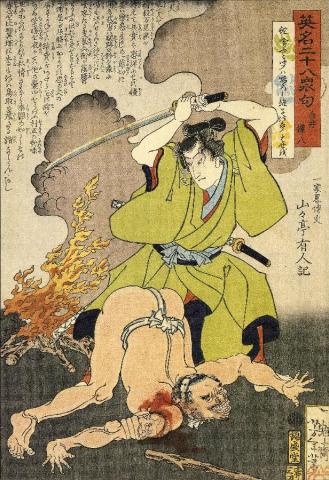
When things got too hot in Edo, Gompachi fled to Kumagaya, where he tied up with a local gang and resumed his career. There, he murdered a wealthy silk merchant and fled with 300 ryo.
Eyewitnesses gave a description of him to the authorities, and fliers were posted around northern Kanto, requesting the public to "be on the lookout for Hirai Gompachi, age 24-25, white complexion, about 5 shaku, 5 mon (about 165 cm) in height".
The desperado traveled to his home town, where he learned that both his parents had died. He then returned to Edo and, after a final emotional encounter with his favorite courtesan, turned himself in to authorities.
The magistrate found no grounds for mercy, and sentenced Gompachi to death by haritsuke (impalement with spears while tied to a crucifix). Taken from the jail to the Suzugamori execution grounds near Shinagawa, Gompachi was bound to crossed beams and hoisted upright. Before the sentence was carried out, he sang a romantic ballad supposedly composed by his beloved. He was then put to death and his remains buried in an unmarked grave at the Meguro Fudo temple, where, legend has it his distraught lover committed suicide. At the time of his death he was 25.
A serial murderer who made his mark in Taisho times was a 34-year-old laborer named Sataro Fukiage. In April 1922, Fukiage assaulted and attempted to rape a 10-year-old Tokyo girl, but was not formally charged. As was often the case, the police came to regret their lenience. Over a period of one month during 1922, Fukiage committed 13 rape-murders of young women in Tokyo and neighboring prefectures.
Fukiage's photo was circulated and a man closely matching his description was detained for questioning. The man insisted his name was Kimura; but when he started to sign his name at the bottom of the interrogation transcript, he inadvertently began to write "Fukiage" before halting in mid-stroke. A sharp-eyed cop named Arai spotted the blunder and kept "Kimura" in custody until his identity was confirmed.
While in prison awaiting execution, Fukiage read works on Western philosophy and literature and produced an autobiography, a 3,000-page manuscript titled Shaba (This Corrupt World) that was published in 1926 by Ganshodo. He was hanged in September of the same year.
In the annals of crime, a serial killer named Seisaku Nakamura stands out as unique, in that he had been severely deaf from birth and unable to speak coherently. He was found to be exceptionally bright.
Young Nakamura was especially enraptured by a series of samurai films starring Denjiro Okochi, who portrayed a one-eyed, one-armed ronin masterless samurai named Tange Sazen. In Sazen, Nakamura found a figure he could relate to.
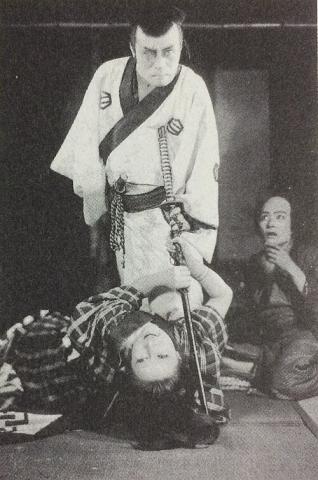
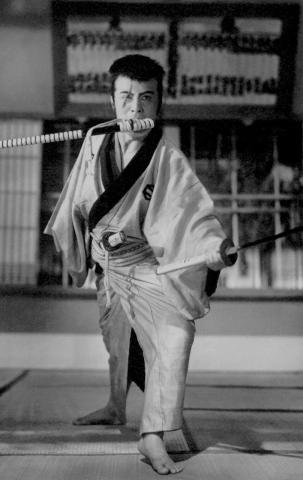
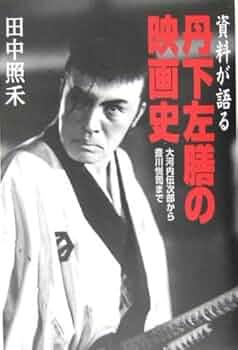
At age 16, Nakamura was arrested on charges of armed robbery, and the attempted rape and attempted murder of a geisha in his hometown of Nishigasaki, western Shizuoka Prefecture. His father had prevailed on the mercy of the court and arranged for his son to enter Hamamatsu's municipal school for the deaf, and his criminal record was covered up.
In July 1941, Nakamura purchased a fish knife and modified it to resemble a tanto, the short sword carried by samurai. On the morning of August 18, he crept into the window of an okiya (geisha dormitory) and used the knife to murder two 20-year old geisha with single thrusts to their hearts. He fled when a third woman heard noises and shouted for help.
Two days later, Nakamura broke into the sleeping quarters of employees of the Kikusui restaurant, killing a 60-year old male employee, a 16-year old maid and the 44-year old female proprietor.
Nakamura's next target, incredibly, was his own home. Short of funds for his tuition, Nakamura had been pressured by his father into withdrawing from school. On September 27, 1941, he assumed a disguise and killed his elder brother and sister-in-law, and assaulted other family members, after which he slipped back into his room and feigned to have slept through the ruckus.
On the night of August 31, 1942, Nakamura broke into a house in a rural village and killed a couple and injured their 15-year old son, but fled before he could grab any money or rape the 19-year old daughter, whom he had spotted on the street and followed home.
In November 1942, police, having learned of Nakamura's prior arrest from 1938, detained him, and under questioning, he confessed to nine murders and six cases of serious injury. During the interrogation, instructors from Nakamura's own school were used as sign language interpreters.
Learning of Nakamura's fascination with Tange Sazen, a policeman asked, via the interpreter: "What is more satisfying for you, to rob, or to kill?" Nakamura signed: "If I kill and get some money as well, then nothing makes me happier."
Before his trial, Nakamura was subjected to a battery of evaluations by two well-known psychiatrists. They noted that while did not appear to regret his crimes, such extenuating factors as lack of parental love as a child and his severe disability should be taken into account. His physical issues, the doctors concurred, had led to his suffering discrimination and therefore he did not bear full responsibility for his crimes.
After a trial of only four court sessions, Nakamura was sentenced to death. On June 19, 1944, his appeal was rejected. He was hanged on July 24, at age 20. His final words, reportedly, were "When people are oppressed, they inevitably turn to evil."
From February 23 to April 5, 1968, popular author Seicho Matsumoto serialized a novel based on the "Hamamatsu Incident" in the Weekly Yomiuri magazine.
Because serial killings tend to involve a killer not close to the victims, investigators must assemble a variety of unrelated clues. Ex-convict Kiyoshi Okubo, however, made little effort to conceal his criminal activities. Any number of witnesses were able to offer a similar description: a nattily attired middle-aged man, somewhat heavy set, who drove a new, cream-colored Mazda Rotary Coupe.
Born in January 1935 in Takasaki, Gunma Prefecture, Okubo was the third and youngest son in a family of eight children.
Okubo had pronounced features that made him stand out from his fellow Japanese: white skin, a prominent nose and large round eyes, attributed to his maternal grandmother, who was Russian.
While still in primary school, Okubo was caught while attempting to molest a neighbour’s four-year old daughter. In July 1955, at age 20, Okubo was charged with raping a 17-year-old high school student in Maebashi city. He was sentenced to 18 months, deferred for three years. Because it was his first offense, he did not spend any time in jail. In December of the same year however, Okubo was charged once again with rape and assault. Found guilty, his previous sentence was tacked onto the second one, with the result that he spent the next three-and-a-half years in Matsumoto prison. He was granted provisional parole in December 1959.
In May 1962, when he was 27, Okubo married Setsuko Sato, a 20-year old graduate of a dressmaking school. During their courtship he had used the name Watanabe, but just before their wedding, he explained to her: "My situation has changed. I will be adopted into my uncle's family and take the name Okubo." After Setsuko went to live with Okubo's parents, it soon became evident that he had fabricated virtually every aspect of his background.
Okubo would father two children during the brief time the two were together.
In December 1966, Okubo was in trouble once again, this time on two counts of forcible rape and one on intimidation, resulting in a sentence to four-and-a-half years. He was given a provisional release on March 2, 1971, after which he made a down payment on a sporty new Mazda Rotary Coupe.

Crime writer Akira Tsukuba's 1982 book, and later TV drama, about Okubo, Showa Yonjuichi-nen Gunma no Haru, quoted him as as having stood before his ancestors' grave and blurting out:
It would have been better if I had not come back to Gunma. I'm an ex-con, I’ve been completely forsaken by my older brother and my wife, and have no hope and no future. I’ve lost everything. I don't care what becomes of me. I'd like to kill my brother. I'm just some sort of cold-blooded animal with no human blood left in me. But if I'm going to be executed, I'd like to kill 20 people first. Then I'll be ready to die. Until I meet my target, I'll take pains not to let the police catch me.
After a heated argument with his elder brother, he stormed out of the house. Later that night, a motel in neighboring Nagano prefecture noted that a middle-aged man wearing a beret had checked in, accompanied by a girl appearing in her late teens and wearing a school uniform. The license number on the driver's Mazda Rotary Coupe was entered in the register: Gunma 55-NA-295.
Several days later, in Annaka city, Okubo accosted a 16-year-old high school girl who was waiting for a bus, offering to give her a lift home. She accepted.
After buying her dinner he drove her to a nearby love hotel, where he raped her. The girl wept afterwards, but Okubo returned to his gentle demeanor, first apologizing for his act, and then assuring her that she would not become pregnant. He then drove her home, and made a date to meet her again in Annaka several days later. (She kept the date.)
On May 9 in Fujioka city, the brother of Okubo's seventh victim, Reiko Takemura, had heard his sister leave the house, telling him she had "met a teacher who asked be to model for him". When she had not returned home by midnight, a worried Takemura called the police. The next day he spotted Reiko's bicycle parked in front of a local bank, where a middle-aged man wearing cotton gloves was wiping it clean of fingerprints. Takemura shouted at the man, who fled in a cream-colored Mazda Rotary Coupe with the license number 55-NA-285.
Takemura traced the number to Kiyoshi Okubo, a resident of Takasaki. He then went to Takasaki and began questioning Okubo's neighbors, and was told of Okubo's record as a recently released sex offender.
Takemura promptly organized a "citizens posse" in Fujioka city with the approval of the police. Initially, 36 men in 18 cars began prefecture-wide patrols. Meanwhile Takemura staked out the Okubo residence.
After several missed opportunities, two members of the patrol cornered Okubo following a nine-kilometer chase. Okubo halted his car and the man demanded he hand over his car keys.
Finally on May 15, Okubo was formally arrested on the charge of abduction with the intent to perform an immoral act. Under intensive questioning, he admitted to eight killings, provoking and taunting the police during a period of over two months. The bodies of the last two victims were not found until July 30. Okubo also implied that there were others, but the police concluded that he was probably teasing them.
Data compiled from testimonies by 58 women who encountered Okubo gave a picture of the manic energy behind his 73-day spree. Nattily attired in a Cossack-style blouse and beret, and posing as an English teacher or artist, he would accost young women with such pick-up lines as "Excuse me, miss. Would you be willing to pose as my model?" or "Why don't we have a chat over a cup of tea?" Okubo's forays ranged over nearly a dozen cities and towns throughout Gunma. The women he accosted ranged in age from a junior high school girl of 13 to a housewife of 27. He is estimated to have solicited the company of approximately 150 girls and women, of whom more than one third accepted his offer. By his own admission he had raped "17 or 18". The eight victims he murdered ranged from 17 to 21 years of age. He buried four of the women in a lot adjacent to an industrial park near Takasaki city, with the other four dispersed in various rural areas.
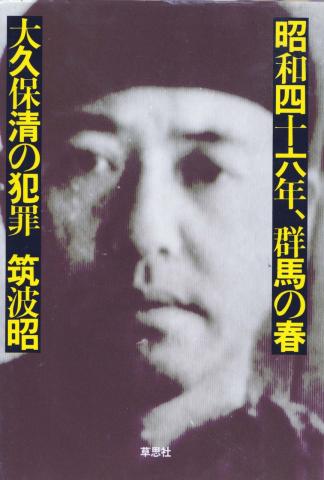
A psychological evaluation ahead of the trial found Okubo fully accountable for his actions. While in the course of his trial at the Maebashi District Court, he told a Yomiuri Shimbun interviewer: "I became the brute that I am because of the police. who treated me badly during their investigation of the previous two cases in which I was involved. Their punishment completely destroyed my humanity … and made me rebel against authority."
The court handed down the death sentence on February 22, 1973. On January 22, 1976, six days after his 41st birthday, Okubo was executed at Kosuge prison in Tokyo.
As is the case in other violent crimes, serial killings in Japan have been on a long-term downward trend. Among the main reasons for their decline can be attributed to dramatic improvements in investigative techniques – specifically, DNA testing, widespread adoption of security cameras and digital forensics (analysis of mobile phone and internet history) – which have aided police in identifying suspects and apprehending perpetrators before they can kill again.
And in the very near future, it's a virtual certainty that AI tools every bit as astute as master detective Sherlock Holmes will be harnessed to aid investigators in probing the darkest recesses of the criminal mind.
A resident of Tokyo since 1966, Mark Schreiber has authored two works of nonfiction on historical crimes in Japan.
