


Issue:
May 2026
The history of the Japanese garden is steeped in status, and a touch of egalitarianism
I recently received a startling email from a well-known German photographer who has lived in Japan for over 40 years. In the note, he professed to “detest Japanese gardens”, even going so far as to suggest misogynistic impulses in their creation, citing images of bondage in bonsai cultivation and the manipulation of nature in Japanese landscape design.
It all seemed rather far-fetched at first, but it got me thinking along more critical lines concerning ideas related to privilege, servitude, the suppression and manipulation of nature in the cause of art, a negative legacy that embodies a counter emotion to the conventional adoration of the Japanese garden.
Similar ideas and reservations are explored in Olivia Laing’s recent book, The Garden Against Time. During Britain’s severe Covid-19 lockdown, the author ponders the uneven access to gardens among a populous still bedeviled by social class, but also massive differentials in economic strata. “There was a grim disparity,” she wrote, “between the people pottering with trowels or typing from their deckchairs, and those trapped in tower blocks or mildewed bedsits.” Compounding the inequality in Britain is the fact that statistics show black people are four times as unlikely to have access to gardens as their white counterparts. In the U.S. the situation is far from ideal, but the figures are an improvement on the U.K., with white people having double the access to gardens as black and Asian people.
Many of the great gardens in Britain, particularly those attached to stately homes, were constructed from the profits gained from sugar, cotton, and tobacco plantations in the West Indies, America and other colonies, worked almost exclusively by slaves. Private gardens were also created through a system of parliamentary enclosure, in which common land, open fields established in the medieval period, were handed over to wealthy landowners.
The estate gardens of the upper echelons in Britain, often resembling fastidiously manicured Arcadian parks, were in many instances the result of reshaping existing landscapes. The influential English garden designer, Capability Brown (1716-1783), for example, had few scruples in draining wet lands to make lawns, damming rivers to create ornamental lakes, sculpturing the earth into new forms, removing ancient pathways and farmhouses, even relocating entire villages to improve a view for a client. The exclusion of common people from these gardens, even those whose labor created them, was a given. The author, Toni Morrison, noted this phenomenon, writing, “All paradises, all utopias are designed by who is not there, by the people who are not allowed in.”
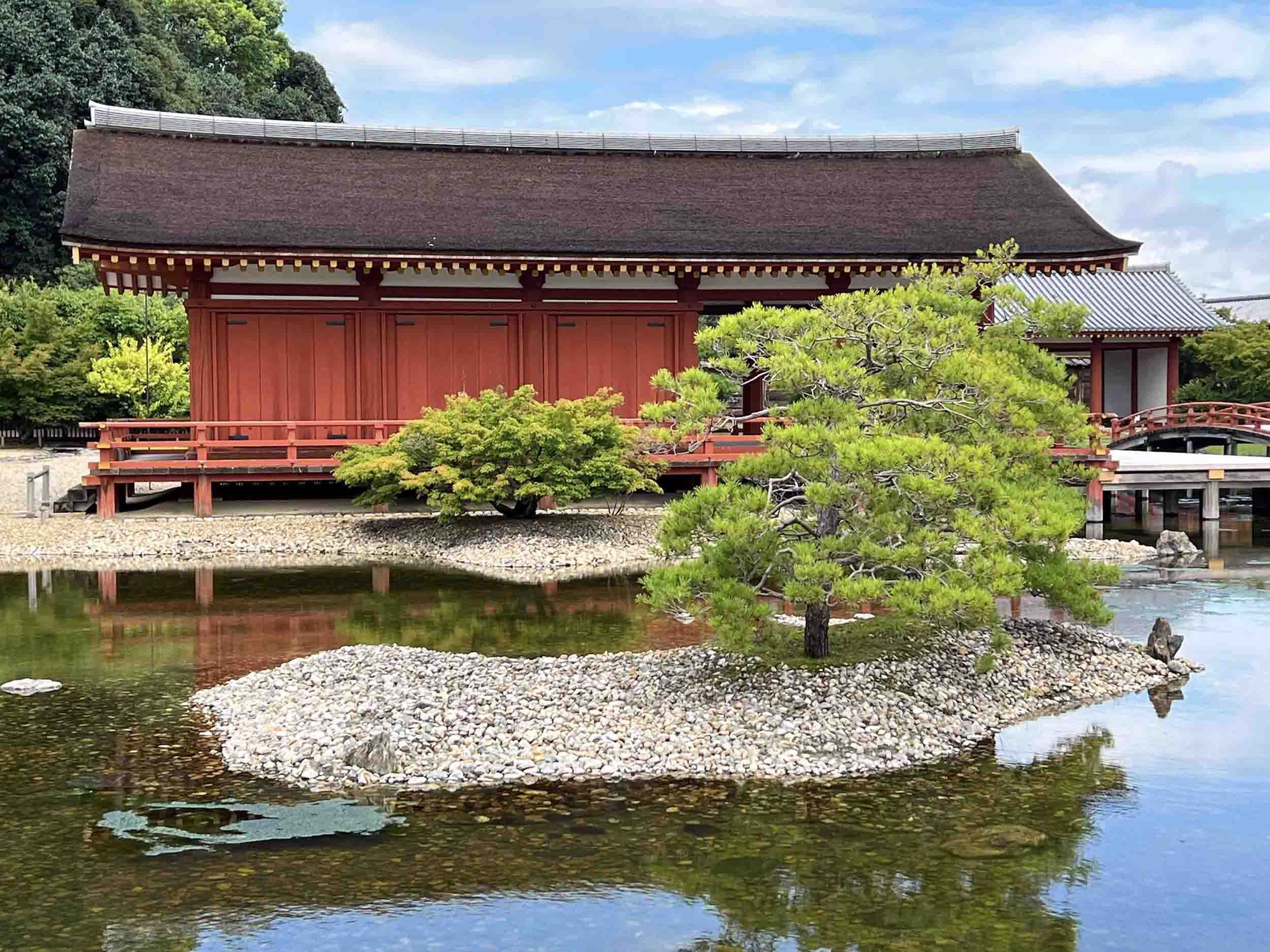
Should such scrutiny be applied to Japanese gardens? Early landscapes created in the Nara (552-794) and Heian (794-1185) eras were exclusively for the pleasure of a privileged class of court nobles. The poetry, diaries and fiction of the period, notably Murakami Shikibu’s The Tale of Genji and Sei Shonagon’s The Pillow Book, are full of lyrical descriptions of gardens, plantings and flowers enjoyed by a sheltered and entitled elite.
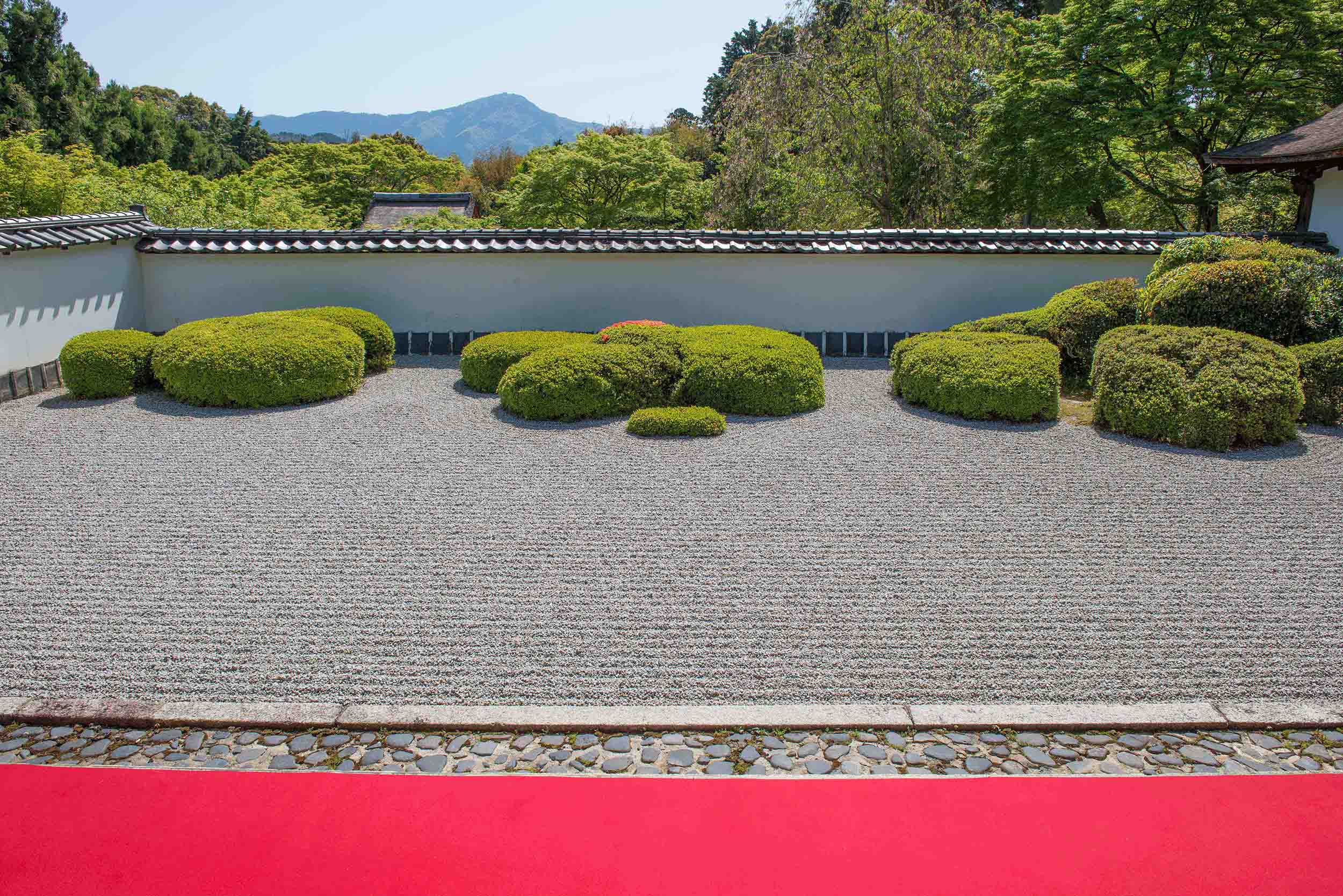
The dry landscape gardens attached to temples in the medieval era, reaching minimalist perfection during the Muromachi period (1333-1568), were more egalitarian in terms of access to worshippers from every social strata. Such landscapes, spiritually nourishing, but flat and inorganic, consisted solely of stones and gravel, creating a garden form that was symbolic rather than representative of nature. Author, Ian Buruma, writing on the planned landscape in Japan, noted that, “some of the most prized gardens are made entirely of stones. Japanese love of nature does not extend to nature in the raw, for which they seem to feel an abhorrence”. Another writer, Nicholas Bornoff, contended that “With its rocks carefully placed like islands in a sea of gravel, the Zen garden is less a garden than the emblem of a garden.” In this way, the putative, much celebrated love of nature in Japan is tempered by a fear of an authentic landscape, one which may be beyond control. In order to co-exist with it, nature is, thereby, tamed, reduced to human symmetries of thinking.
The appropriation of existing landscapes in the service of an entitled class associated with the aristocracy can be seen in a later garden form: the Japanese stroll, or daimyo garden. Daimyo were lords, whose estates, fashioned into gardens intended to entertain and impress important guests, were vanity projects of unquestionable beauty, but also explicit expressions of wealth and power. In contrasting the generous grounds of daimyo gardens in Japanese cities, especially during the Edo era (1603-1868), with the airless, often insanitary homes of the common people, we see not only divisions in the allocation of space, but the organization of the social order. The Japanese have long excelled at managed miniaturization, though properly speaking, the process in stroll garden design is closer to the representation and scale manipulation of natural vistas, the results often more playful than solemn. The writer Donald Richie went so far as to assert that the Japanese stroll garden was “the avatar of Walt Disney”.
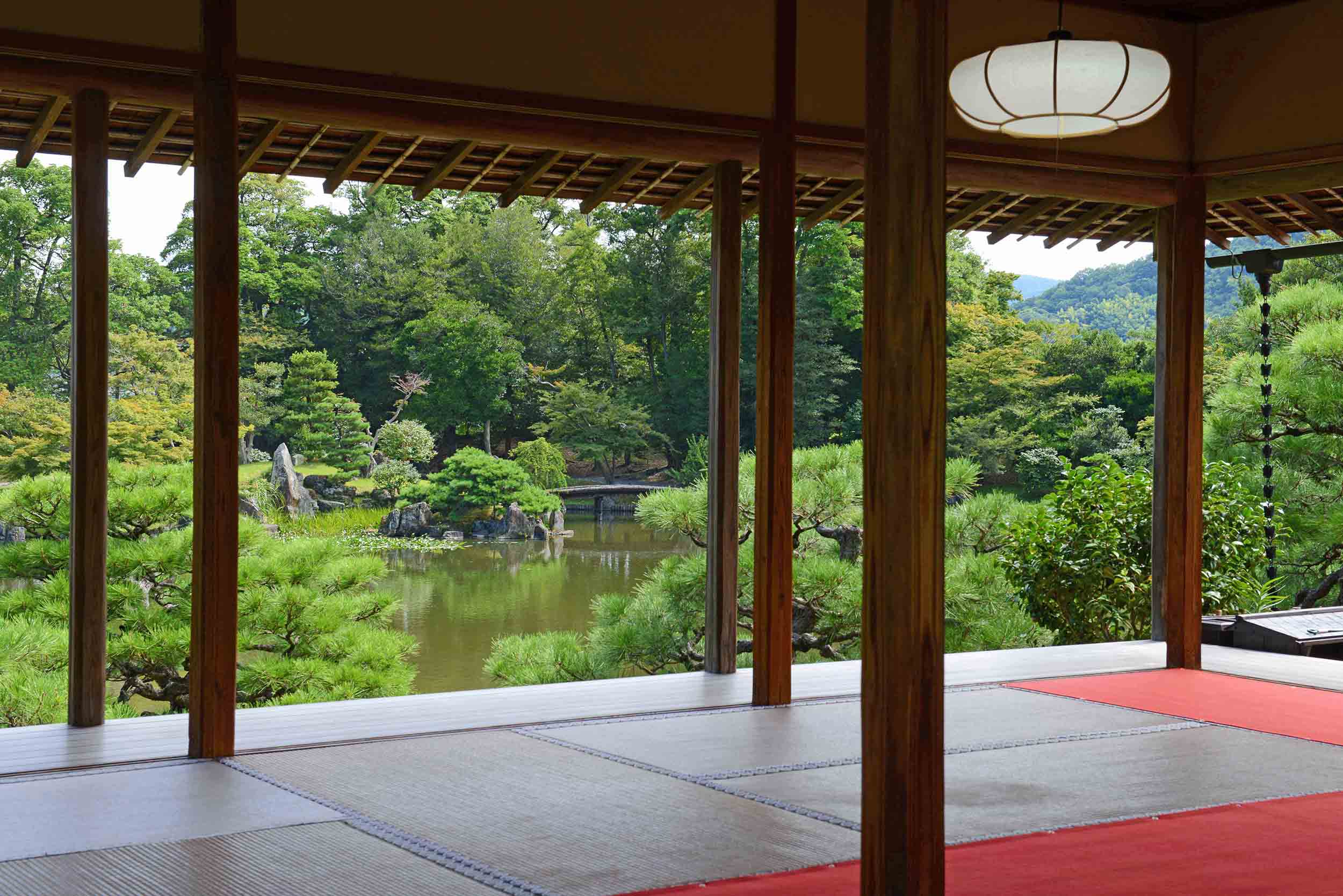
The Meiji (1868-1912) and Taisho eras (1913-26) witnessed the rise of powerful business families, entrepreneurs, industrialists and plutocrats with a different vision of how gardens could best represent their new-found wealth and position. Themes and symbolism, important features of older gardens, were largely absent from the landscape designs of this period onwards, imperatives shifting to the personal tastes of the clients who commissioned them. Following global trends in the arts, gardens were laid out in a more overtly naturalistic style, completing the transition from nature as art to naturalism.
Closer examination reveals some notable differences to earlier concepts. More introspective, they represent private domains of ownership and privilege. With their acknowledgement of English naturalism, lawns with woodland borders were laid, and purling streams dug to promote the feeling of a parkland. The more muscular, assertive ornamentation of the period represented a growing confidence and shrinking of self-restraint. The presence of atypically large stone lanterns, recycled decorative elements such as millstones, stone pillar pedestals, and the placement of oversized kutsu-nugi-ishi (shoe-removing stones), suggest hubris, the acquisition of objects as status symbols. Large tachi-chozubachi (standing water basins), for example, introduced into gardens in the 16th century, became popular revival objects. Scale and height accorded with the social status of the people using them. Members of the aristocracy tended to stand up straight when washing their hands, commoners to stoop. Members of the lower ranks, therefore, used basins suitable to their reduced status. Despite the beauty of many of these gardens, they continued to function as indicators of conspicuous wealth and consumption, a measure of financial standing and influence.
Less subservient to the demands of landscape contouring, the work of contemporary designers represents a desire to be independent of nature. No longer working exclusively in the service of gardens, designers seek to craft personal visions free of the site-specific or geomantic imperatives of traditional gardens. Rather than being mere facilitators for the transition of ideas from natural settings into gardens, designers aspire to be masters of their own schemes and conceptions. The modern age has, accordingly, witnessed a shift from the spiritual to the cerebral, with designers projecting their own intellects, aesthetic preferences and layouts onto natural land forms and stone arrangements.
In this new vision of the Japanese garden, rocks are cut, and on occasion hollowed out to reduce their weight, and artificial materials, ranging from concrete, carbon fiber, silicon, fiberglass, and polycarbonate, introduced into designs. Advocates of the new materialism in gardens maintain that radical innovations are a collaboration with nature rather than a rejection of it.
In The Garden Against Time, Laing contends that such manmade creations do not exist in isolation from their surroundings, that outside forces play an equal part in their shaping. They exist, she writes, “on the threshold between artifice and nature, conscious decision and wild happenstance”. The same, manifestly, applies to the Japanese garden. Even a landscape that appears to be highly formal in its conception, to be devised rather than organic, is, inevitably, a collaboration with nature.
Stephen Mansfield will present his latest book, The Modern Japanese Garden, at an FCCJ Book Break on May 26.
