


Issue:
May 2026
Do campaigns for jailed journalists help or hinder their prospects for release?
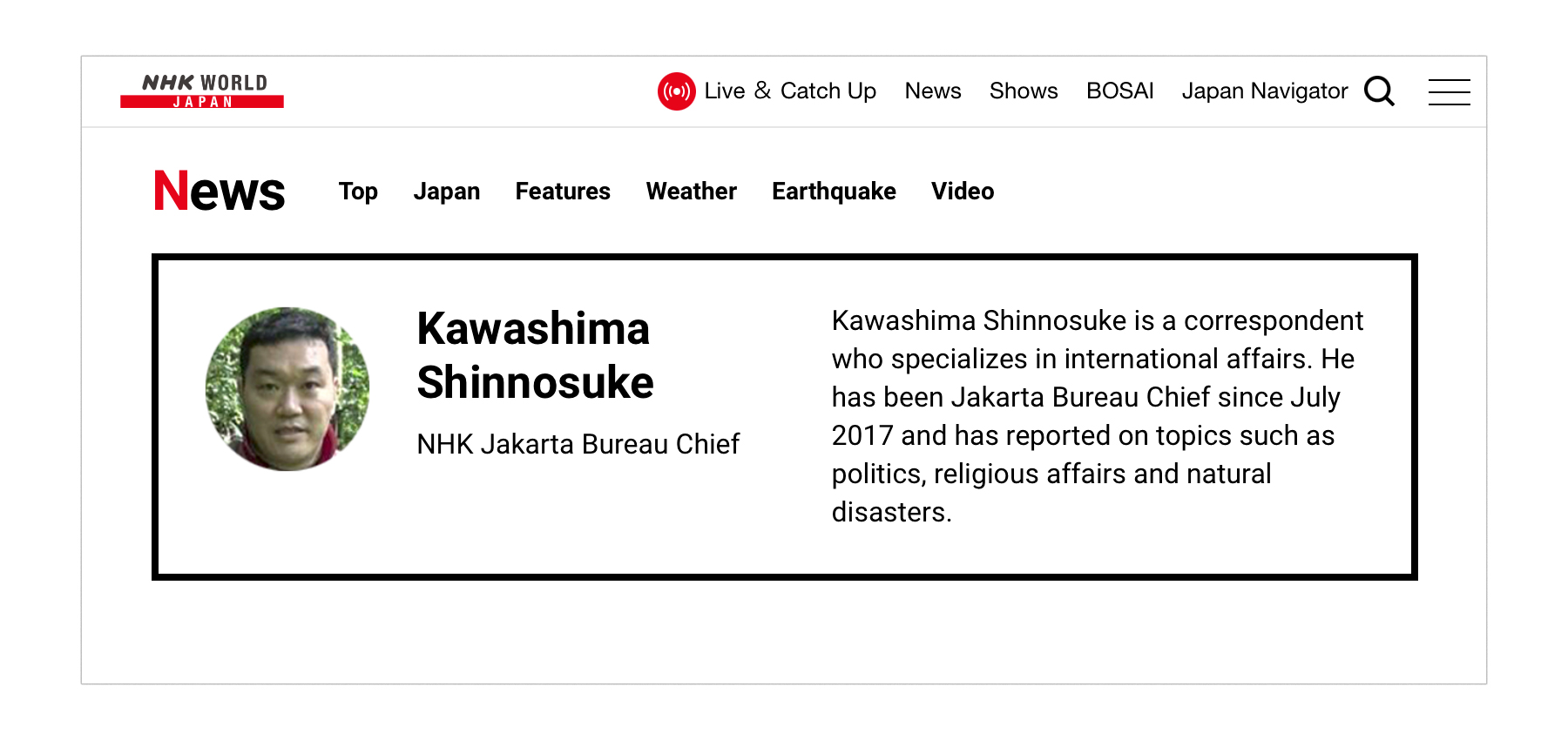
It has been five months since Shinnosuke Kawashima, the Tehran bureau chief of Japan's public broadcaster NHK, was detained and subsequently arrested by the Islamic Revolutionary Guard Corps (IRGC) in Iran. He is reportedly being held at the notorious Evin Prison in Tehran.
Press freedom organizations around the world have demanded his immediate release, while it is still not clear what, if anything, Kawashima has been charged with.
“The arrest of Shinnosuke Kawashima and the intimidation of his colleagues reflects a deliberate effort by Iranian authorities to silence independent reporting,” said Sarah Qudah, regional director of the Committee to Protect Journalists (CPJ).
The Japanese government and NHK have declined to discuss his case in public to the extent that his name has been omitted from official statements and NHK reports.
Responding to questions on February 25, a day after a report by Radio Free Europe/Radio Liberty named Kawashima, Deputy Chief Cabinet Secretary Masanao Ozaki told reporters – again without mentioning the journalist’s name – that the government had confirmed that a Japanese national had been detained on January 20. Ozaki declined to comment further, citing privacy concerns.
The Iranian authorities launched a harsh crackdown against protestors and journalists amid huge demonstrations late last year. According to the CPJ, 12 journalists covering the unrest were arrested, seven of whom, including Kawashima, remain in jail.
Reporters Without Borders said that since the start of the U.S.-Israeli war on Iran began on February 28, foreign and local journalists in the country have been braving air strikes as well as repression from the Iranian regime.
Jason Rezaian was the Washington Post’s Tehran bureau chief from 2012 until his arrest on July 22, 2014, by the Iranian authorities. Like Kawashima, Rezaian was held in Evin Prison – in his case for 544 days on false espionage charges, before being released in a prisoner exchange on January 16, 2016.
In an editorial published in July 2023 by the Washington Post to mark the 100th day of the arrest of another Western journalist, Evan Gershkovich of the Wall Street Journal, the newspaper conceded: “Our advocacy for jailed journalists isn’t working. We need a new approach.”
One wonders if there is some merit in Japan’s approach of negotiating behind closed doors, or whether the Western media’s preference for going public is more effective.
As the Post said in its editorial, advocating for a jailed journalist is a complex, high-stakes decision that can either accelerate their release or worsen their situation, depending largely on the political context of the detention.
While campaigns by the likes of CPJ are essential, focusing public attention on individual cases can trigger authoritarian regimes to double down and use imprisoned journalists as leverage.
The FCCJ faced a similar dilemma when Kawashima’s detention was first reported.
The Freedom of the Press Committee regularly issues statements concerning non-Japanese journalists, but this case involved an employee of Japan’s public broadcaster.
To add to the complexity, the situation surrounding Kawashima was, and remains, fluid. The committee felt compelled to prepare a statement as soon as it was aware of his detention, but postponed its release since it could not confirm his identity.
During his February press conference, Ozaki stressed that since learning of this detention, the Japanese government had “strongly demanded” Kawashima’s immediate release. But again, the Freedom of the Press Committee was still unable to confirm his name.
Its members also felt it necessary to obtain permission from NHK and Kawashima’s family before releasing a statement, fearing that to publicly call for his release could upset his loved ones or interfere with any negotiations taking place behind the scenes. That remains the situation today.
Instead, the committee joined press freedom organizations and the Japanese government in demanding Kawashima’s immediate release and an end to the harassment of his Iranian colleagues by the regime in Tehran.
It also urged the Iranian authorities to remember that, however volatile and violent the situation on the ground may be, they must respect the public’s right to access to accurate information.
Ilgin Yorulmaz is a freelance journalist working between Japan and the U.S. She served as the 2nd Vice-President of FCCJ and is the co-chair of its Freedom of Press Committee.
