


Issue:
April 2026
FCCJ panel discusses the dos and don’ts of reviewing films, art, music, books … and sofas
What is the purpose of a review? Why do people write them? And why do people read them?
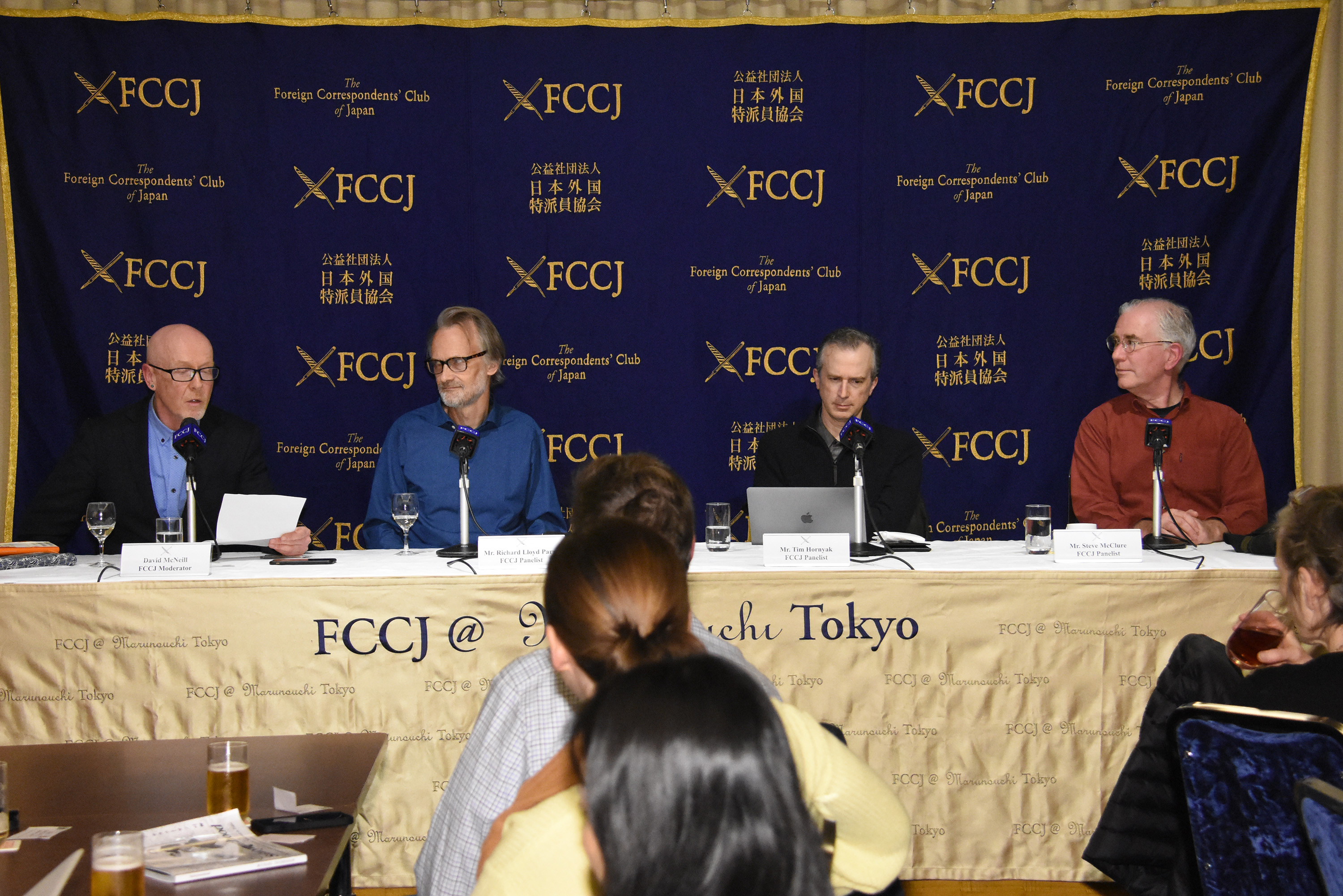
These were just some of the questions posed – and to some extent answered – at the AMLC Crucial Critiques panel discussion at the FCCJ on February 24. The event, emceed by the Club’s Freedom of the Press Committee co-chair David McNeill, featured the following panelists: the Times Asia editor Richard Lloyd Parry, freelance journalist and author Tim Hornyak, and former Billboard Asia bureau chief Steve McClure.
McNeill kicked off the discussion by noting that reviews are steadily becoming shorter. “The Times asked me to write a review of a new book about Fukushima in about 300 words,” he said. “It’s barely worth your while because you have to read the book.”

McClure noted that the record for the shortest review ever is held by Leonard Maltin’s pithy dismissal of the 1948 romcom Isn’t It Romantic? His one-word verdict: “No.”
McClure said his aim when writing a review is both to inform and entertain. “I’ve learned a lot in reading reviews about the subject of the review, but also about writing itself,” he noted. McClure cited Jay Cocks’ 1977 Time magazine article about rock band Television’s seminal album Marquee Moon as an example of how a reviewer can help to expand one’s horizons.

Hornyak described his experience in reviewing travel destinations for the Lonely Planet series of guidebooks. “The key in working for Lonely Planet was to find these special places,” he said. “But you don't want them to become overpriced tourist traps. So you're always debating (whether to) put it in the guide book or not.”
Hornyak, noting that he occasionally writes book reviews, emphasized the importance of drawing the reader in from the word go. “You could use a dramatic scene, or you could use a personal anecdote. But you have to balance the need for describing what the book's about with avoiding spoilers.”

Lloyd Parry said the first reviews he ever wrote were about furniture for a Daily Telegraph lifestyle supplement. “I became a sofa reviewer, and I went into Tottenham Court Road, which then had a lot of furniture shops,” he recalled. “I found five or six sofas and I sat on them and felt the quality of the cushions. I wrote a review of these sofas and it was a catastrophic failure. I swore as of that moment I would never touch furniture reviewing again. And I advise you to avoid it as well – it’s fraught with peril.”
On a more serious note, Lloyd Parry said he now confines his review subjects to books. He noted that there’s much more to reviewing a book than expressing one’s opinion. Key elements of a review include a certain amount of plot summary and quotations that give the reader a sense of how the author writes. Another is context: “You want to be able to put it in its context to compare or contrast it with other similar books so it’s more than just the book you’re writing about,” Lloyd Parry said.
“In some ways it’s a consumer service you’re providing,” he added. “People need to know whether this book is worth buying or not.” The most important thing, Lloyd Parry said, is that the review itself is well-written.
Hornyak advised would-be reviewers to know what the going payment rates are. “They should join organizations like one in Canada: a writers association that used to, and perhaps still does, publish surveys of its members to see what they're getting paid,” he said. “So you have this benchmark.”
During a lively question period that followed the panelists’ remarks, one member of the audience, who said she writes hotel reviews, asked for hints about how to keep her reviews fresh. McClure said the only advice he could offer was to keep in mind rule one of journalism: tell it like it is. “Put yourself in the position of the person you think is going to be your reader,” he said. “And that applies to every form of writing.”
One point that came up during the discussion was that with the rise of social media, everybody is now a reviewer. But Hornyak said many people still appreciate old-style reviews. “There are so many book lovers still out there, and these are people who love complex written accounts of history, biography, etc.,” he said. “That should be a source of encouragement to us even though we may feel bad about the rise of TikTok.”
