


Issue:
July 2026
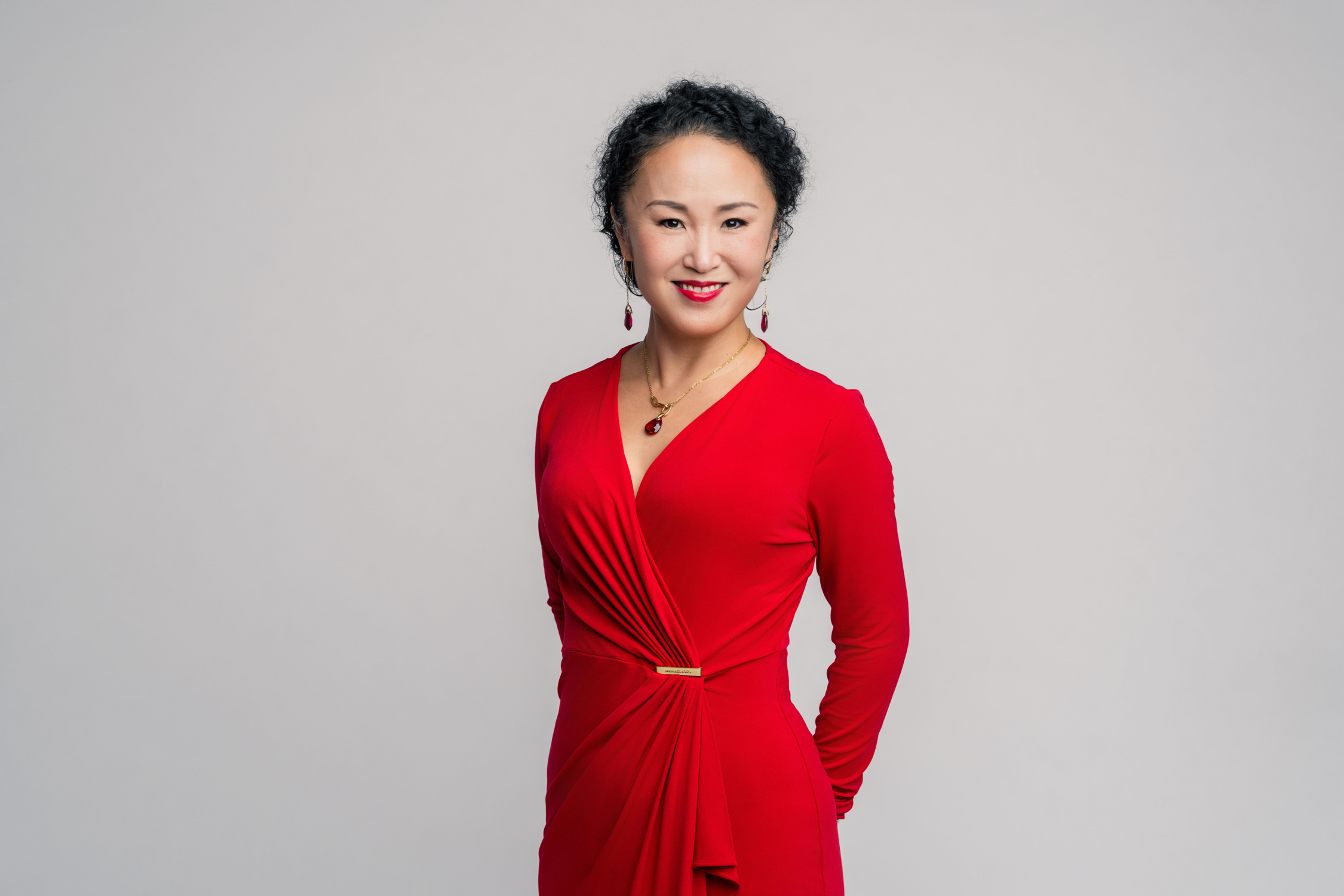
Mariko Oi, former presenter of Newsday and Business Today on the BBC News Channel, explains the recent launch of her Asia Specific podcast.
Q: Tell us all about your new podcast.
Asia Specific is a visualised podcast which was launched last November with a schedule of 2 episodes per week published on Wednesday and Saturday mornings by the BBC World Service. We aim to become the ‘go to’ current affairs podcast for the region in English by bringing essential insights and conversations on the stories shaping the Asia Pacific. Our full playlist can be found on YouTube and BBC.com. From February, the podcast has also been airing on the BBC News Channel, and we are about to go live on World Service radio and our audio partners this July.
Q: What new content will you bring to a very crowded battle for ears?
While the global podcast market is indeed increasingly crowded, when we launched last November there were surprisingly few programmes that focused on the Asia Pacific region. On our podcast, I am joined by the BBC's vast network of veteran correspondents and reporters who know the region inside out. Asia Specific also brings together a team of four full-time and one part-time journalists from across the region, led by Bill Birtles, who joined the BBC after a decade of reporting from the region as ABC’s China correspondent in Beijing and Taipei, and more recently as Indonesia bureau chief in Jakarta. Our team is working in a truly multicultural newsroom in Singapore, representing almost every country in the region. This allows us to cover stories that are important to our audiences in Asia.
Q: The BBC, like most international media organizations, has significantly downsized operations in Japan in recent years (https://www.fccj.or.jp/number-1-shimbun-article/pulling-plug). Are podcasts and online content filling the gap?
Since I joined the BBC in 2006, the number of journalists working in our Tokyo bureau hasn’t changed. In October 2015, we expanded our Japan coverage by launching the BBC’s Japanese language website and we have a team of full-time journalists led by Yuko Kato, based in Tokyo.
I am also extremely thrilled to welcome another Japanese reporter to the BBC, Kurumi Mori, as our new Tokyo correspondent this year. She joined us from Bloomberg where she won multiple awards, including the 2025 SOPA Award for her short documentary on Japan's economic experiment. In her first few months at the BBC, she spoke to Shinjiro Koizumi in his first sit down interview with the foreign media as Japan’s Defence Minister. I look forward to her future Japan coverage not just on TV and radio but also on our news website and podcasts.
Q: In general, do you think Japan is well served by the foreign media or do you think there’s room for improvement?
I believe the foreign media plays a crucial role in exposing stories that are often considered taboo by the Japanese media such as Johnny Kitagawa's scandal or a secret market in sex attack videos by the BBC. My personal pet hate, however, is cliche reports about Japan – focusing on its uniqueness or quirkiness which may only represent a small proportion of the society. Having a veteran producer, Chika Nakayama, for over 20 years allowed the BBC to cover Japanese stories authentically and I will miss her when she retires.
Q: The BBC now produces a huge array of podcasts by its most trusted names. Why - What is the audience that is not being reached by the BBC’s vast terrestrial and satellite reach?
Asia Specific was launched to reach new and younger audiences in the region. According to YouTube analytics, our audiences are in their 20s to 40s across the region with strong presence in Japan, Indonesia, Vietnam and the Philippines.
Q: Any podcasts you admire or recommend?
As a former business news geek, Planet Money and Freakonomics taught me a lot about how to explain complicated business stories to non-specialist audience. Aside from everyone’s favourites such as the Daily by the NYT, I have also learned a lot by watching the BBC’s Newscast and its host Adam Fleming as I try to switch my presentation style from being a TV news presenter to a podcaster. Outside of the BBC family, I enjoy The Rest is Politics, especially watching the BBC’s former Japan correspondent Katty Kay’s interactions with her co-host Anthony Scaramucci, and I try to build similar chemistry with my guests on Asia Specific.
Mariko Oi is one of the BBC's best-known journalists in Asia after more than 20 years covering major breaking news stories from across the region, including the 2011 Japan earthquake and Fukushima disaster, Hong Kong pro-democracy protests, the Trump-Kim summits, the assassination of Shinzo Abe, and the COVID-19 pandemic. Born in Tokyo, Mariko began her career at Bloomberg Television before joining the BBC in 2006 as its first Japanese reporter. Based in Singapore, Mariko presented Newsday and Business Today on the BBC News Channel before being appointed as the host of Asia Specific podcast last October.
