


Issue:
December 2025 | Cover story
Regular members share their memories of the FCCJ as it celebrates its 80th anniversary
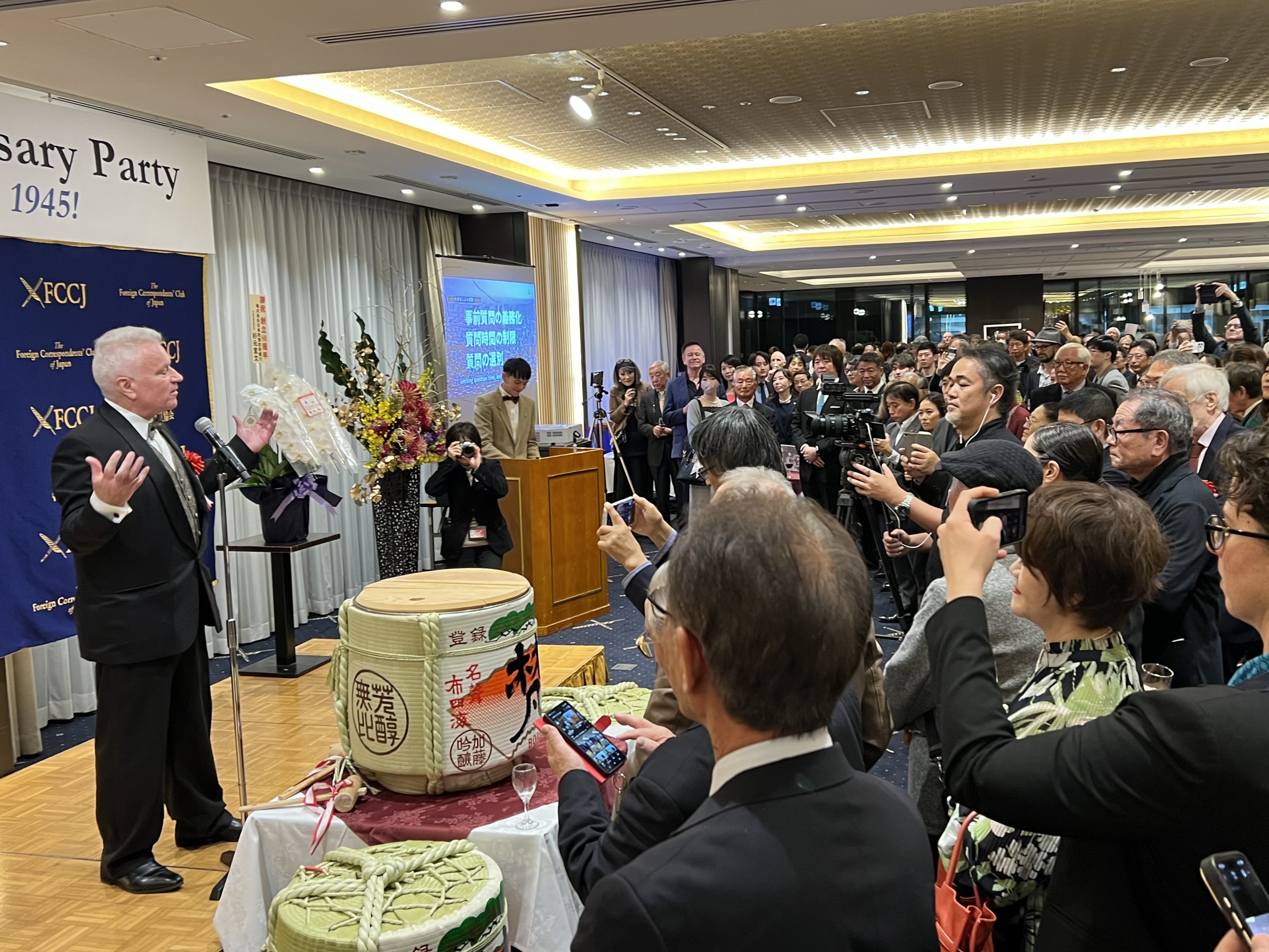
The princess and I
Dan Sloan
I was introduced to the Foreign Correspondents’ Club of Japan in 1989, when I joined its softball team. After gaining my first media job, albeit for a lowly trade journal, I applied to become a regular member.
In the club’s wisdom, I was rejected in an era when even being a broadcast correspondent was considered slightly suspect. The FCCJ advised me to apply instead for professional associate status, as it had a long waiting list for all membership categories at the tail end of Japan’s bubble economy. I had met many members through my mentor and softball manager Pat Killen, seen the characters frequenting the 20th floor of the Yurakucho Denki Building - mostly its bar – but had heard in no uncertain terms that I must wait to join such a hallowed fraternity/sorority as a peer. Disappointed, I recognized some Groucho Marx wisdom in their decision, which likely only intensified my desire to join. If only the FCCJ would lower its standards.
Fast forward to 1994, when Reuters hired me and offered FCCJ membership as a staple of employment. In fact, it did this for all staff as did most major news agencies then, encouraging visits to leverage the club for sources, stories, and socializing. Over three decades, the FCCJ has been that oasis, but it took leaving Japan to recognize how exemplary our organization is, and how it would be lost without volunteers.
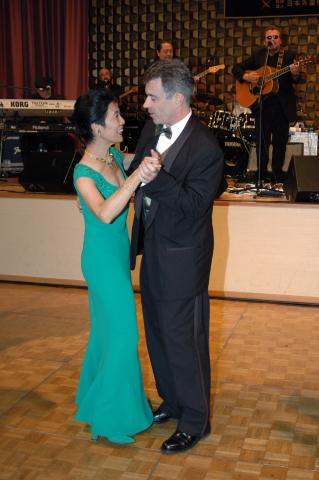
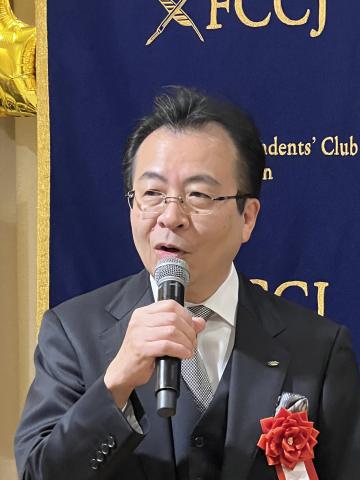
That’s why I started working for the Professional Activities Committee, and then ran for office in our shadan hojin days, eventually becoming president when democracy hit its lowest ebb. Some 20 years ago, I wore a red sweater at our 60th anniversary party, presented by John Roderick, an Associated Press titan who had lived in a cave with Mao Zedong during the Long March. Then I danced with Princess Takamado while my father remained stupefied at our table. Yes, you can’t make this stuff up. But when I told my daughter that I may dance with her again at our 80th, she deftly replied: “Poor, Mrs. Takamado.”
Has it all been great? Um, no, nor is another 80 years assured, so don’t take our history and legacy for granted. But please enjoy - and treasure - this blessed moment, give thanks to our hardworking staff and many who over eight decades took an idea and turned it into history. It’s something truly special. I am honored to be associated with you and the club, and glad that I could finally wiggle my way in. It’s been life-changing, humbling, and the best job of my life.
A cast of thousands
Robert Whiting
I’m proud to have been a member of the FCCJ for a good half of its 80-year history. It is a venerated institution that has been based in Tokyo since 1945, and at the forefront of the news in Japan for much of that time.
Over the years, it has been a magnet for world leaders, movie stars and other famous people. Its interior walls covered with photos of famous individuals who had spoken or appeared there: Gina Lollobrigida, Ronald Reagan, Willie Nelson, Roger Moore, Maradona, Sting, Tony Bennett, Princess Margaret, Rachel McAdams (promoting the Academy Award-winning film Spotlight), Carlos Ghosn, and Major League Baseball Commissioner Rob Manfred. Among Japanese guests, some of the most influential people in the nation have walked through its doors, including Shintaro Ishihara, Mao Asada, Ken Watanabe, Yuriko Koike, Junichiro Koizumi, Hayao Miyazaki, Hideki Matsui, Yuzuru Hanyu, Fumio Kishida and a host of others.
The list of news-making press conferences is long and impressive. Particularly memorable for me was the time the world heavyweight boxing champion Muhammed Ali and the Japanese professional wrestler Antonio Inoki met at the club in June 1976 for the first time before their infamous bout at the Budokan. Ali dubbed the lantern-jawed Inoki, “the Pelican” while brandishing a crutch he said his opponent would soon need.
And the time Prime Minister Kakuei Tanaka spoke at the club in August 1974 and stormed out over what he perceived as hostile questioning over a magazine article describing shady land deals on his part. Tanaka resigned weeks later.
How could we forget a press conference by a surprisingly articulate Donald Trump in August 1993, when he criticized Japan’s closed market? He spoke in complete sentences, one following the other in a logical train of thought, in a way that would surprise most Trump followers who find his syntax confusing. The tape of the event is available in the library for those who would like to revisit this historic event.
Another high note came when Andrew Horvat, the FCCJ’s president in 1988-89, represented the club at the funeral of Emperor Hirohito and at the first press conference given by Emperor Akihito, asking a question in impeccable Japanese.
Equally memorable were the appearances by leading figures of the infamous religious cult Aum Shinrikyo on April 3 and again on April 7, 1995, just weeks after the group unleashed sarin gas in an unprecedented attack on the Tokyo subway on March 20.
Moritomo Gakuen head Yasunori Kagoike was perhaps the most widely covered and loquacious of all. He appeared at the club on the evening of March 23, 2017, to speak about the furor surrounding the sale of government land to his school – a scandal that involved the prime minister at the time, Shinzo Abe, and his wife, Akie. Kagoike appeared after a day-long grilling in the Diet but still managed to test the patience of a packed FCCJ. He gave long-winded answers to questions during an exhausting, protracted session he seemed very reluctant to end. He may be the most energetic, indefatigable individual ever to appear at the club.
Other speakers of note included philanthropist George Soros, the cast of the drama series Shogun, and the former U.N. Secretary-General Ban Ki-Moon.
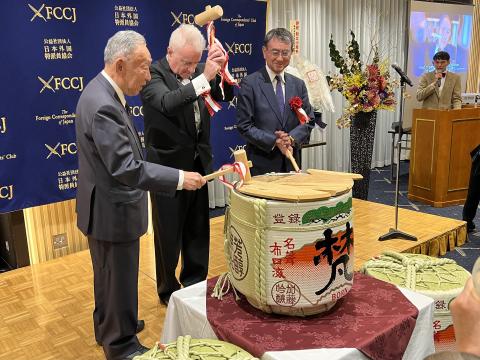
At the 70th anniversary party, the then FCCJ president Peter Langan tripped the light fantastic with Princess Takamado. All that was missing was Fred Astaire and Ginger Rogers.
Banzai, FCCJ! Banzai!
Mascots for peace
Jake Adelstein
I used to work for the Yomiuri Shimbun. My former boss, Hidetoshi Kiyotake, whom I liked, quit the company in a spectacular fashion and had a press conference at the FCCJ. I stumbled upon the press conference by accident. After I asked him a few questions which made the audience laugh, a reporter from Yukan Fuji asked me to write an op-ed defending my boss.
He gave me an hour. I expected it to be massively edited. It was not. The headline read, “Reporters says Nabetsune is a cancer on the face of the Yomiuri.” In the piece, I compared Tsuneo Watanabe, the Rupert Murdoch of Japan, to a yakuza boss without morals. I suggested that he should retire to a temple, repent, and atone for his sins.
This article endeared me to Kiyotake-san but I was persona non grata at my old office and still am today. At least Kiyotake-san still talks to me.
I went to a press conference held by Funassyi, a talking pear and one of those mascots that you see roaming around Japan. Out of sheer boredom and a dislike for cute things, I asked Funassi what he thought about Prime Minister Shinzo Abe's attempts to revise Japan’s constitution and remove Article 9, which renounces war. I expected a “no comment” but instead go the oblique, “Funassyi loves peace.” It was if the mascot was rebuking the prime minister and it was just newsy enough that some papers actually reported the comment. A Japanese reporter I had known for many years jabbed me jokingly in the side and said: “Nice work, Jake-san. Now I may have to write something.”
FCCJ press conferences always feel like a thrilling lottery for me. I never know what I’m going to win or whether I’ll even want the prize if I do.
A manner of speech
Eiichiro Tokumoto
I first visited the FCCJ in 1982, when I was a university student. One evening, a Japanese journalist who was a club member invited a few of us students to have dinner at the club, which was still located in the Yurakucho Denki Building. While we were eating in the main bar, an American reporter friend of his passed by and joined us at the table. One of the students asked him: "What do you think is the mission of journalism?"
The reporter, red-faced from the martini he was sipping, answered energetically and rapidly in English, but I failed to understand a word he was saying.
He was a veteran correspondent, as you'd expect. His English was so sophisticated and enigmatic, and it made me feel I needed to study more. But now I'm convinced he was just so drunk that his speech was slurred.
More than 40 years have passed since that first visit, and I've since become a club member and published several books. These include books about Emperor Hirohito during the post-war occupation period, former Prime Minister Kakuei Tanaka's questionable money machine and the Lockheed aircraft bribery scandal, and Seigen Tanaka, the enigmatic Japanese fixer who secretly maneuvered to obtain Japan's oil concessions in the Middle East.
What I've learned from these experiences is that the truth of history is gray, and something like a jigsaw puzzle. From the beginning, there is no simple answer: black or white, absolute justice or absolute evil. By patiently collecting scattered facts and piecing them together, we can see the bigger, more complicated picture.
To that end, I visited archives in Japan and abroad and reviewed declassified documents. I also interviewed living former politicians, bureaucrats, former members of the military and intelligence agencies, and assembled these pieces to complete the jigsaw puzzle of history.
For me, the FCCJ became one of the places where I could find an essential piece of the puzzle. Since the club's founding in 1945, its archives have housed articles and memos, written by journalists from around the world who were assigned to Tokyo, and audio data from numerous press conferences. There are also clippings of old newspaper and magazine articles about major events and individuals in postwar Japan that cannot be accessed from the Internet or databases.
I discussed my findings with veteran members at the club bar about the facts I gathered in this way, and that, too, provided me with a great deal of inspiration for writing my books. In that sense, I can say that the FCCJ is one of my greatest benefactors.
And now I, too, find myself emulating some of my former benefactors, getting drunk while sipping martinis at the club bar.
Heart on sleeve
Yasushi Hara
The club is my pride. Its members can be devoted, angry, stubborn, creative, egoistic, stoic, easygoing, entertaining and single-minded all at the same time in their defense of freedom of speech.
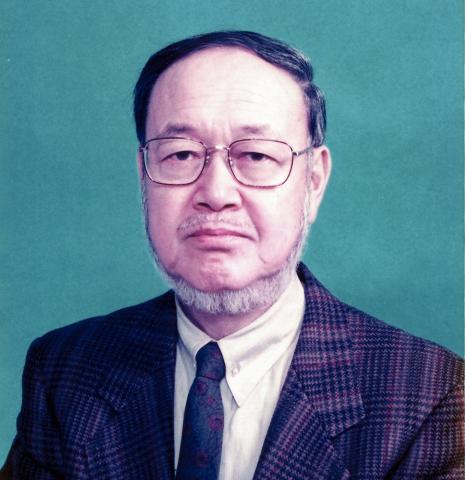
As a reporter for the Asahi Shimbun during the US Occupation, I was lucky enough to join the FCCJ, which was then located, as it is now, in the Marunouchi business district. The premises were small and filled with cigarette smoke.
I spent a lot of time at the US embassy and enhanced my international news gathering activities while other Japanese media struggled to do the same.
Mike Tharp was the first FCCJ member to greet me. He had a smile on his face and helped me get used to the club’s atmosphere.
We drank beer and watched Japanese professional baseball. Mike never rooted for the Tokyo Giants or the Hanshin Tigers. Instead, he backed the Nippon Ham Fighters, then a weak team.
I later had assignments in Washington, New York, Los Angeles and London as a correspondent, bureau chief, and executive director of the Asahi Shimbun in charge of its international operations.
My FCCJ status changed from regular to expat member, and until recently I was an honorary member and, at 92, the club’s oldest active member.
With the Asahi Shimbun on my right shoulder and the FCCJ epaulette on my left, I traveled the world.
I visited numerous foreign capitals and the UN Headquarters in New York. My work took me to Geneva, the Kremlin, Leningrad, Nuremberg, Israel, Milan, Pisa, Florence, Rome, Palermo, and Sicily.
I would like to convey, with all due respect, to current members how invaluable the benefits of wearing that FCCJ epaulette were.
Journalism acts as a check on the political, economic, and social establishments. Its primary role is to uphold human rights and freedom of speech. And the FCCJ is an important part of that movement.
The club is our pride. And truth always wins.
Hooray for the FCCJ, and god bless.
Happy birthday, Charles Pomeroy!
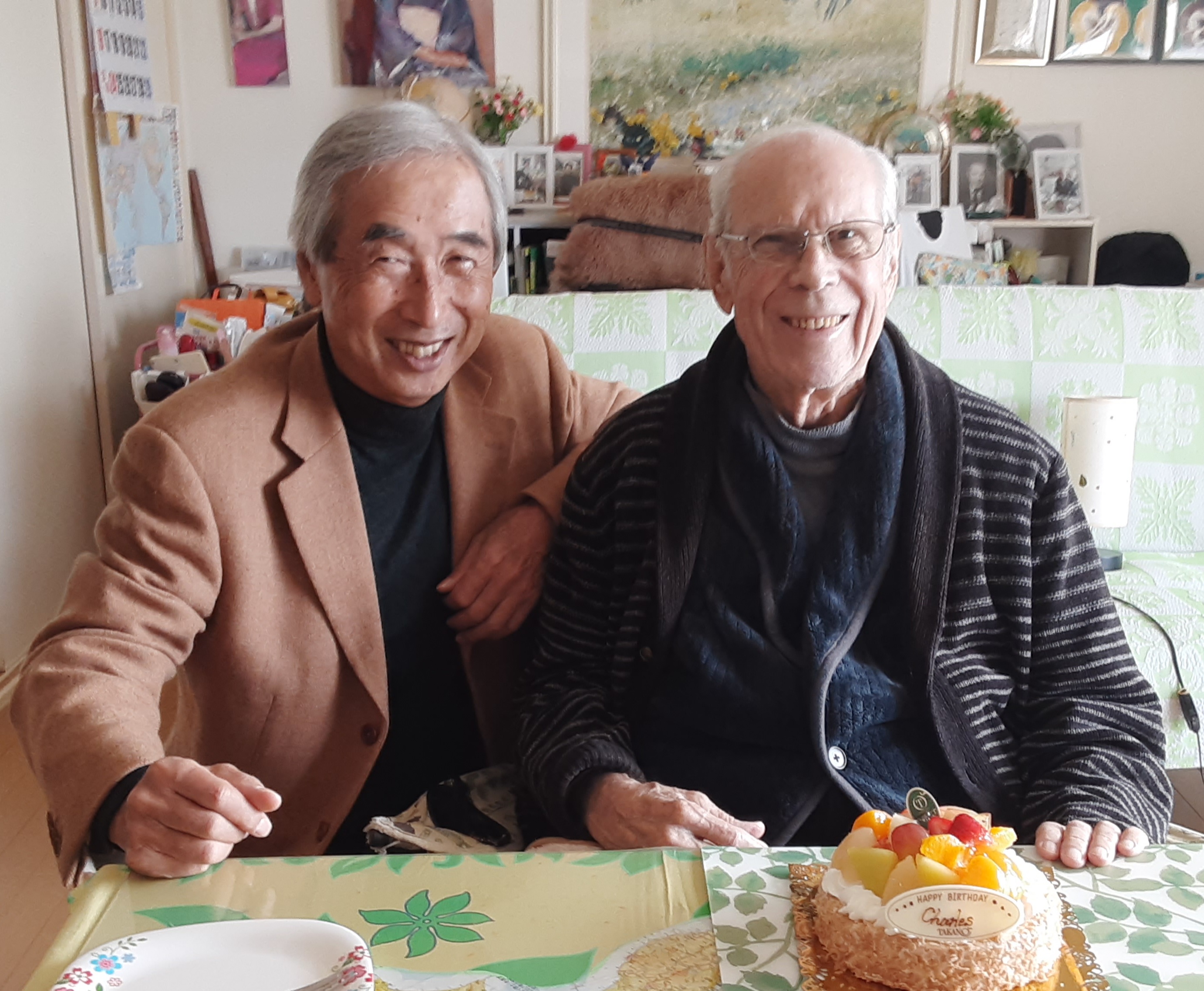
Kaz Abiko writes: Charles Pomeroy celebrated his 95th birthday on November 6. As I was working that day, I visited his home on the 8th to celebrate.
My Tokyo home
Eric Johnston
The FCCJ has been a part of my life for 30 years. As a young Osaka-based reporter/translator for the Mainichi Daily News, my first visit to the club was in the summer of 1995, when the editor-in-chief of the MDN took me to lunch there.
Walking in and out of the main bar was the all-star team of great journalist: Karel van Wolferen, Murray Sayle, Bruce Dunning, and Bob Whiting. I was too shy to introduce myself to Murray, Bruce or Bob, and a little intimidated by Karel when my boss, who knew him, introduced us.
That visit inspired me to become a member five years later, despite the fact that I lived in Osaka. The FCCJ became my home while in Tokyo. And so it has been for a quarter century. In the interim, I moved from Osaka to Sapporo, but for me, Tokyo remains, to a large degree, the FCCJ. Its press conferences and committees and, yes, the main bar, have made me a better journalist and a better person.
I hope that eight decades from now journalists staring at photographs of the club's 80th anniversary party are inspired to drop by the club, have lunch and, hopefully, continuing the tradition.
