


Issue:
December 2025
Former military bases in Kyushu offer different perspectives on World War II
| “The generation that experienced the war is diminishing and the war is being forgotten. We must not allow the war experiences to fade away. We should pass on to future generations the tragic experiences and various thoughts of former military personnel and the families of those who died in the war.” War Records Succession Office, Miyazaki |
For decades after the end of World War II, the people of Japan seemed reluctant to acknowledge the history of their role in the conflict. Perhaps it was the Potsdam Declaration mandate to disarm and demilitarize, as enforced by the General Headquarters during the Allied Occupation (1945-1952). Or perhaps it was an emotional response to defeat. People preferred not to think about what had taken place during the war, focusing instead on recovering and moving forward.
Whatever the reason, with the benefit of chronological distance, Japan’s wartime history – other than as the victim of two atomic bombings – is becoming more accessible through the opening of museums and historical displays, often on the former sites of military bases. After the war, most bases were either taken over by the U.S. military or demolished so the land could again be used for farming.
Three such former bases on the island of Kyushu, a critical staging area for fighting in the Pacific, provide visitors with further perspectives on the actions of Japanese forces, especially in the final months of the war.
Kamikaze pilots
Many Tokko pilots - better known outside Japan as the kamikaze – were trained at Chiran Airfield, in what is today Minamikyushu City, Kagoshima Prefecture. It was from Chiran that they flew south on their usually fatal missions.
From 1975, a Tokko archive was opened on the site of the former base. In 1987, it became the Chiran Peace Museum. The overwhelming focus of the museum is the pilots who perished in the name of the emperor. Perhaps the perceived nobility of their mission enabled those individual stories to be told even when other aspects of Japan’s war were not.
Photos of the 439 men, ranging in age from 17 to 29, who flew from Chiran to their deaths line the walls of the main exhibition hall. Using the audio guide, visitors can hear the personal stories of several of the men, including one Korean national and one American-born nisei who joined the Japanese military in 1941, when he was studying in Japan.
Items belonging to the men, as well as their final letters home (usually addressed to their mothers), are in display cases below the photos.
“In the movies the pilots scream ‘Long live the Emperor’ as they steer their planes into enemy ships. Yet I can’t help but feel most of them must actually have screamed ‘Mommy!’” a Japanese visitor said in reaction to the displays.
Other photos show the men off-duty, smiling and full of camaraderie, or the planes taking off, saluted by their comrades on the ground. There is also a life-size model of a Hayabusa fighter plane, a collection of uniforms, and displays on the role of army nurses.
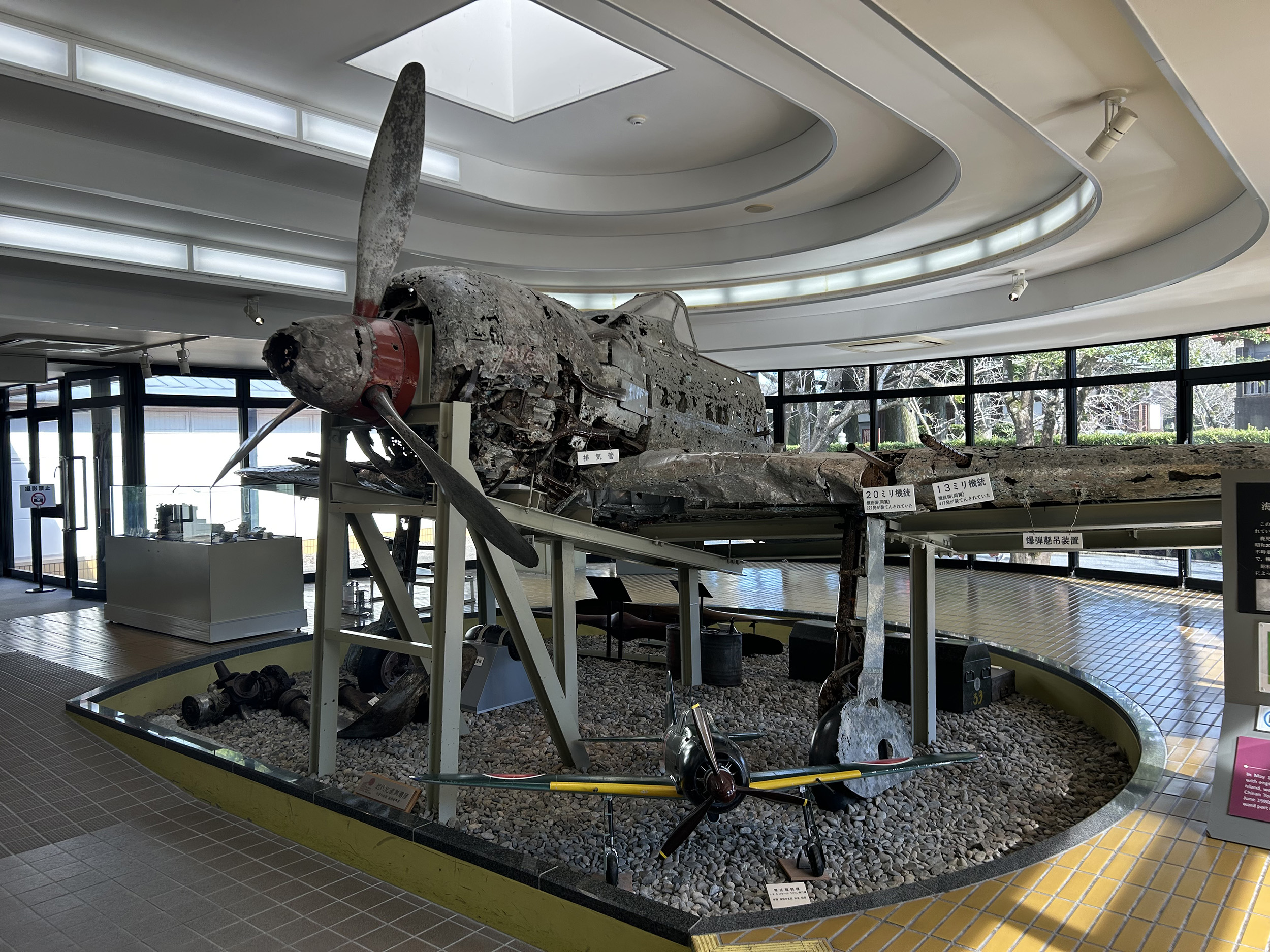
The Chiran facility is often criticized for calling itself a “peace” museum given that it venerates the personal sacrifices of so many young men in wartime. It is, more accurately, a “war memorial” museum, although there is little said or displayed about the death toll or other impact of the Tokko strikes. Japan often includes “peace” in the name of war-related sites – seemingly an expression of an aspiration for the future that also avoids any characterization of the past.
Long-forgotten supply base
While the people of Chiran and others associated with the base and its activities never forgot its existence, it is different for the Hitoyoshi Naval Air Base located in Nishiki, just a few minutes by car from Hitoyoshi city, Kumamoto Prefecture.
Opened in 1944 as an airfield for pilot training, the base was soon converted to a supply depot, its “safe” inland location proximate to three coastal bases. After the war ended, the base reverted to farmland and many of its records were destroyed. The 1.5 kilometer-long primary airstrip became a public road – the one visitors now use to reach the museum – and the former base was largely forgotten for more than half a century, only to be rediscovered in the 2010s.
The Nishiki Secret Base Museum opened in 2015, housing a life-size model of an Akatonbo bi-plane trainer of the type used at the base, as well as items collected from those who once served there. Especially poignant is the diary of a young man who was just 14 when he enlisted.
Guided tours take visitors to a series of tunnels carved into the other side of the hill behind the museum, possibly the largest underground military facility in Japan. The tunnels were used to store military supplies and, more significantly, for the final assembly of missiles and torpedoes later transported to naval vessels offshore.
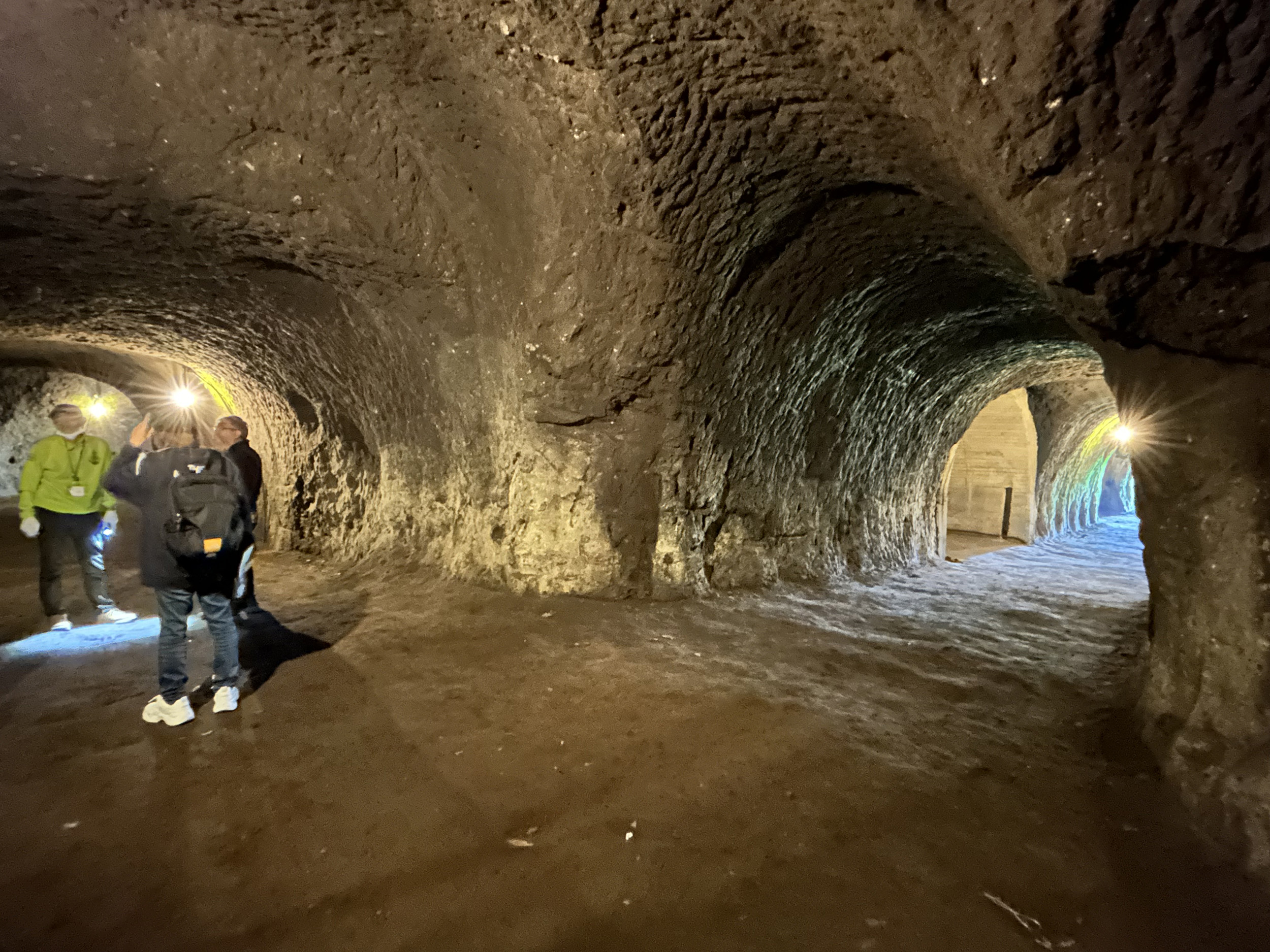
The missile assembly was performed by young civilian women, mostly evacuees from Okinawa, toward the end of the war. Besides the challenge of working in the dim light of the tunnels, the women also worked while uncertain of the fate of their loved ones and homes in Okinawa, where fighting raged. They had to rely on anecdotal reports from pilots returning from supply runs and often began their day by facing south, toward home, in symbolic solidarity. One tour participant said: “I can’t imagine how difficult it must have been for those women to concentrate on their work while not knowing if their families were safe.”
In the final months of the war, as they considered mounting an invasion of the Japanese mainland, the Americans conducted two air raids on the base. Although there was significant damage to the buildings, it appears that the U.S pilots were unaware of the tunnels, which survived untouched.
After the war, Nishiki farmers who found the abandoned tunnels did not realize they were part of the base, assuming instead they were air raid shelters. The farmers used the tunnels to store farm machinery until a researcher earlier this century unearthed their actual wartime role.
For intrepid visitors who want a more in-depth experience, rental bicycles are available at the museum, along with a map showing where base structures were once located.
Where time stands still
A naval airfield was opened in the Oita city of Usa in 1939 to train crew to serve on aircraft carriers and supply those same vessels.
Like Chiran, by early 1945 its role had evolved to Tokko training and deployment.
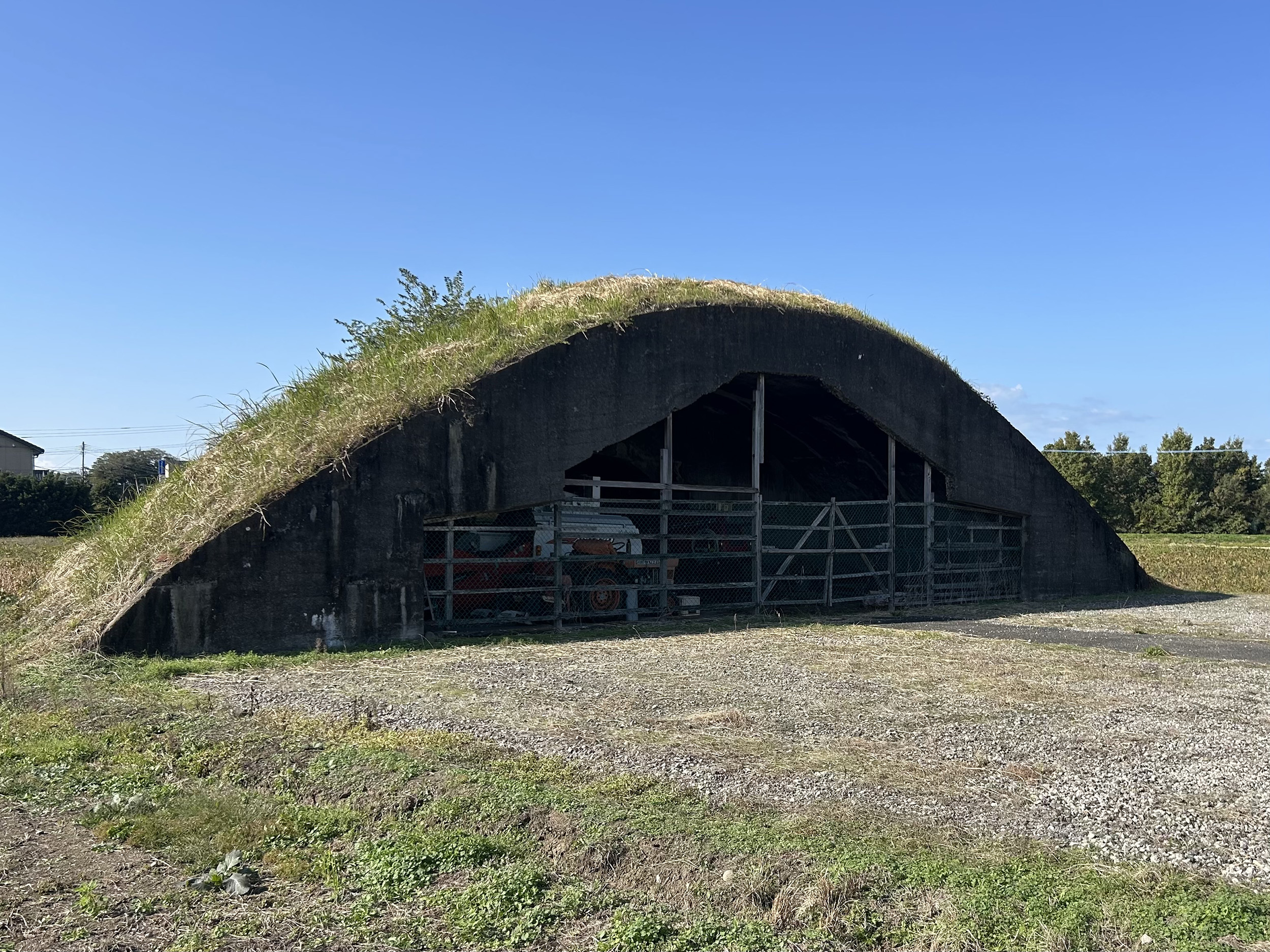
Unlike the other bases, at the end of the war a number of Usa’s buildings and bunkers were left standing, even as the land around them was turned into homes and farms.
The Usa City Peace Museum stands where the gate to the base once stood. The small museum contains one of the original gateposts as well as photos and documents describing the layout of the base.
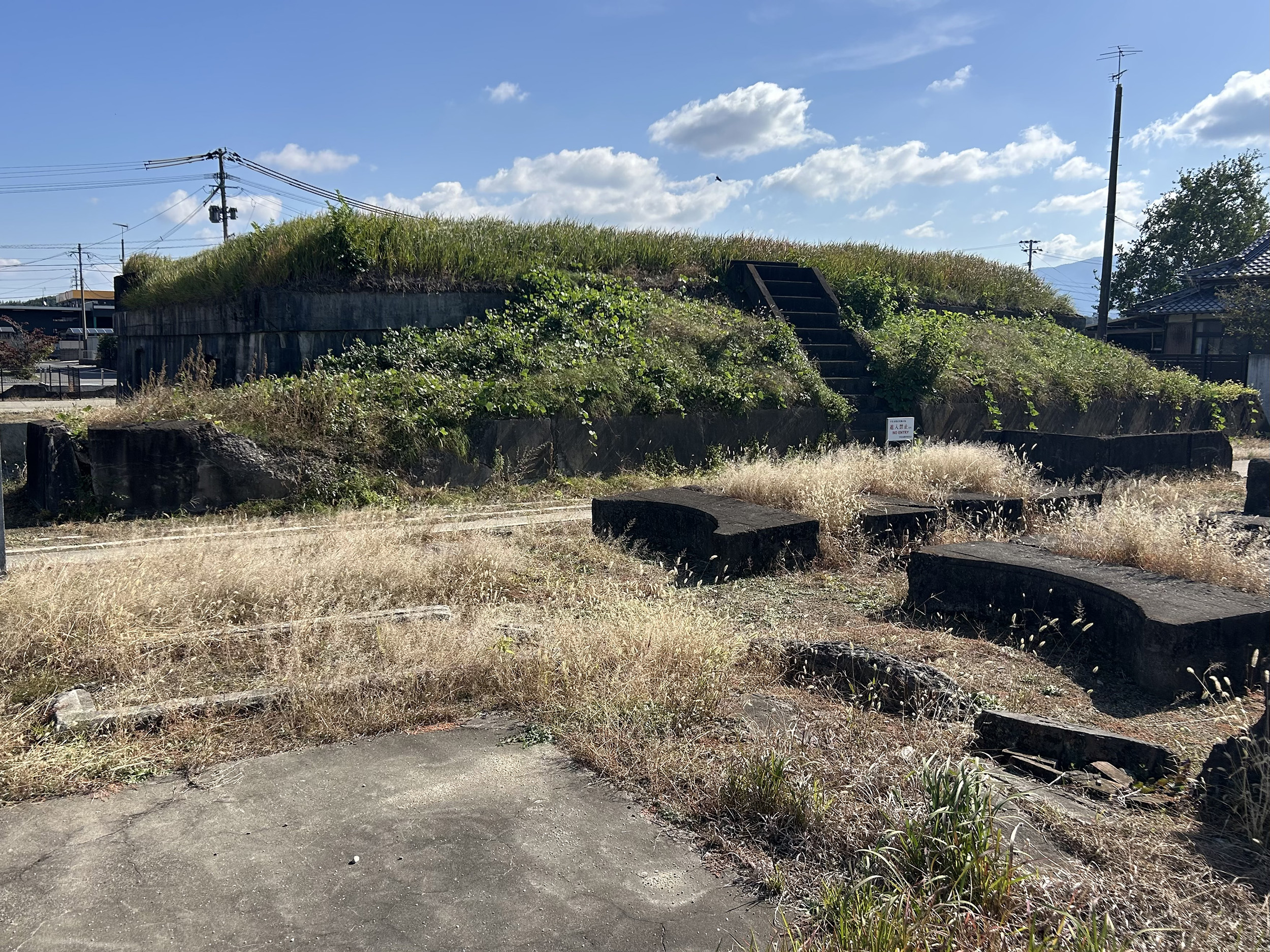
Visitors can pick up a map showing the location of a dozen surviving parts of the base, many of them within walking distance of the museum. They include a former runway (now a local road lined with granite markers emulating runway lights), the base communications center, a parachute packing facility, and a number of earth-covered hangars designed to serve as bunkers in the event of an air raid. The base was, in fact, bombed by the Americans in 1945, inflicting damage on exposed areas and leaving behind a number of craters, one of which still exists as a “bomb pond” – a deep circular impression that often fills with water after heavy rains.
It is often observed that airmen are less aware of the horrors of war, since the carnage occurs far below them. This may explain why the exhibits at these three former air bases are able to ignore the misery inflicted by the Japanese military and instead focus on the “glory” of the mission or the damage caused by American bombing. As time passes and these sites gain more attention from tourists, will there be more introspection and examination of Japan’s conduct during the war? Only time will tell.
Vicki L. Beyer is a freelance writer and retired professor at Hitotsubashi University Graduate School of Law, Business Law Department. She served as FCCJ Kanji from mid-2020 to mid-2022. She is currently working on a book about Kyushu’s history.
