

Issue:
June 2026
In an extract from his new book, Jake Adelstein explains how the Underground Amazon made cryptocurrency crucial, and why the reelection of Donald Trump forced him to rewrite the book – twice.
The first Bitcoin purchase may have been for a pizza, but it didn't take long for people to discover that Bitcoin was extremely valuable for purchasing guns, illegal drugs, magic mushrooms, hardcore pornography, and all the other things you might not want anyone to know you're buying or selling. Bitcoin was the first usable cryptocurrency in the world, allegedly created by Satoshi Nakamoto in 2008. No one knows who he is—or if he's Japanese— but people quickly knew that Bitcoin, the digital gold that he invented, could be put to use doing nefarious things. Because it was very hard to trace, in its early days.
When you combine Bitcoin with the invisible internet—the dark web—a heavy Tor browser for privacy, and an online catalog of illegal goods, you have all the ingredients for what is, in essence, an underground Amazon.com. That was Silk Road: not the 6,000-kilometer ancient trade route connecting East and West, but the first successful online black market, sitting smack in the middle of the dark web, and the platform that would finally make the world realize Bitcoin wasn't just for pizzas and porn.
The Idealist Behind the Operation
Silk Road arrived with the new year on January 1, 2011, when an unknown individual using the pseudonym "Altoid" began advertising a hidden service on internet forums including bitcointalk.org. He described it as "an anonymous Amazon.com." The website hadn't launched yet. Altoid was drumming up support for something that didn't fully exist - like a movie preview for the criminal underworld.
It was those early, innocent posts by Altoid—a name taken from the curiously strong breath mint—that would eventually help undo the creator of Silk Road. Because Altoid was none other than Ross Ulbricht: a twenty-six-year-old physics graduate from the University of Texas in Dallas, six foot two, a surfer, and by all accounts an extremely bright and likable guy. His friends and parents could never have imagined that within a few years he'd be called "an American kingpin" and accused of running one of the world's largest illegal drug markets.
Ulbricht was born on March 27, 1984—easy for me to remember, since my own birthday is a day later, though many years earlier. He joined the Boy Scouts, rising all the way to Eagle Scout, something only four percent of scouts achieve. It requires twenty-one merit badges, demonstrated leadership, and what the scouts call "Scout spirit." He exemplified many of the Scout Laws: Kind. Treat others as you want to be treated. Never harm or kill any living thing without good reason. You could argue that Silk Road became Ulbricht's second Eagle Project, though whether it demonstrated Scout spirit is debatable. Libertarians do seem to have issues with the Obedient part.
In college, Ulbricht's personal life hit a few walls. He had fallen deeply in love with his girlfriend, and after crafting an engagement ring himself—a stone set by his own hands—he asked for her hand in marriage. She gave him the finger instead, informing him she'd been sleeping around behind his back. It did not go well for his worldview.
By the time he graduated, Ulbricht had become convinced that government was the greatest obstacle facing modern civilization—that the more laws there were, the worse it was for society. He believed people were fundamentally good. He flitted from startup to startup, failing at most of them, before finding modest success running an online secondhand bookstore called Good Wagon Books. It was during this period that the idea of a completely free marketplace began to take shape in his mind.
Magic Mushrooms and a Flooded Cabin
The practical problem with an online illegal marketplace, circa 2010, was that any purchase could be traced back to you regardless of payment method—until Ulbricht discovered Bitcoin, then thought to be virtually untraceable. He also stumbled across the dark web. His diary entries, later submitted as trial evidence, capture the beginning:
Still working on Good Wagon Books and Silk Road at the same time. Programming now. It's a patchwork job. Don't know how to host my own site. Didn't know how to use bitcoins with the website.
In July 2010, Ulbricht rented a cabin an hour from Austin, Texas, where he was growing magic mushrooms—proof of concept, so to speak. You can't launch a website selling illegal drugs without a product to sell first. It didn't go smoothly. The cabin sprang a water leak, and when the landlord went to fix it, he discovered Ulbricht's crop: nearly 100 pounds of psychedelic mushrooms by some accounts. Fortunately for Ulbricht, the landlord warned him to clear out before calling police.
What followed was a scene straight out of Breaking Bad: Ulbricht racing to the cabin, stuffing garbage bags full of mushrooms, clearing every trace of cultivation, and speeding out of the driveway minutes before the police arrived. He salvaged his supply and moved forward.
On January 27, 2011, Ulbricht officially launched Silk Road. Later in his journal he wrote:
I got the basics of the website written and launched it via the freedom hosting service. Only a few days after launch, several people signed up. And then I got my first message from a user. I was so excited I didn't even know what to do with myself. Little by little, people signed up, vendors signed up, and then it happened. My first order. I'll never forget it.
Over the following months, he sold roughly ten pounds of mushrooms through the site. Some orders were a gram; others were a quarter pound. He was also, simultaneously, managing his bookstore and trying to maintain a relationship with his girlfriend Julia Vie, a photographer he'd met in college. His diary has a certain sympathy-inducing quality: Between answering messages, processing transactions, and updating the codebase to fix constant security holes, I had very little time left in the day, and I had a girlfriend at this time! Running a criminal empire is hard on your personal life.
By April 2011, Silk Road had hit 1,000 users. The rest of the world had no idea it existed. You couldn't find it in a Google search. You needed to know it existed to know how to get there—plus a specific address, a special browser, and Bitcoin to transact.
The Gawker Effect
The anonymous paradise didn't last long. On June 1, 2011, reporter Adrian Chen published a piece on Gawker titled "The Underground Website Where You Can Buy Any Drug Imaginable." The article explained how Silk Road allowed people to buy and sell illegal goods—heroin, hash, ecstasy, mushrooms, related paraphernalia—as safely as using Amazon.com, with Bitcoin as the currency of the realm. It also included a clickable link directly to the Mt. Gox exchange, where you could obtain that currency.
Mt. Gox was located in Tokyo and it was the largest Bitcoin exchange in the world. The company was run by Mark Karpeles, a French national with a deep love for Japan and pussy, or any combination of the two. He had two cats. He had a cryptocurrency exchange. And now after the Gawker article, he also was handling vast amounts of money.
Because The Silk Road took off. People loved buying illegal drugs safely and they needed Bitcoin to do it. Suddenly every would-be libertarian, amateur criminal, smuggler, and dark-web entrepreneur knew exactly where to shop and how to pay for it.
Nothing did more to popularize Bitcoin than that single article. One day after it appeared, on June 2, 2011, the value of one Bitcoin hit ten dollars. Two months earlier it had been one dollar. Bitcoin was now serious business, and Mt. Gox had become, in effect, the tollbooth of the Silk Road.
What the Gawker article didn't fully explore was Ulbricht's ethical framework. Like the yakuza in Japan—who traditionally banned their members from theft, robbery, and rape under what they called the noble way—Ulbricht had established rules of conduct. He prohibited the selling of anything coerced, anything that created direct victims: no child pornography, no stolen goods, no violent services. "Our basic rules are to treat others as you would wish to be treated," he would proclaim on the website.
Remember the Boy Scout law? Kind. Treat others as you want to be treated. Ulbricht believed in a utilitarian online society run on libertarian principles. People were good. Freedom of choice would lead to happiness. Violators were kicked off. He wasn't a sociopath. Not at the start.
A Postscript: The Man Who Walked Out
Here's where the story gets complicated for me personally—and explains why I had to rewrite The Devil Takes Bitcoin twice.
On January 21, 2025—his first full day back in office—President Trump granted Ross Ulbricht a full and unconditional pardon. Ulbricht, now 40, had been sentenced to two life sentences plus 40 years in 2015 for running Silk Road, which prosecutors said facilitated $183 million in drug sales using Bitcoin.
The pardon fulfilled a campaign pledge Trump made to Libertarian supporters, whom he courted heavily during the 2024 election cycle. Trump posted on Truth Social that he had spoken with Ulbricht's mother, writing: "It was my pleasure to have just signed a full and unconditional pardon of her son, Ross." He called the sentence "ridiculous" and described the prosecutors who built the case as "scum" and "lunatics" engaged in the "weaponization of government."
Libertarian activists had organized for years under the banner "Free Ross," arguing that Ulbricht's punishment was unduly harsh for a first-time offender. They were not entirely wrong about the sentence. Whatever you think of what Ulbricht did, double life plus forty years for running a website—when actual murderers routinely serve less—is a punishment that strains any sense of proportionality.
What I find fascinating—and troubling—about Trump's pardon is the framing. The "weaponization of government" rationale fits neatly into Trump's broader self-narrative, but the underlying argument about Silk Road's sentence being excessive predates Trump by years and comes from across the political spectrum, including from civil libertarians who would never vote for him. Senator Rand Paul said Ulbricht's sentence was "disproportionate to his crimes." Legal scholars agreed. When a genuinely defensible position gets absorbed into a political favor machine, it muddies everyone's thinking.
What the pardon doesn't change is the story itself. Ulbricht was a true believer who built something that grew far beyond his ideals. He was also, by the time the FBI closed in on him in 2013, alleged to have paid for attempted murders of people he saw as threats. The idealistic Eagle Scout and the accused murderous kingpin are the same person. That's what makes the story worth writing—and worth reading.
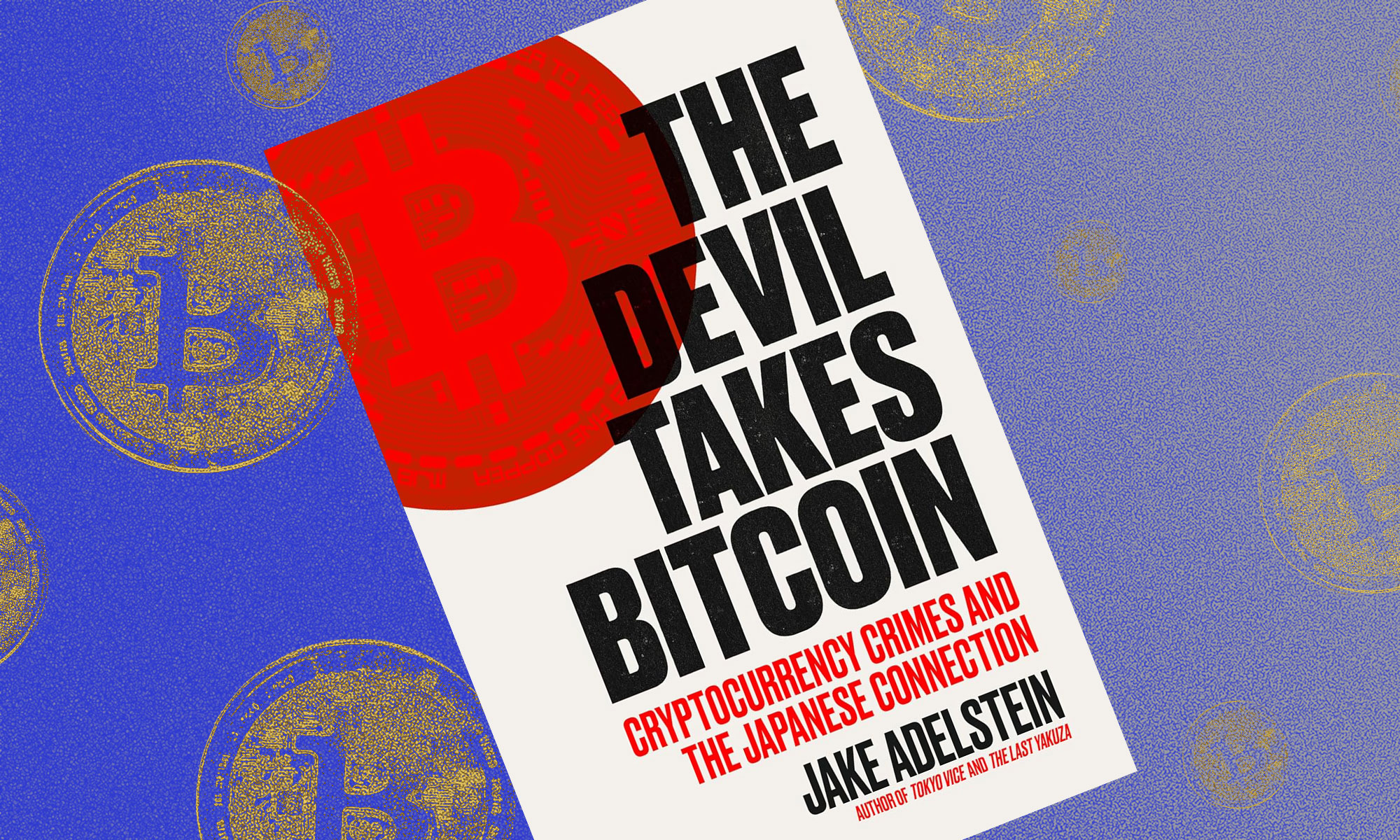
The full arc of what Ross Ulbricht built, what Bitcoin became, and who would later hack Mt. Gox---stealing nearly $500 million is the subject of The Devil Takes Bitcoin. It's a story about a Frenchman in over his head, a Japanese justice system that doesn't care about guilt but about winning, and what happens when utopian technology meets human greed. Spoiler: greed usually wins.
This is an adapted excerpt from The Devil Takes Bitcoin: Cryptocurrency Crimes and The Japanese Connection, published by Scribe. The American edition arrived in stores on October 14th, 2024.
Jake Adelstein has been an investigative journalist in Japan since 1993. He co-hosted and co-wrote the award-winning podcast about missing people in Japan, The Evaporated: Gone With The Gods. He is the author of Tokyo Vice: An American Reporter on the Police Beat in Japan (Vintage) which is a series on (HBO) Max and also The Last Yakuza: Life and Death In The Japanese Underworld (2023) and Tokyo Noir (2024).
