

Issue:
June 2026 | Cover story
Dong Yifu on his father, Dong Yuyu, winner of this year’s FCCJ Freedom of the Press Award.
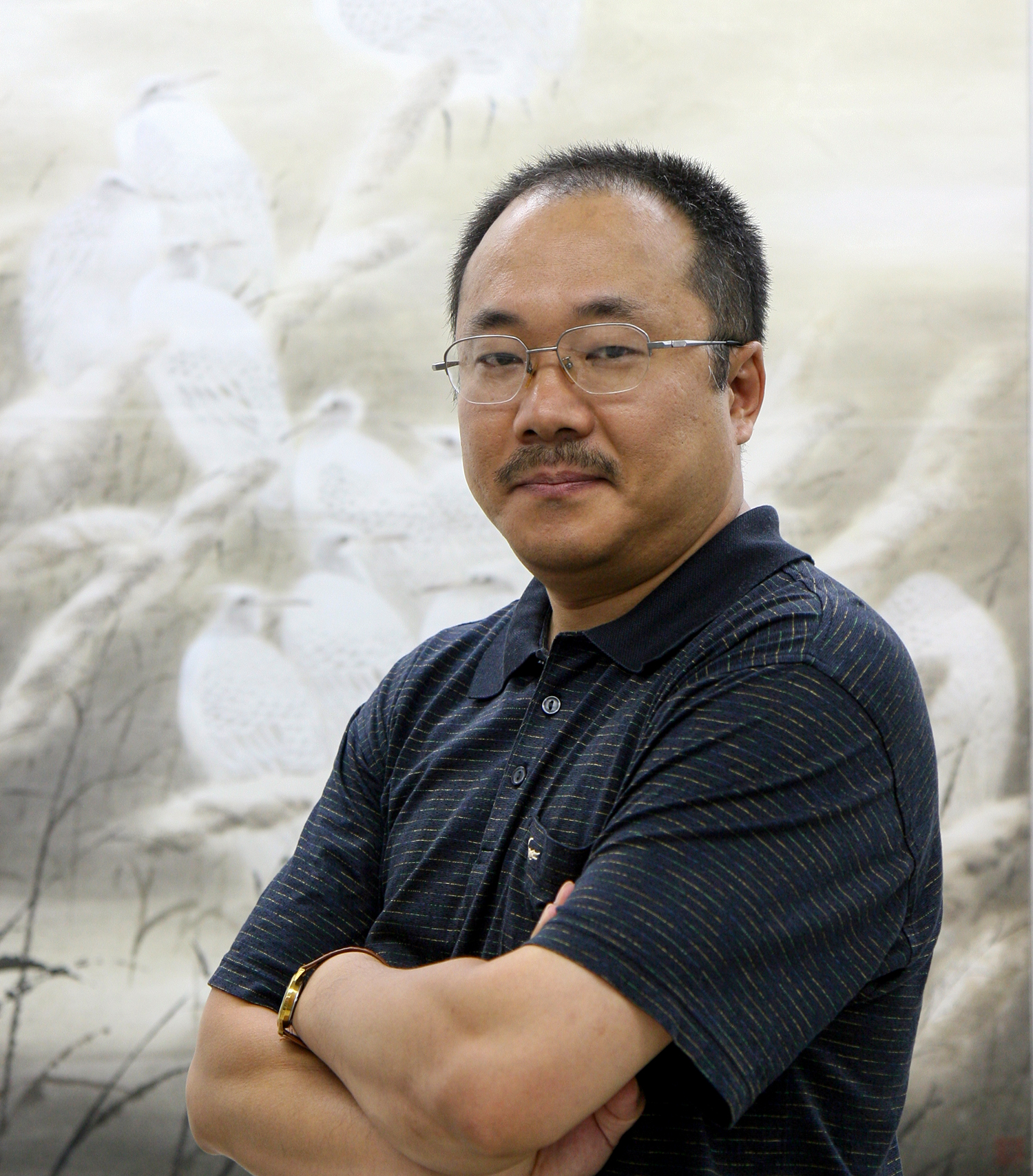
On behalf of my father, Dong Yuyu, and my family, I want to express our deepest gratitude to the Foreign Correspondents Club of Japan for selecting my father for this year’s prestigious Freedom of the Press Award.
Mixed feelings arise every time my father receives an award for his work as a lifelong journalist—warmth and joy for the recognition he receives, along with sadness and frustration about his unjust imprisonment.
Recently, a sizeable tumor was found in my father’s lung. As of this writing, there is no conclusive diagnosis, but many signs point to malignancy. During family visitations, my father told us that ever since he lost his freedom, he has been prepared for all possibilities.
As my father faces a difficult path ahead, I want to take this opportunity to reflect on his career, a career rooted in hard work and courage, dedicated to the betterment of society, and exemplifying the true honor of journalism.
In many ways, my father’s journalism career is unique. He studied law, earning his master’s from the prestigious Peking University in 1987. But he spent the next 35 years working for Guangming Daily, a state newspaper, despite never becoming a Communist Party member.
China had high hopes of democratization during the first two years of his journalism career, but those hopes ended in June 1989. My father participated in the democracy movement, but he was exiled to a year of hard labor in a factory for his activism.
In 1998, my father co-edited a groundbreaking volume called Political China, which collected dozens of pieces on China’s political reform. The first edition sold out within weeks, but the Chinese authorities soon banned the book. Although political reform stayed on the Chinese Communist Party’s agenda for decades, it eventually became taboo, yet my father never stopped calling for democracy, the rule of law, constitutionalism, and government accountability.
Growing up, I saw how consistently hardworking my father was. At home, besides cooking for me and my mother and attending to chores, my father was always typing away on his computer, from morning to evening, during weekends and on holidays.
Even as hopes for a better China dimmed, he kept writing and became especially prolific in the last decade of his career. On top of editing and a few regular columns, he helped establish a daily online opinion column for his newspaper’s website. The column, around 1,200 Chinese characters (about 800 English words), discussed breaking news and tackled China’s social issues. Some years, my father wrote more than 300 articles for that one column, and he wrote close to 200 articles in total in 2021, the year before he was detained.
The thousands of columns by my father throughout his decades-long career truthfully reflected China’s development. In those articles, he called for government accountability after disasters, called out state-owned monopolies on unfair practices, criticized police misconduct, advocated for equal citizenship rights for China’s rural residents and workers, and highlighted the abuses by China’s big tech companies.
The vast majority of my father’s articles are anonymous or written under a pseudonym, and many of his articles were censored, but his independent thinking made a real impact. A versatile writer with a distinct rhetoric, my father is well-versed in classical Chinese poetry as well as the latest Internet-speak. One article analyzing a heartwarming verse of Tang Dynasty poetry, which appeared on boxes of goods sent by Japan to China for COVID relief, gained over 100 million views. Another fiery article denouncing local government officials for promoting cremation by destroying villagers’ coffins and tombs gained over 20 million views in three days, resulting in the government compensating the affected villagers.
Using his real name, my father contributed to The New York Times Chinese website and a historical journal called China Through the Ages (Yanhuang Chunqiu). My father never shied away from the most politically sensitive topics, such as the Chinese Communist Party’s legitimacy and its responsibility for historical catastrophes such as the Cultural Revolution.
From within the Chinese system, my father consistently called for justice and change, constantly testing the red lines of censorship and punishment. His work is widely admired by like-minded peers at home and abroad, and it is because of his outspokenness that he is now being silenced.
Even though the Chinese authorities have accused my father of espionage, China’s official media offered no details of his case. From what we know, the government produced no reliable evidence and did not prove any element of the alleged crime. My father is being punished because he used words to challenge power.
My father has always stayed true to himself and his ideals. And that is why, like so many other journalists, he led a life of service and meaning. For my father, journalism is his way to reaffirm humanity—his and everyone else’s, including the humanity of those who are now persecuting him. Even as his health deteriorates in the harsh prison conditions, his unwavering faith in the possibility of change and deep commitment to journalism will never be taken away.
Yifu Dong is a writer and columnist based in Toronto. His work has appeared in The New York Times, The Washington Post, Foreign Policy, Caixin, and FT Chinese.
