

Issue:
June 2026 | Cover story
Israel was responsible for two-thirds of the deaths of all journalists in 2025 and 2024
2025 was another banner year for journalism, but not in a good way. A total of 129 members of the press were killed, the highest in more than 30 years and the second annual record in a row, according to the Committee to Protect Journalists, a New York nonprofit aimed at protecting press freedom around the world.
Conflict in the Mideast is accelerating the slaughter. Israel was responsible for two-thirds of the deaths in 2025 and 2024, and its military has killed more journalists than any other government since 1992, according to the CPJ, referring to the year it began documenting such deaths.
The Israel Defense Forces have defended the killings as targeting terrorists. It confirmed one of its airstrikes on Gaza City in August 2025 killed Al Jazeera's Anas al-Sharif, a 28-year-old Palestinian who was part of a Reuters team that won a Pulitzer Prize in 2024 for photography of the Israel-Gaza war.
The IDF said al-Sharif “served as the head of a terrorist cell in the Hamas terrorist organization and was responsible for advancing rocket attacks against Israeli civilians and IDF [Israeli army] troops.” Al Jazeera called the killing a “targeted assassination.”
While Israeli forces killed the majority of journalists in 2025, media deaths were also up in Ukraine and Sudan, as were the number of press personnel killed by drones, rising from two in 2023 to 39 last year, according to the CPJ.
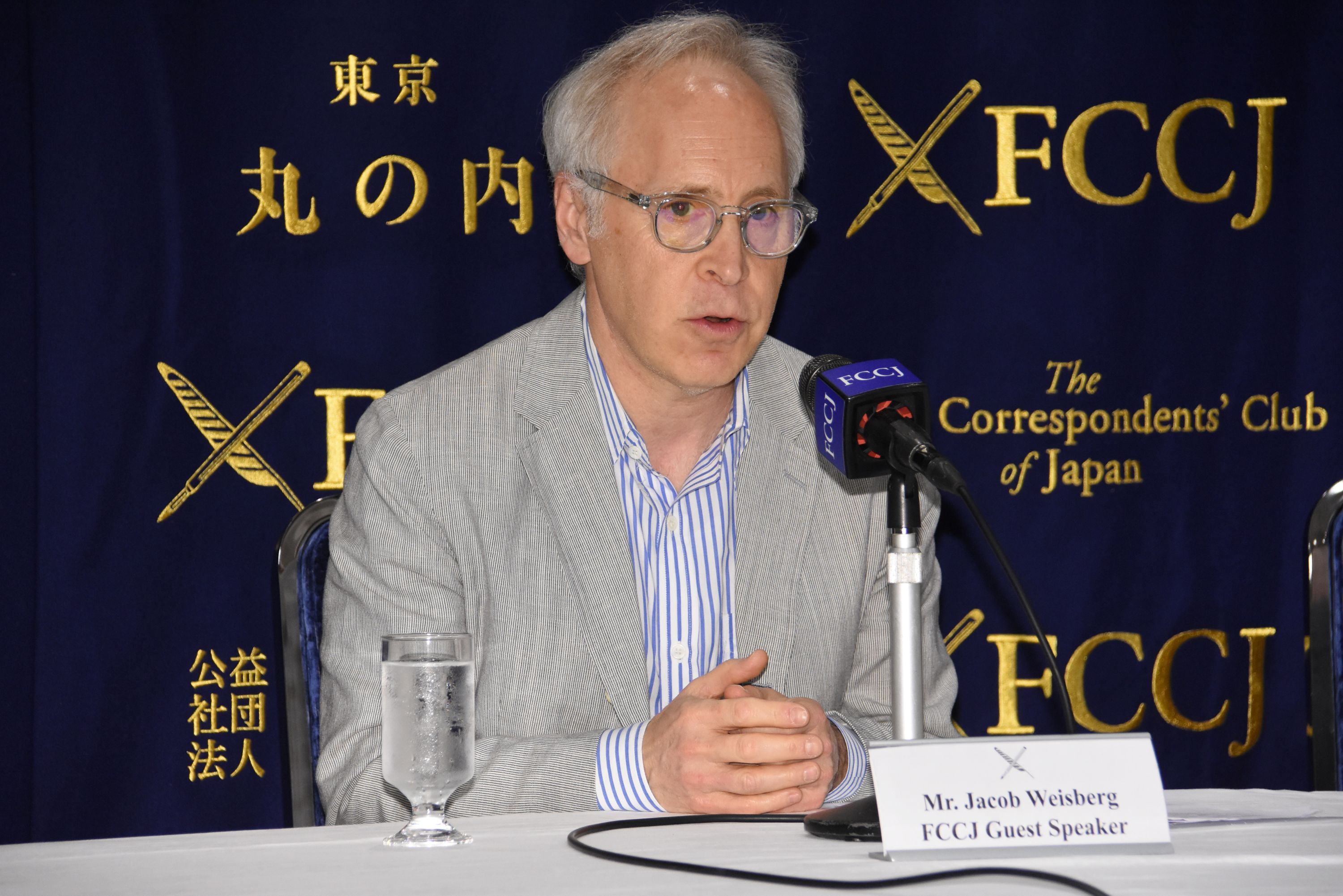
“Democracy is in decline around the world,” Jacob Weisberg, chair of the committee, told a press conference at the FCCJ in late May, noting that some 335 journalists are locked up globally. “It’s a moment that underscores the vital role that journalists play in providing timely and factual information. Independent journalism is the foundation of accountability…It’s the most dangerous time ever to be a journalist since CPJ has been operating.”
Founded in 1981, the CPJ focuses on advocacy, awareness and assistance. Weisberg described how it shines a spotlight on journalists who are being harassed or detained. Its awareness activities take the form of meticulously documenting incidents around the world in which journalists are targeted. Meanwhile, it provides assistance to journalists in trouble, helping their families and providing a rapid response in times of danger.
Asia has long been the region with the highest number of journalists in prison, with 103 journalists currently locked up, led by China, Myanmar and Vietnam. Weisberg mentioned journalists such as Dong Yuyu, former editor of the Guangming Daily, who was sentenced to seven years’ imprisonment on espionage charges; Jimmy Lai, founder of Hong Kong’s Apple Daily, who was sentenced to 20 years for sedition under the 2020 Hong Kong national security law; and Myanmar Now photojournalist Sai Zaw Thaike, who was sentenced by a military tribunal to 20 years in prison with hard labor on charges of sedition.
In Iran, the Islamic Revolutionary Guard Corps arrested NHK Tehran bureau chief Shinnosuke Kawashima amid antigovernment protests in January. He was released after two months but still faces charges and cannot leave Iran, according to Weisberg. He called on Japan, as a mature Asian democracy without contemporary instances of imprisoning or killing journalists, to use its diplomatic leverage to advocate for press freedom across Asia.
“Protecting press freedom is in the direct interest of Japan and other countries,” said Weisberg. “Independent journalism supports public trust, accountability, the response to crises, peace and security and informed policymaking—all of the things that are necessary for societies to be stable, to be informed, to be resilient.”
Tokyo pushing for press freedom may seem implausible to those who are more familiar with Japan. With its longstanding kisha club news cartel system, it ranked 62 out of 180 nations—two notches above the United States—on the World Press Freedom Index maintained by Reporters Without Borders. The media advocacy group noted that in Japan, “traditional and business interests, political pressure and gender inequalities often prevent journalists from completely fulfilling their role as watchdogs… The government and corporations routinely exert pressure on the management of mainstream media, resulting in heavy self-censorship on topics that could be deemed sensitive.”
Weisberg noted similar self-censorship in the U.S., where what he terms “media capture” has seen TV networks coming under pressure to fire late-night talk show hosts who have ridiculed President Trump. Meanwhile, news organizations and journalists face the threat and cost of “lawfare” suits by the administration—more than a few major media conglomerates and online platforms have fallen in line.
“These lawsuits are a tremendous abuse. Government officials are subject to criticism and accountability,” Weisberg said. “Sometimes news organizations will settle spurious suits, either because they need government approval for a merger, as was the case against CBS, or because they think it’ll be cheaper to avoid the distraction, as in the case that ABC settled. The online platforms paid what were effectively bribes to the president at the beginning of his term.”
Despite all the headwinds, Weisberg said there’s never been a better time to be a journalist, citing all the media platforms available to newcomers to the profession and emphasizing its critical role in our society and freedoms.
“An independent, pluralistic media is essential to democracy,” said Weisberg. “It’s why authoritarian regimes are so intent on silencing it. They’re not just intent on punishing journalists, they’re interfering with the right of the public to be informed. Press freedom is not just about freedom for journalists to do their jobs. It’s the foundation for the public’s right to know and be informed through journalism.”
Tim Hornyak is a Canadian writer based in Tokyo. He has worked in journalism for more than 20 years, and written extensively about technology, science, culture and business in Japan, as well as Japanese inventors, roboticists and Nobel Prize-winning scientists.
