


Issue:
March 2026
Rental Family actor Mari Yamamoto says the film teaches us that true kindness is a two-way street
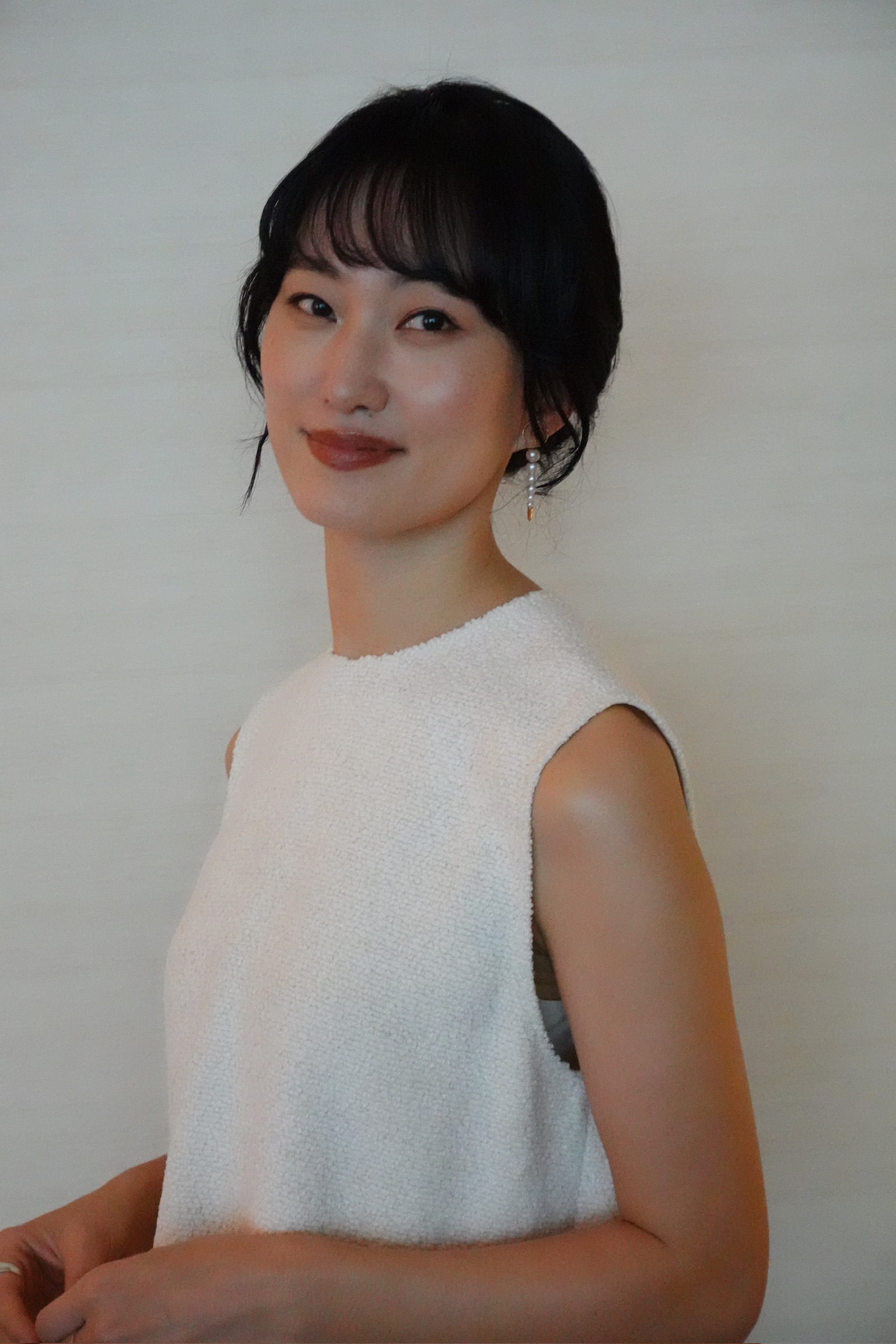
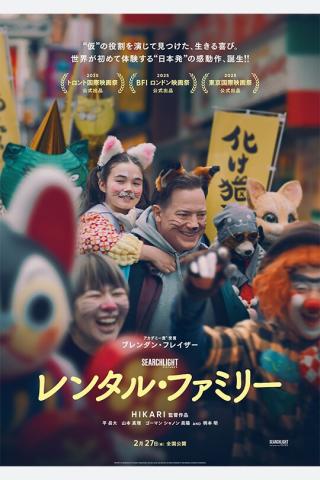
Loneliness is the quiet protagonist of Rental Family, a Japanese‑U.S. comedy‑drama about people who hire stand‑in relatives and the actors paid to play them. The film opened in Japan on February 27, turning a bizarre‑sounding service into a lens on a culture in which asking for help can feel more shameful than being alone. Rental Family won the Audience Award at the Middleburg Film Festival in 2025, one of the more prominent fall festivals on the North American awards circuit, and has garnered an almost cult-following.
Starring Brendan Fraser and directed by Hikari, the female lead is Mari Yamamoto, a journalist and former member of the FCCJ. I worked with Mari for many years at the Daily Beast, where she wrote with the same mix of curiosity and precision she now brings to the screen. Long before she appeared opposite Fraser, she started as a journalist at the Japanese travel magazine TRANSIT, chasing stories rather than camera angles. That background matters, because Rental Family is, at its heart, a reporter’s film about the emotional economy of modern life.
Filling out photos
The story follows Phillip (played by Brendan Fraser), a struggling American actor in Tokyo who stumbles into work with a “rental family” agency that sends performers to play spouses, parents, or friends in the lives of strangers. The premise is comical, even absurd: a foreigner hired to fill out family photos, play a groom, give toasts, or smooth over social embarrassment. But each job Phillip takes pushes the story away from satire and toward something quieter and more unsettling. (I’ve done my best to keep this article spoiler-free).
A fake fiancé helps a woman stage a traditional wedding for her parents, on the eve of her departure with the spouse they don’t know about. A pretend father helps a mixed‑race girl navigate a school system that still wants to see a “proper” family at the entrance exam. The agency sells performance, but what its clients are really buying is permission – to grieve, to conform, to be seen.
Around Phillip is a small, fragile community inside the company itself. Shinj (Takehiro Hira) the owner, treats rental kinship as a business model; Aiko, played by Yamamoto, and her co‑workers grind through gigs that range from the touching to the degrading. Over time, these “professionals of emotion” realize they are at least as lonely as the people hiring them, and that the roles they play for others are the very roles they lack in their own lives.
Someone to talk to
In our conversation, Yamamoto was candid and charming. She built Aiko the way she used to build stories – as a reporter. She started not from theory, but from fieldwork, leaning on the same research reflexes that served her when she was filing travel pieces and investigative features. For this role, she went to a women‑only benriya (odd‑jobs) service in Japan, which shies away from the label “rental family” precisely because renting a family sounds too extreme, too shameful, for most clients to admit. The softer name lowers the psychological barrier to entry.
What she heard there was less about tasks than about time. Clients might hire someone for an hour to change an air‑conditioner filter, a five‑minute job. Once it is done, the worker asks, “Anything else I can do?” and jobs begin to spill out: small chores, lingering errands, and finally the truth – the person mainly wants someone to talk to.
“At first, they ask you to change the AC filter, but in truth they just wanted someone to talk to,” she said. The errand is a socially acceptable excuse – the real service being purchased is presence.
Yamamoto described elderly clients who ask a staff member simply to sleep in the next room so they can fall asleep to the sound of another human being breathing nearby. She told me about a solitary patient in a hospital who sent a worker to retrieve a stuffed animal from home, only for the worker to find a garbage‑packed apartment and end up crawling through trash to rescue this one object that still meant something. In the end, the “job” became cleaning the apartment, yes, but more than that it became dignifying a life that had collapsed into clutter.
For Yamamoto, these stories revealed two hidden truths. First, that many people – in Japan, but not only in Japan – need help in ways that fall outside formal systems: not medical care, not welfare, but someone who will cross the threshold and notice what is there. Second, that the people providing this labor feel a deep sense of meaning, because the impact is immediate, visible, and mutual. “It’s not just about giving,” she said. The staff feel they receive just as much, in gratitude and a palpable sense that they matter.
Being a burden
Asked why loneliness seems to be spreading in Japan, especially among older men, Yamamoto pointed to a cultural instinct that sounds virtuous but becomes deadly in excess: the desire not to be a burden. In her view, many Japanese are incredibly kind, but that kindness turns inward in a dangerous way. “You don’t trouble your grown children by telling them you’re going into surgery; you text only afterward to say it went well. You don’t admit that you are afraid of dying alone; you apologize for inconveniencing people if they find out too late.”
This restraint is often mutual. Parents hide illness to spare their children worry. Children hesitate to pry, to ask the harder questions, because they don’t want to violate a boundary or seem ungrateful. What begins as consideration becomes distance. Yamamoto thinks a lot of Japanese families are drifting apart not because they care too little, but because they care in a way that is indirect, conflict‑averse, and often silent.
Gender layers another pressure onto this. Older men, she notes, grew up with rigid ideas about masculinity. They were trained not to show weakness, not to ask for help, and certainly not to confess to something as “unmanly” as loneliness. Their identities fused with their jobs. When they retire or get laid off, they lose not just income but identity, self‑worth, and the social network that came with work. The result, in both Japan and the United States, is a cohort of men who know how to perform competence at the office but not vulnerability at home.
Against this backdrop, services that sell companionship – host clubs, “rental friends,” and the fictionalized agency in the film – start to make psychological sense. If all day you must orbit around others, reading the room, suppressing your own needs, then a space where you pay to be the center becomes a kind of pressure release. For that hour, you do not have to manage anyone else’s feelings. In Yamamoto’s words, these services buy you the rare luxury, in Japan, of focusing on yourself without guilt.
Absorbing the blows
Inside the film, Aiko is not just an employee; she is one of several characters who are themselves profoundly lonely. They fill their own inner gaps by filling in for others – playing dutiful mistresses in apology scenes where they get physically slapped, pretending to be caring relatives at funerals or celebrations, absorbing the blows that real families refuse to face. The work is risky and sometimes degrading, but it gives them structure and meaning.
Yamamoto sees this as the paradox at the heart of Rental Family. The very people paid to simulate family ties are the ones who most urgently need those ties themselves. Over time, as they keep gathering in the same shabby office, sharing bento and war stories from the field, they become each other’s de facto family. A boss becomes an older brother. A co‑worker becomes a surrogate sibling. The company selling fake kin ends up, unintentionally, creating the real thing.
Her favorite scene in the film involves an older character returning to his childhood home and speaking to a tree, in a gesture that echoes Shinto ideas about spirits dwelling in natural objects. For her, this moment captured how Japanese spirituality and everyday emotion quietly intertwine. She remembered her own father talking to the trees in their yard, encouraging them to grow. The shot of an aged hand resting on aged bark, she said, moved her deeply: human time and natural time, held in one frame.
I saw the movie at its Los Angeles premiere in October. Part of the film centers on an aging actor who struggles with health and memory in his last days. In that performance, I saw echoes of my Zen master, Ryogen Adachi, who died on November 20, 10 minutes after I got off the plane. When I saw the film again in February, it resonated on a more profound level. It is a film that can be watched more than once and still be savored.
The moral of Rental Family
Near the end of our interview, I tested Yamamoto on a proverb: 情けは人のためならず Nasake wa hito no tame narazu. Like many modern Japanese, she initially offered the common misreading. She's not alone. A Cultural Affairs Agency survey found nearly half of those questioned chose the wrong meaning (“being kind doesn’t help the other person”), essentially equal to the share who answered correctly.
The real meaning is almost the opposite: acts of kindness toward others ultimately return to you. I probably only know because my Zen master also quizzed me on the true meaning and I got it wrong. We live, we learn.
But, that misunderstanding is, in a way, the story the film wants to correct. We live in a world where people worry that helping will “spoil” others, or that asking for help will burden them. Rental Family suggests that both fears miss the point. The characters discover that helping others – on or off the clock – gives their own lives coherence. The clients, in turn, find that paying for care is often just a first step toward remembering how to ask for it directly.
Yamamoto hopes audiences leave with a simple impulse: if you feel lonely, take one small step outward. Call someone. Email someone. Say hello to a neighbor you usually nod past. In a society that has professionalized emotional labor to the point that you can rent a wedding guest or a surrogate father, genuine connection may feel risky, even embarrassing. But the film insists that the only reliable antidote to isolation is the same thing that animates its strangest service economy: the willingness to show up for one another, imperfectly, in person.
Jake Adelstein has been an investigative journalist in Japan since 1993 . Author of Tokyo Vice and The Devil Takes Bitcoin, he also co-hosted the award winning podcast The Evaporated. Follow him on https://tokyopaladin.substack.com/
