


Issue:
March 2026
Tech entrepreneur Joi Ito exchanged thousands of emails with sex offender Jeffrey Epstein. Why are Japan’s big media pretending they don't exist?
The U.S. Department of Justice’s partial release of materials related to Jeffrey Epstein has turned the Epstein files into one of the biggest international news stories of 2025-2026. The world has been shown that prominent figures in business, entertainment, and academia maintained friendly relations with the disgraced financier and sex offender. Major media outlets in the United States, the United Kingdom, and other parts of the world have called on these figures to clarify the nature of their relationships with Epstein. Even in cases where there are no allegations of criminal wrongdoing, the reputational damage has been serious, and institutions have acted to distance themselves from individuals seen as too closely connected to Epstein’s network.
The scandal has also reached Japan. New details have emerged about ties between Epstein and Japanese tech entrepreneur Joi (Joichi) Ito, the former head of the Massachusetts Institute of Technology’s Media Lab. In the months after Epstein’s death in prison in 2019, U.S. media coverage of Ito’s efforts to raise money from Epstein put pressure on the Media Lab, leading Ito to resign after apologizing for what he called an “error of judgment”. Ito denied any knowledge of or involvement in criminal acts committed by Epstein during the period they knew each other.
A January 2020 independent report into Epstein’s interactions with MIT revealed that Ito proactively sought donations from Epstein, despite repeatedly receiving warnings about the American’s reputation and previous criminal convictions. It noted that Ito and others realized that accepting public donations from Epstein would not reflect positively on their organization, so efforts were made to make the donations anonymous.
Ito did not fade into obscurity after his fall from grace at MIT. Instead, he returned to Japan, where media coverage of the Epstein-MIT scandal had been minimal. Japan’s political establishment welcomed his expertise and in 2021 he was appointed to an advisory position in the government’s Digital Agency. According to Shukan Bunshun, influential conservative journalist Yoshiko Sakurai, who co-authored a book with Ito in 2002, considered him “someone overflowing with creativity, a Japanese treasure on par with Shohei Ohtani”. Sakurai allegedly arranged for meetings between Ito and the leadership of the Chiba Institute of Technology, which offered Ito a job and made him university president in 2023.
Years passed and memories of Ito’s ties with Epstein seemed to fade. However, that changed when the DOJ released portions of the Epstein files between December 2025 and January 2026. Although many of the files were redacted, the information available revealed that Ito had written over 8,000 e-mails to Epstein, making him one of the billionaire’s most prolific correspondents. The e-mails showed a friendship that went beyond mere requests for Media Lab funding and provided enough new information to raise many questions.
Unfortunately, Japan’s mainstream media did very little to respond. Throughout January and February major Japanese newspapers and television networks seemed to consistently treat the international fallout from the Epstein files as something unrelated to Japan.
For example, on February 20, 2025, the public broadcaster NHK ran an article titled “The ‘Epstein issue’: Newly released documents reveal a wide-ranging network of connections.” Published in the wake of the arrest of Andrew Mountbatten-Windsor – formerly known as Prince Andrew – it provided a brief overview of the international controversy surrounding Epstein, noting that files released by the DOJ over the previous two months had revealed “the breadth of Epstein’s network of connections, ranging from politicians to corporate executives and researchers”. The report named Mountbatten-Windsor, former U.S. President Bill Clinton, Treasury Secretary Howard Lutnick, former Norwegian Prime Minister Thorbjørn Jagland, and Norway’s Crown Princess Mette-Marit. Notably absent was any mention of Japanese names or the possibility of ties with Japanese people.
However, Japanese social media users who pored over the documents were unafraid to point out Ito’s prominence in the files. On X, many viral posts tried to analyze e-mails between Ito and Epstein. The enormous volume of e-mails, combined with English phrases that were often confusing or ungrammatical, created a lot of room for wild speculation.
This online speculation coincided with Japan’s House of Representatives election campaign between January 27 and February 8. Three days into the campaign, LDP politician Takuya Hirayama posted a video of Joi Ito endorsing his candidacy. Hirayama met with Ito on various occasions while serving as head of the Digital Agency and may have believed that linking himself to Ito would boost his campaign. Instead, it resulted in a flood of negative comments from X users who were aware of the recently released Epstein e-mails. Hirayama deleted the video, as well as an older post about a meeting with Ito. The incident received no mainstream media coverage and had little impact on the election, which Hirayama easily won.
As is often the case with stories involving information that could potentially damage the reputations of powerful or famous people, tabloid magazines and online media were willing to take a risk that newspapers and television channels seemed eager to avoid. In February, the weekly tabloid Shukan Bunshun ran several paywalled stories about the Epstein files, focusing on Joi Ito and possible links to Japanese businesses.
One of the most prominent Japanese public figures to speak out about the lack of media reporting on the Epstein files was Waseda University journalism Professor Yasuomi Wada. In a February 18 interview with an online news outlet, Wada criticized the mainstream media for their extreme cautiousness when it comes to publishing stories that could “cause trouble” or result in lawsuits. As a former investigative journalist who was involved in Japanese coverage of the Panama Papers, Wada believed there was a need for Japan to “cultivate journalists who are challenging and combative” and have lawyers who are willing to defend the freedom to report on issues that are in the public interest.
One journalist who is fighting for the public interest is Taro Iwata, who wrote a February 22 piece for President Online explaining some of the newly discovered details about Joi Ito’s friendship with Epstein. Iwata noted that Ito’s name appears over 10,000 times in the Epstein files and there was evidence indicating that Ito made three visits to Epstein’s infamous private island. Ito’s e-mails were cited as evidence that he helped introduce influential figures in the academic and tech world to Epstein. Iwata pointed out that the documents do not include proof of any criminal wrongdoing by Ito, but argued that Ito’s status as a university president and as someone who holds positions of responsibility in Japanese society make it reasonable to ask that he further explain his ties to Epstein.
On February 23, the Kyodo News newswire ran one of the first mainstream media articles mentioning the DOJ Epstein files’ impact on Ito. The article appeared in several major newspapers, including the Nikkei, Sankei, and Mainichi. Its brief report stated that the hacker convention DEFCON had banned Ito and two other individuals from attending their yearly event due to their past ties to Epstein. It mentioned that Ito had resigned from MIT in 2019 after accepting donations from Epstein but did not mention that the recently released DOJ files contained thousands of e-mails with new information about the Ito-Epstein friendship. The article followed a pattern one often observes with scandals involving public figures in Japan: mainstream media outlets seem to wait for international media to report on a scandal, so that foreign press can be “cited” as sources.
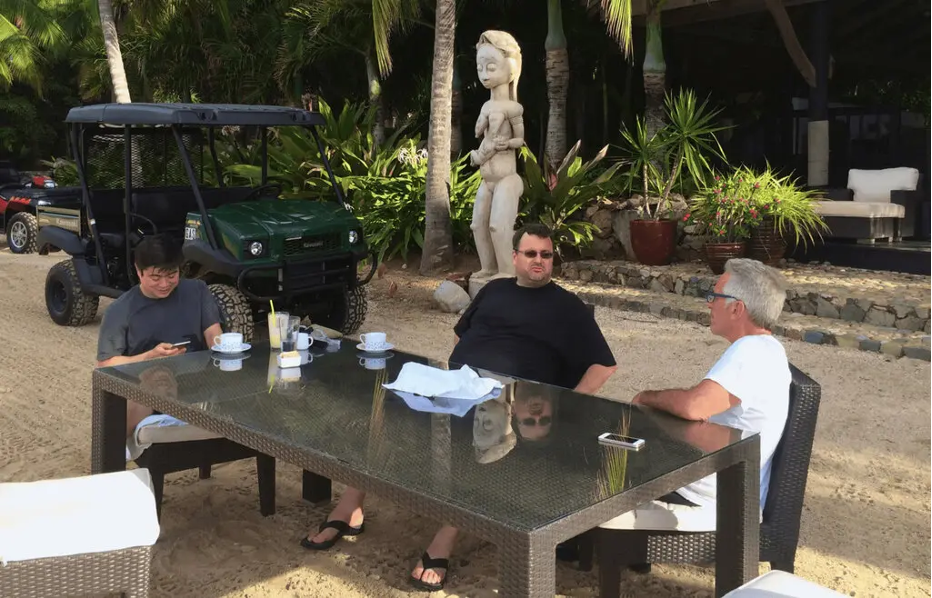
As I was completing this article on February 24, the New York Times had just published an article on Epstein’s ties to the tech world, alleging that Joi Ito introduced him to LinkedIn co-founder Reid Hoffman. The article included a photo of Epstein, Hoffman, and Ito on Epstein’s private island. Coverage from one of America’s most prominent newspapers could serve as a catalyst for cautious Japanese mainstream media outlets to raise questions about Ito’s role in Epstein’s network of associates.
Jeffrey J. Hall, PhD, is a lecturer at Kanda University of International Studies in Tokyo.
