


Issue:
March 2026
The imprisonment of Apple Daily owner Jimmy Lai has fomented fear throughout Hong Kong journalism
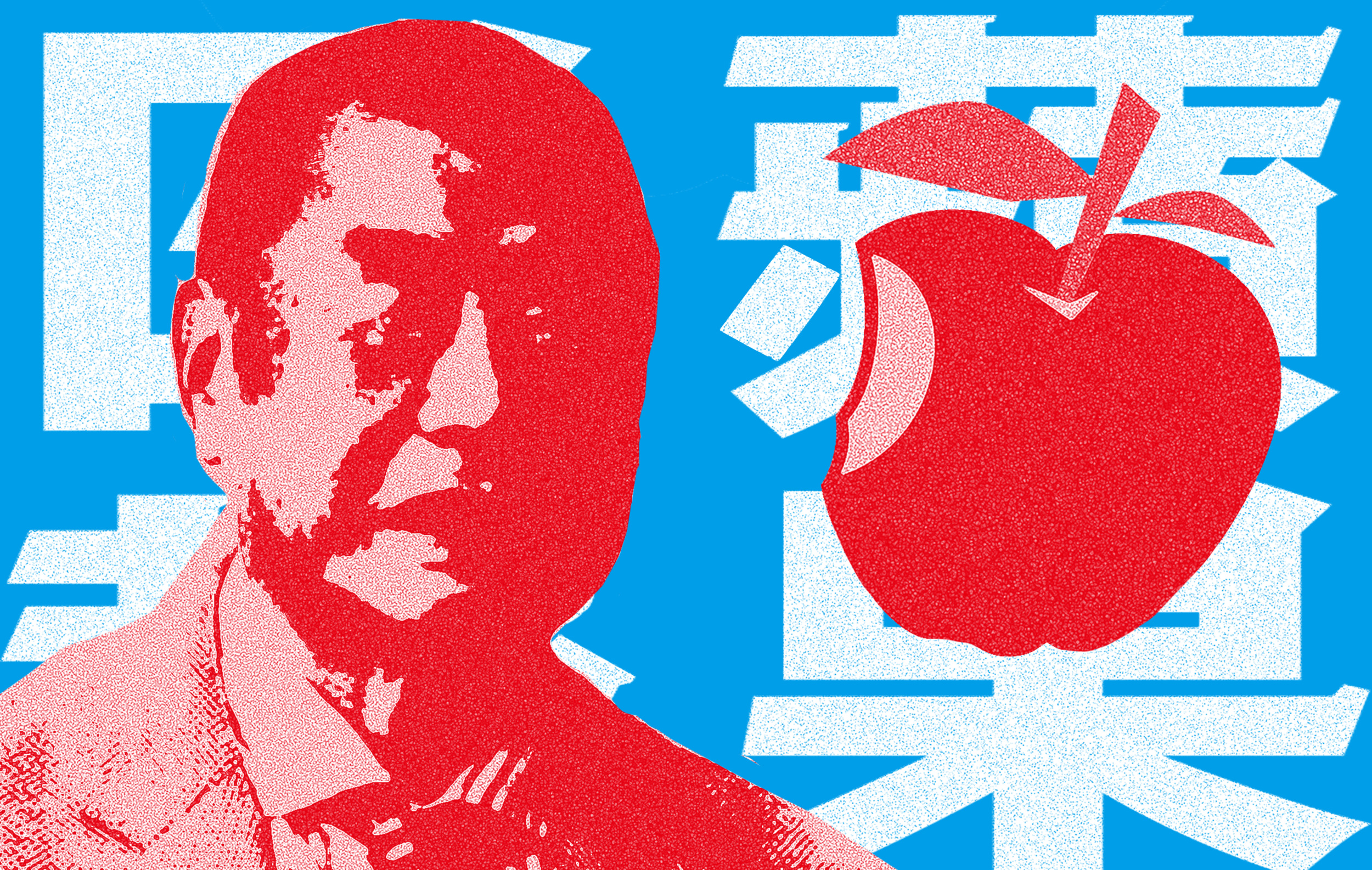
The Hong Kong headquarters of the South China Morning Post — the city’s main English-language newspaper — is a 20-minute taxi ride, traffic permitting, to the offices of the Apple Daily newspaper.
On the morning of June 17, 2021, Apple Daily somehow seemed much closer than 20 minutes to me. I was sitting at my desk in the 19th floor newsroom of the SCMP in Times Square, Causeway Bay.
At 7:30 a.m. that day, about 500 armed police officers raided Apple Daily. They spent the morning confiscating scores of laptops and hard drives, along with other devices and notebooks used by reporters. The police marched arrested journalists out of the building in handcuffs and froze about US$2 million in Apple Daily assets. The paper shut down days later.
The raid was not the first that morning. A few hours earlier, the police had arrested Apple Daily Editor-in-Chief Ryan Law and other senior journalists at their homes. The paper’s 78-year-old owner, Jimmy Lai, had been in detention since August of the prior year.
Apple Daily was known as the city's pro-democracy newspaper for its criticism of the Chinese Communist Party (CCP) that rules the mainland. It described the CCP as an "authoritarian regime". During the 2019-2020 mass street protests against Beijing’s tightening grip on the city, it ran headlines that included: “Fight for Freedom, Stand with Hong Kong.”
It was also a tabloid, covering celebrity gossip, sex and crime scandals, and splashing its front pages with Paparazzi-style photos.
The raid on Apple Daily was executed under the National Security Law for Hong Kong that China President Xi Jinping signed into effect on June 30, 2020.
Known as the NSL, the law has four main sections.
It criminalises Secession: acts aimed at separating Hong Kong from China. Subversion: efforts to undermine or overthrow the Hong Kong or mainland government. Terrorism, which speaks for itself. And finally Collusion with Foreign Forces: working with overseas governments or organisations against the interests of Hong Kong and China, the section with the broadest sweep.
As more SCMP journalists arrived in the newsroom that Thursday morning, the police raid dominated the conversation at desks, the coffee machine and in conference rooms.
"If it's Apple Daily today, could it be SCMP tomorrow? What will happen to the Apple Daily journalists? Did you see any police outside?"
Eye contact with colleagues communicated the real question: "Have I ever written anything that under the NSL could lead to a knock on my door tonight, perhaps tomorrow? Could I face arrest?"
And so the fear began its quiet creep into the SCMP newsroom, like smoke slipping under the doors from a fire lit by Beijing just 20 minutes away.
One SCMP reporter covered social media in mainland China, often the first sources of criticism against the CCP before the censors shut them down. The reporter was concerned that the stories published off those posts could be construed as violations of the NSL. Under the law, it didn't matter when the stories had been published.
Reporters wanted answers.
An email appeared in our inboxes: SCMP Editor-in-Chief Tammy Tam Wai-yi and Executive Editor Chow Chung-yan would host a newsroom conference call to address our concerns.
In my opinion, Chung-yan set the wrong tone when he used the call for a broad criticism of Apple Daily itself. He said several times that he had never liked the newspaper, perhaps reflecting his disdain for its tabloid elements. Tammy made clear that SCMP would carry on with its mandate. Chung-yan said SCMP staff should have no concerns because the paper's reporters worked in mainland China and were accustomed to operating under the rules that existed there.
I asked Tammy if the SCMP news leadership had been contacted by Beijing authorities or given guidance on coverage. Foreign news organizations in China are called in for what’s known as a “cup of tea” when the authorities want to make a point about news coverage.
Tammy said that had not happened. Rather the increasing number of mainland officials arriving in the city were asking for advice on Hong Kong rather than dispensing it.
After the call, the newsroom grumblings echoed less interest in what Chung-yan thought of Apple Daily, more in what SCMP would do if one of us were arrested. And so began the second-guessing on story ideas and themes. What is now acceptable? What isn't? Where are the red lines?
Perhaps this is a good place to introduce the Anaconda.
US Professor Perry Link, a specialist in Chinese politics, wrote an essay in 2002 titled "The Anaconda in the Chandelier." It's a characterization of the CCP and how it deals with dissent. It sums up very well what happened to Hong Kong, and not just its media and press freedoms.
In short, Link's essay says the CCP doesn't intimidate by acting as a man-eating tiger or fire-snorting dragon, but rather as a giant anaconda.
To take the metaphor to the case of Apple Daily, the anaconda strikes to bite off the head of what displeases and then retreats to coil in the chandelier to wait and watch. Link writes: "Normally the great snake doesn’t move. It doesn’t have to. It feels no need to be clear about its prohibitions. Its constant silent message is ‘You yourself decide.’”
Before the NSL was imposed on the people of Hong Kong, they did make a decision. In 2019 District Council elections, they voted in their millions for pro-democracy candidates in a record turnout. Those candidates took 86% or 388 of 452 seats. Pro-Beijing candidates were largely wiped out.
After the NSL, the anaconda wrapped itself around Hong Kong, and like the unease that crept into the SCMP newsroom, the fear was now on the streets.
What followed was the unraveling of the city’s civil society. Hundreds of political organizations, unions, university groups, teacher associations, media companies and more announced they had "decided" to disband. Translation: fear of running afoul of the hissing snake above.
I was traveling home on a Hong Kong ferry when I read the disbanding announcement that struck me most of all. It came from a women’s book club in the Mid-Levels residential district. Apparently, the members were concerned books they were reading or had read may contain views that violated the NSL. A book club of well-to-do ladies dissolves in fear of arrest over their reading list!
And the arrests were real. Dozens of journalists, protestors and the elected councillors from 2019 were in jail or had fled the city. I decided it was time to leave.
Jimmy Lai and Apple Daily journalists couldn’t leave, of course. On February 9 this year, Lai was sentenced to 20 years in jail and the six others with him received sentences of between six and 10 years.
While Human Rights Watch, the UN, Amnesty International and many global news organisations said the sentences were an attack on civil liberties and press freedom, the SCMP saw it differently. The paper’s editorial praised the sentences as a victory for law and order. An SCMP opinion piece called the convictions a "welcome decision".
It was certainly welcome to the anaconda and, I suppose, to Apple Daily critic and SCMP former executive editor Chung-yan, who is now editor-in-chief of the paper.
However, this is not a hatchet job on the SCMP. The paper won praise for its coverage of the 2019 protests and its reporting on the Covid-19 outbreak. Chung-yan flew a team of reporters into Wuhan within 24 hours of reports in mainland social media of the appearance of a “strange pneumonia” in the city. And those social media posts were first spotted by Tammy Tam. SCMP is as much a victim of the anaconda as the rest of Hong Kong.
I started this article by trying to illustrate the worry in the SCMP newsroom on the day of the raid on the Apple Daily and who could be the next journalist to be arrested.
One reporter in the Hong Kong newsroom that day was Minnie Chan, who I worked with on the China Desk. She covered military defence and security.
Minnie went to Beijing in October 2023 to cover the annual Xiangshan Forum on defence, which she had covered many times before. But this time she didn’t return home and stopped responding to messages.
Many of her friends used social media to raise the alarm and try to find out where she is. The speculation became that as she had sources in the military establishment and Xi Jinping has been running repeated purges of senior People’s Liberation Army officers for several years, Minnie’s name may have appeared in communications with such officials and so she was arrested.
But that is just speculation. No one knows for sure. Eventually, the SCMP put out a statement confirming she is in China and handling "a private matter". Her family in Hong Kong — she has two children — requested privacy.
More than two years later, Minnie is still missing. And the anaconda hisses in its chandelier.
Peter Langan is the former Tokyo bureau chief of Bloomberg News, where he also served as a managing editor and editor-at-large.
