


Issue:
January 2026 | Japan Media Review
News organisations are reluctant to address the heavy price paid by family members of notorious criminals
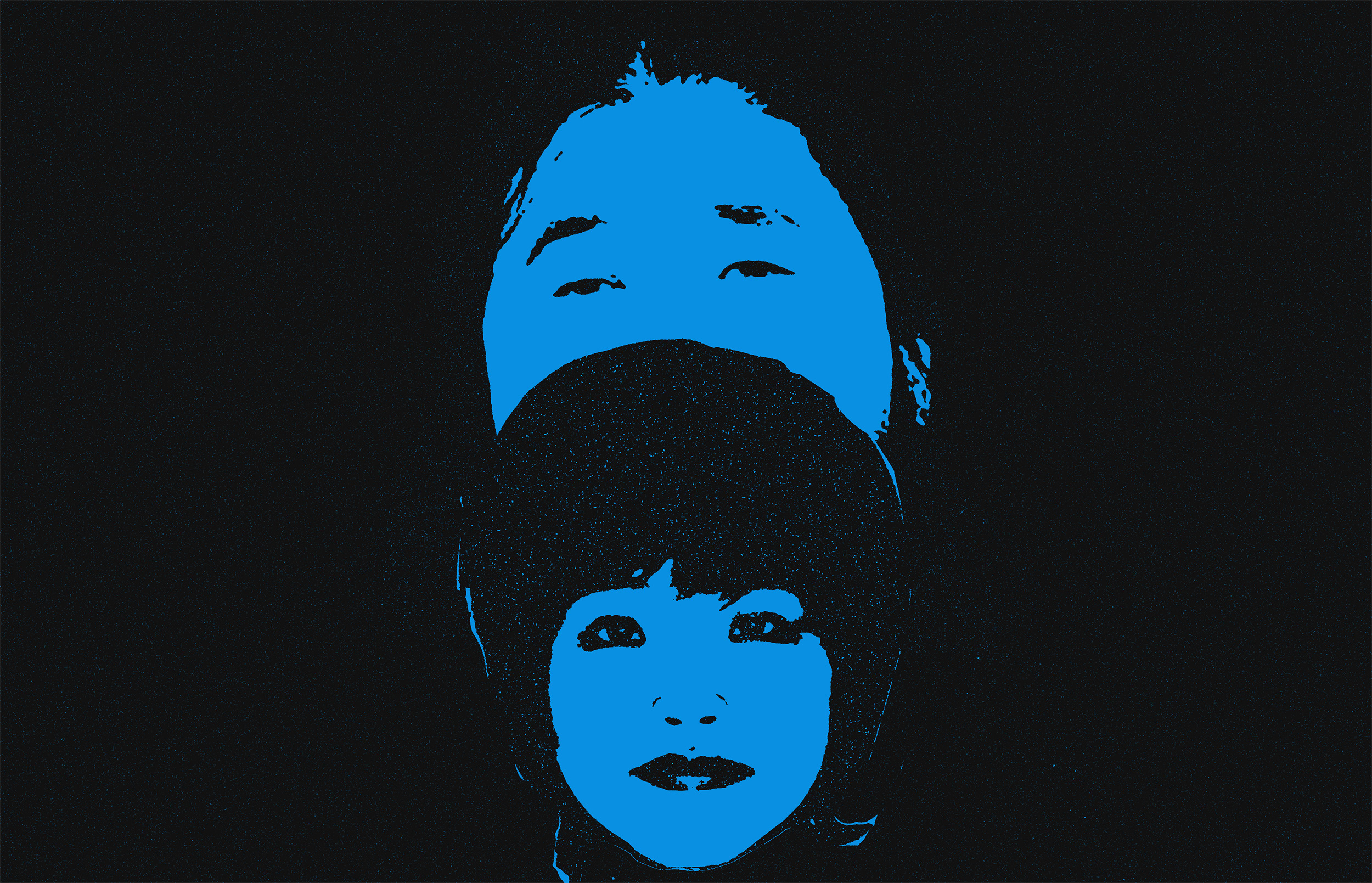
Last May, the Foreign Correspondents' Club of Japan screened the documentary Though I'm His Daughter and afterwards held a press conference with the director, Yo Nagatsuka. The movie is about Rika Matsumoto, the daughter of the leader of the religious cult Aum Shinrikyo, which carried out the sarin attack on the Tokyo subway system in 1995 that killed 14 people and injured thousands of others. The cult’s leader, Shoko Asahara, whose real name was Chizuo Matsumoto, was eventually convicted of masterminding the attack and sentenced to death. His execution took place in 2018. Nagatsuka covered Rika Matsumoto for six years. Ever since the sarin incident, which happened when she was 12, she has been the object of concerted social stigmatization that's prevented her from leading a normal life, even though she had nothing to do with the attack.
The authorities created the structure that made Matsumoto's life difficult, but the media has exacerbated the effects of that structure. Relatives of notorious criminals are held accountable for those criminals' transgressions regardless of the relatives' connection to the crimes themselves. Major media outlets rarely contradict this construct. During the press conference, Nagatsuka said that while he was filming, he continually pitched related stories to TV stations in Japan, but none was interested. It's perhaps worth mentioning that Nagatsuka's previous work included a documentary about the death penalty in Japan that was also turned down by Japanese broadcasters. As a producer from NHK, Japan's public broadcaster, once told him, the Japanese media only presents content "that its audience will like”.
Consequently, very few media outlets in Japan seem interested in telling Matsumoto's story from her perspective. One exception is the Tokyo Shimbun, which, in a feature published in October, described in detail her tribulations. The article points out right at the beginning that Matsumoto left Aum, which she belonged to only because her parents did, at the age of 16. (At the press conference, Nagatsuka clarified that while the media has always stated that Matsumoto "left" Aum as a teenager, she was never actually an active member - she was simply born into it.) The newspaper goes on to say that her life almost immediately hit a wall.
Last summer, Nagatsuka's film won an award at a prominent Korean film festival run by one of the country's public broadcasters. Matsumoto was invited to attend the award ceremony, but the South Korean government eventually blocked her entry to the country without giving any reason. This aspect of the matter was covered by major media, but only the Tokyo Shimbun looked into why the ban was implemented, saying that the Public Security Intelligence Agency, which operates under the general designation of Koan, had classified Matsumoto as a "dangerous symbol", so when she arrived at Haneda airport to check into her flight, Korean immigration was notified of this security classification and refused her entry. Upon further investigation, the Tokyo Shimbun found that the data used to make the classification had been false. Koan claimed that she was still enrolled in a dangerous religious organization, but she was not. Seven years ago, she also was invited to Korea for a different reason and was again refused entry. With such a classification, it is almost impossible for Matsumoto to travel to any foreign country.
The Tokyo Shimbun discovered, meanwhile, that a "former executive of Aum" (unidentified by the newspaper) had been permitted to enter Korea. Why would this individual, who had a hand in the workings of the "dangerous religious group" – which, by the way, no longer exists – be allowed to travel abroad while a woman who had no operative relationship with the organization is prevented from enjoying the same privilege?
Reporter Koji Kiyota, in an interview with the online news show Abema TV in late August, also covered Matsumoto's difficulties. Kiyota said that in 2014 Koan, which was monitoring an "Aum successor group", had insisted that Rika Matsumoto was an executive in the group. However, when Kiyota checked government security records, he found that Rika's mother and brother were in fact "receiving funds" from a religious organization that is considered an offshoot of Aum, but that Rika was not. Apparently, this intelligence was never confirmed by Koan, and so Rika's classification as a security danger remains.
Koan, which was established in the 1950s in order to monitor and control groups considered subversive, including left-leaning political organizations and Japan-resident Koreans, has in recent years found itself with less work to do as organized criminal groups have disbanded. These days, Koan mainly carries out surveillance of extreme right-wing organizations and the Japanese Communist Party.
As Nagatsuka pointed out at the press conference, Matsumoto's situation is considered acceptable by the public, especially those who remember the sarin attack, because of her family. In an article posted August 20 in the Kyodo News online publication 47 News, Yoshitake Sakano, a professor of criminal psychology, discusses the ie seido, or "family system". According to ie seido, which was introduced to the Civil Code during the Meiji Era (1868-1912), an individual is not an independent actor in the social scheme of things, but is simply one element of a group, in this case their family. Over the years, ie seido was removed from the Civil Code and subsequent legislation has weakened its legal grasp, but the system it describes remains deeply rooted in the Japanese social order. If a minor commits a crime, that person's guardian is considered responsible. But even if the perpetrator is an adult, that person's parent is still considered responsible; so is a spouse or a sibling. Depending on the severity of the crime, responsibility can extend even further into the family tree. That's because the authorities still believe, albeit tacitly, that the smallest unit of society is the family, as validated in the family register (koseki), which governs all bureaucratic interactions.
Sakano explains that he once worked as a family court investigator who specialized in juvenile crimes. Within the juvenile legal system, guardians are responsible for monitoring the children in their care. Families are not only considered the root cause of juvenile criminal behavior, but also a "resource" for their children's rehabilitation. As a result, it was often Sakano's job to point out to parents that their children's problems were their problems in that they were liable for their children's transgressions. In such a capacity, Sakano said, he was not expected to address the lives these parents or guardians actually led; he simply was expected to make them face up to their responsibility. It was, as he put it, a matter of placing blame on the parents, a stance he now regrets but admits is still the norm. He adds that there are no public organizations in Japan whose job it is to explicitly help families of juvenile offenders, only private support groups.
This blame game is picked up by the media, which flock to the homes of families of criminal offenders, both juvenile and adult, to elicit comments. But as Sakano points out, these families are almost never mentally prepared for such an onslaught. If they turn the media away or otherwise refuse to address their questions, they know the media will use their resistance against them, turning them into social pariahs in the process. Since there is no public support for the families, their households usually break down.
In principle, it is a lawyer's job to act as a medium between families of offenders and the media and deflect and correct false information. But according to one attorney interviewed by Kyodo, there are very few lawyers in Japan who are willing to take on that role. Most would rather work for the families of victims, who invariably attract support and sympathy from the public and the authorities. But as the lawyer points out, the families of offenders who have done nothing wrong usually end up becoming victims themselves. This situation also leads to recidivism: ex-convicts often have no support after paying their debt to society because their families, having themselves been the object of public resentment, refuse to help them.
In worst case scenarios, this situation can trigger mental illness. The father of Tsutomu Miyazaki, who murdered several little girls in Saitama Prefecture in 1988, killed himself in 1994 after paying compensation to the victims' families. Miyazaki himself was executed in 2008. The brother of Tomohiro Kato, who killed several people in Akihabara in 2008 by driving a truck into a crowd and then stabbing random bystanders, committed suicide some years later after his life was destroyed a relentless media campaign to force him to explain Kato’s crimes. Before he died, he told a weekly magazine that he had come to believe he was a "copy" of his brother, and thus was afraid he would end up repeating his crimes.
The most rigorously scrutinized family under siege for the transgressions of one member is that of Masumi Hayashi, who was convicted of killing several neighbors in Wakayama Prefecture in 1998 by spiking a pot of curry with arsenic at a community festival. Suspicion almost immediately fell on Hayashi, who was supposedly watching the pot in question prior to the festival. Hayashi's husband was an exterminator, meaning he had arsenic in his possession. The suspicion only intensified when it was revealed that the Hayashis had carried out several insurance scams to collect money for injuries, some of which involved the purposeful ingestion of arsenic.
The media descended like a plague on the Hayashi home and basically convicted Mayumi of the crime even before the trial started. Later she was convicted and sentenced to death based on circumstantial evidence. To this day, Hayashi has maintained her innocence and a group of supporters are convinced she was wrongfully convicted.
But she isn't the only person in her family who was punished. Her husband also went to jail, but was eventually released. As explained by her unnamed son in interviews on YouTube and in the feature documentary Mommy, which was released last summer, all four Hayashi children were sent to facilities for "juvenile delinquents or children from troubled homes". This was mainly because they had nowhere else to go, even after their father was released, since someone had burned down their house. Although none of the children had done anything wrong, they were kept in these facilities until they were 18 and then unceremoniously released to fend for themselves. One daughter not only later committed suicide, but killed her own daughter in the process.
The press continued to hound Hayashi’s son while he was attending high school and living at the facility. Local police even asked him not to attend his graduation ceremony since they feared the media scrum would pose a security problem. After leaving the facility he did his best to keep his identity hidden from new acquaintances and employers, but sooner or later they would find out, and he would have to move on and start over again. He has essentially gone from one part-time job to another.
A common theme of these stories is that the children have no idea of what is going on until much later. In an interview that was conducted by writer and social activist Karin Amamiya on the web news show Democracy Times in late September, Rika Matsumoto said she didn't understand what Aum had done until she was almost an adult. Before that, her life was a constant whiplash of change. While her family was in the cult, she did not attend school - "I didn't even know how to write my name until I was 13,” she said – but when the cult was dissolved after the sarin attack no elementary school would accept her and no local government would register her for a residency card, which is required to enrol in school and receive social services. That's why she didn't have health insurance or open a bank account until much later.
"So the constitution doesn't protect you," said Amamiya. "You are an exception."
Eventually, Matsumoto did get a residence card after the Supreme Court decided in her favor in a lawsuit in 2004. Even public broadcaster NHK rejected her application to take their high school equivalency correspondence course. She was forced to educate herself, and while she passed the entrance exam for the university she wanted to attend, it wouldn't accept her at first and she had to sue in order to enrol. She was able to earn a degree and now works as a psychological counselor, most likely for people who are in a position similar to hers. They probably could use the help of somebody who has actually been there and, to all intents and purposes, still is.
Philip Brasor is a Tokyo-based writer who covers entertainment, the Japanese media, and money issues. He writes the Japan Media Watch column for the Number 1 Shimbun.
Sources
