


Issue:
February 2026
The imprisonment, and release, of Turkish journalist Fatih Altaylı is a study in the power of social media
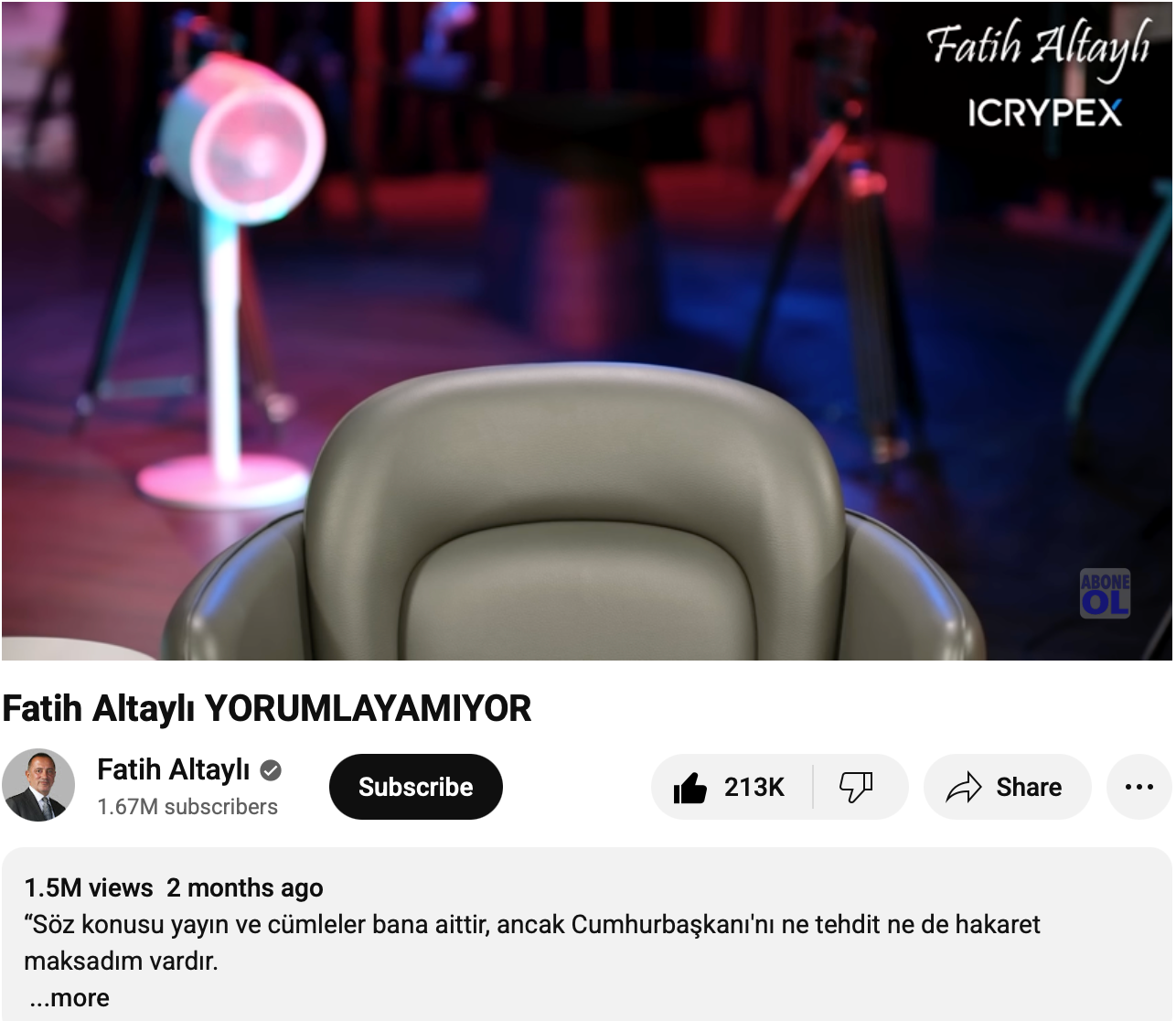
On the morning of June 23, 2025, more than 1.5 million people in Turkey tuned in to a YouTube channel to spend 10 minutes silently watching an empty chair. The chair belonged to the prominent Turkish journalist Fatih Altaylı, a veteran of the Turkish media whose career spans more than 40 years as a journalist, columnist, and editor, and most recently commentator after he left the mainstream media and started his own YouTube channel.
The show, “Fatih Altaylı Comments”, has over 1.6 million subscribers and is watched by more viewers than all of Turkey’s TV channels.
On June 21 the 63-year-old was arrested and jailed for allegedly threatening Turkish President Recep Tayyip Erdoğan. The following day, the show’s title was aptly changed to “Fatih Altaylı CANNOT Comment.” On November 26, he was sentenced to four years and two months in prison.
According to the Freedom House freedom of expression index, Turkey scored a low 31 out of 100 in 2024. (It was 30 out of 100 the previous year.)
Every morning since his arrest, the show – minus its main host – has become an open mic event and is viewed by hundreds of thousands of people every day. They watched his empty chair while listening to his program partner, Emre Aydın, sitting behind the camera reading Altaylı’s daily letter from his cell in Silivri Prison in Istanbul.
Istanbul’s opposition mayor, Ekrem Imamoğlu, and several other elected opposition officials are also being held at the prison without trial. On August 17, Altaylı managed to interview Imamoğlu via an exchange of letters between the two men’s attorneys. This journalistic feat prompted jokes among viewers that from now on there would be two empty armchairs: one for him and another for his guest, drawn from the growing number of dissidents ending up in Silivri.
At the end of the letter reading to the empty chair, a prominent journalist, opposition personality, or dissident activist would come on screen, sit on Altaylı’s chair and comment on the status quo in Turkey.
Altaylı’s voice grew exponentially while he continued to report from prison, where he met visiting MPs from across the political spectrum, journalists, and lawyers. He briefly suspended his reporting toward the end of his six months in prison.
The curious phenomenon of Altaylı’s followers in Turkey and abroad watching an empty chair, dubbed “the silent protest of the dissidents”, was a good example of how social media can be harnessed for hard-hitting journalism. Altaylı’s empty chair and his broadcasts from Silivri inspired journalists working under similar circumstances in other parts of the world who face legal injustice.
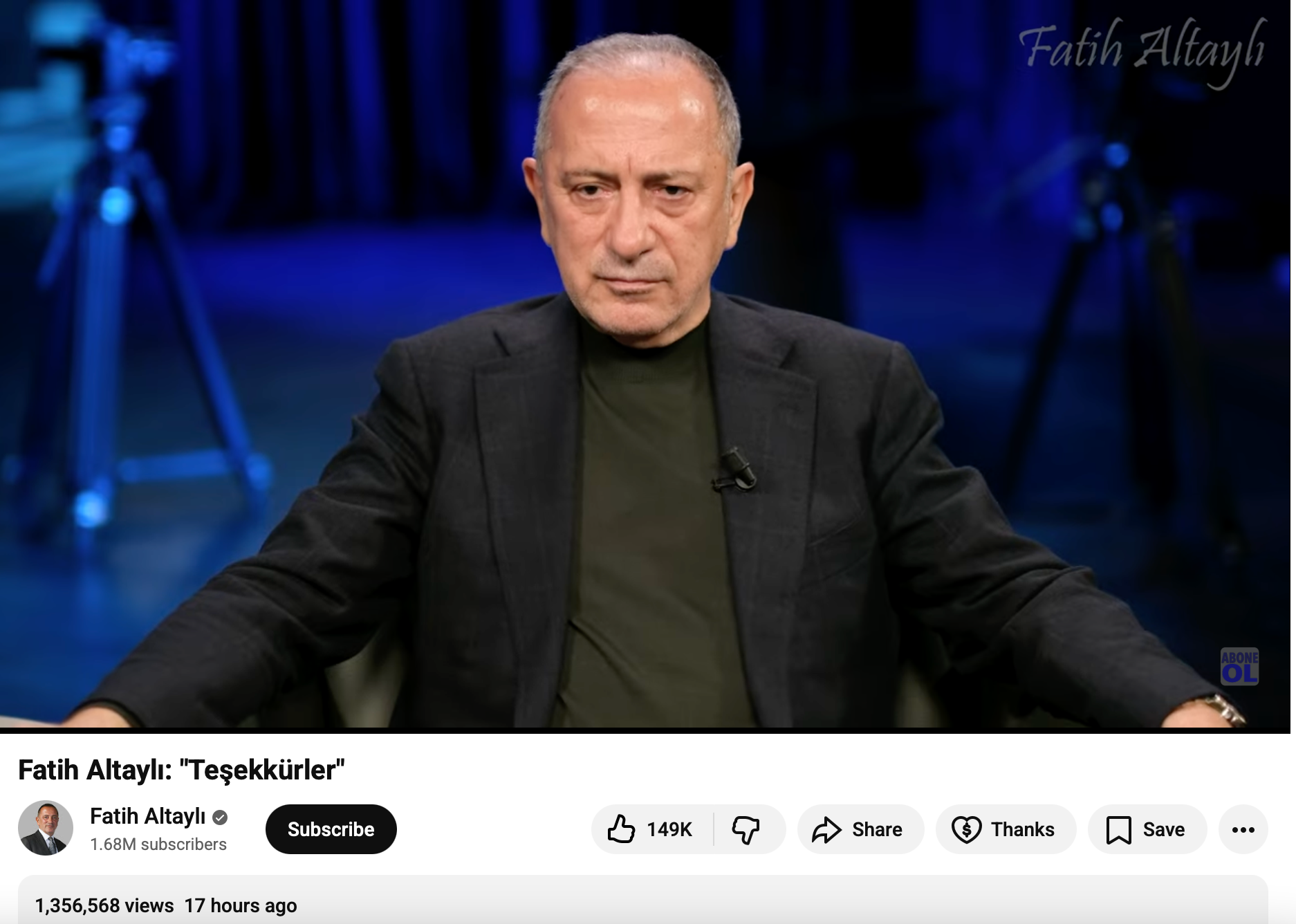
Altaylı was released on December 29, pending an appeal. His return was as spectacular as his departure: his January 26 broadcast, the first since release, was titled “Thanks” and was watched by almost 1.4 million people in less than 24 hours.
Ilgın Yorulmaz is a freelance journalist working between Japan and the U.S. She served as the 2nd Vice-President of FCCJ and is the co-chair of its Freedom of Press Committee.
