


Issue:
February 2026 | Ask an Associate
Toshi Tokunaga Cooper was instrumental in helping the world understand postwar Japan
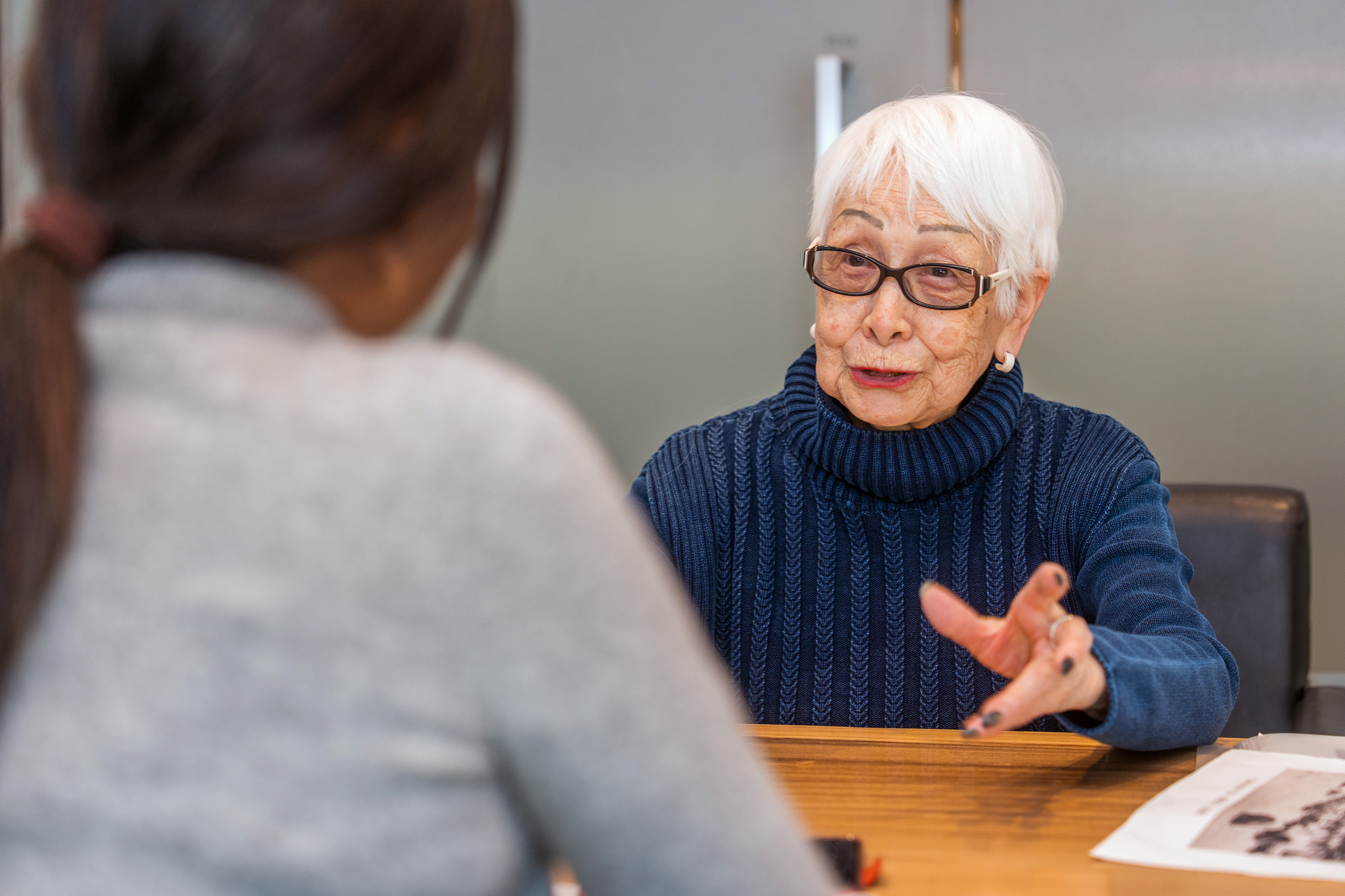
Toshi Tokunaga Cooper started working in the library of the Pacific Stars and Stripes’ Tokyo bureau in 1949. There she assisted U.S. military and civilian journalists covering the U.S. Occupation of Japan. Toshi, who greets people with a wide, generous smile, later met her husband, the photojournalist Gary Cooper, who was stationed in Japan at the time. On January 28 this year, she turned 100 years old - a landmark she said her friends had celebrated with more enthusiasm than she had.
“I view this momentous birthday as a quiet contemplation of my life, which is gifted with incredible memories. I am deeply humbled,” she said in an interview with the Number 1 Shimbun.
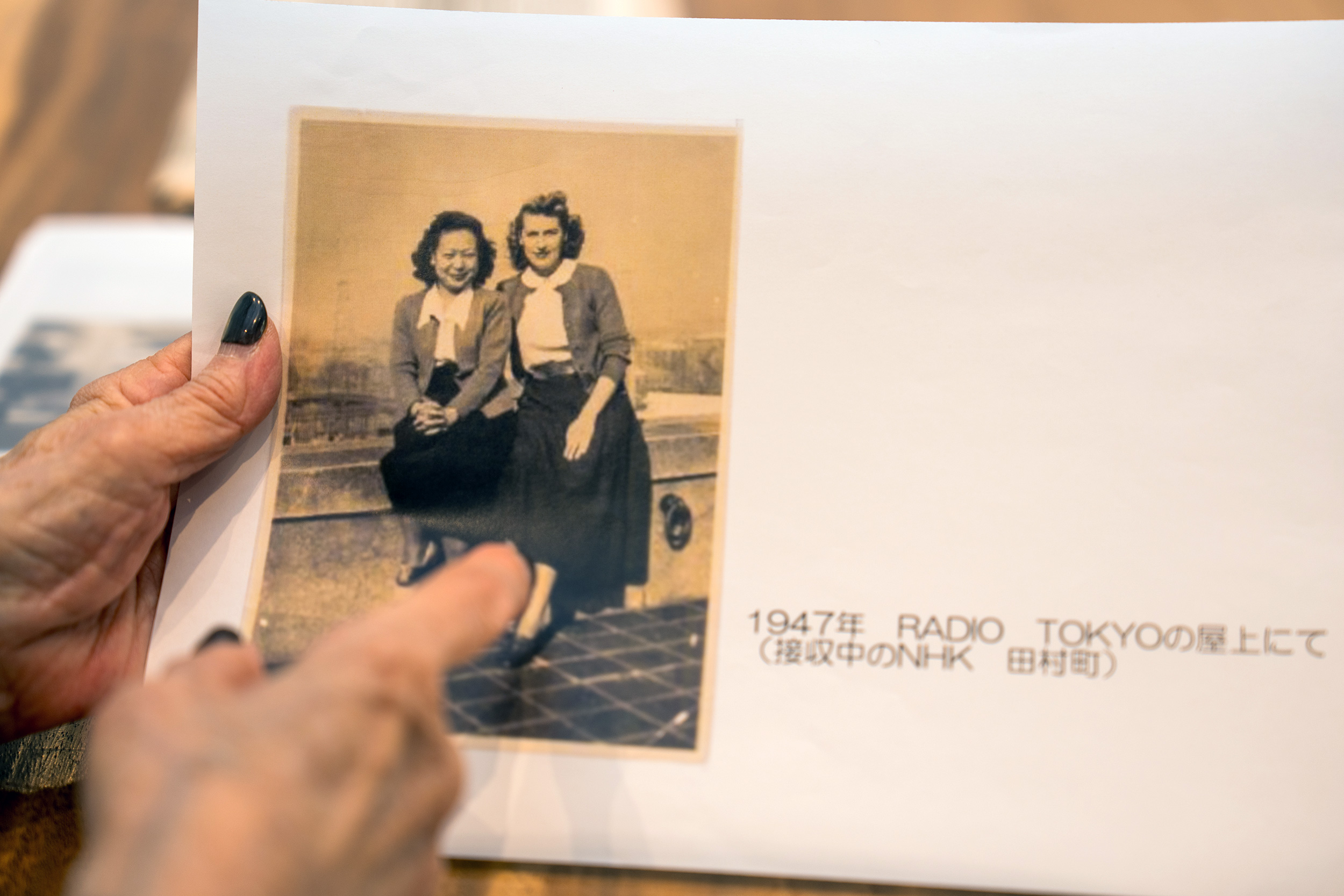
Her life is a treasure trove of experiences, spanning a tumultuous period in modern Japanese history. Born in 1926, Toshi grew up in Shibuya, Tokyo, when Japan was fighting U.S.-led Allied forces in the Pacific War. Her father was a civilian member of in the navy. Her family, who survived U.S air raids and struggled when food was scarce, was committed to the war effort. Toshi recalled the time when she joined the crowds weeping at the Imperial Plaza in Tokyo after Japan's defeat. “I was filled with remorse about the outcome,” she said.
Just four years later, Toshi’s life underwent a dramatic transformation when she took a job helping Japan’s former enemy rebuild the country. “The job took me out of my conservative cultural roots. Still, I slid into the new world quite happily,” she said.
The stacks of old files and photographs in her living room – she is a librarian, after all - bear witness to Toshi’s clear recollections of a time when she embraced the heady novelty of U.S-style freedom. While she never met Gen. Douglas MacArthur, her proficiency in English meant she became an indispensable interpreter for journalists reporting on his policies.
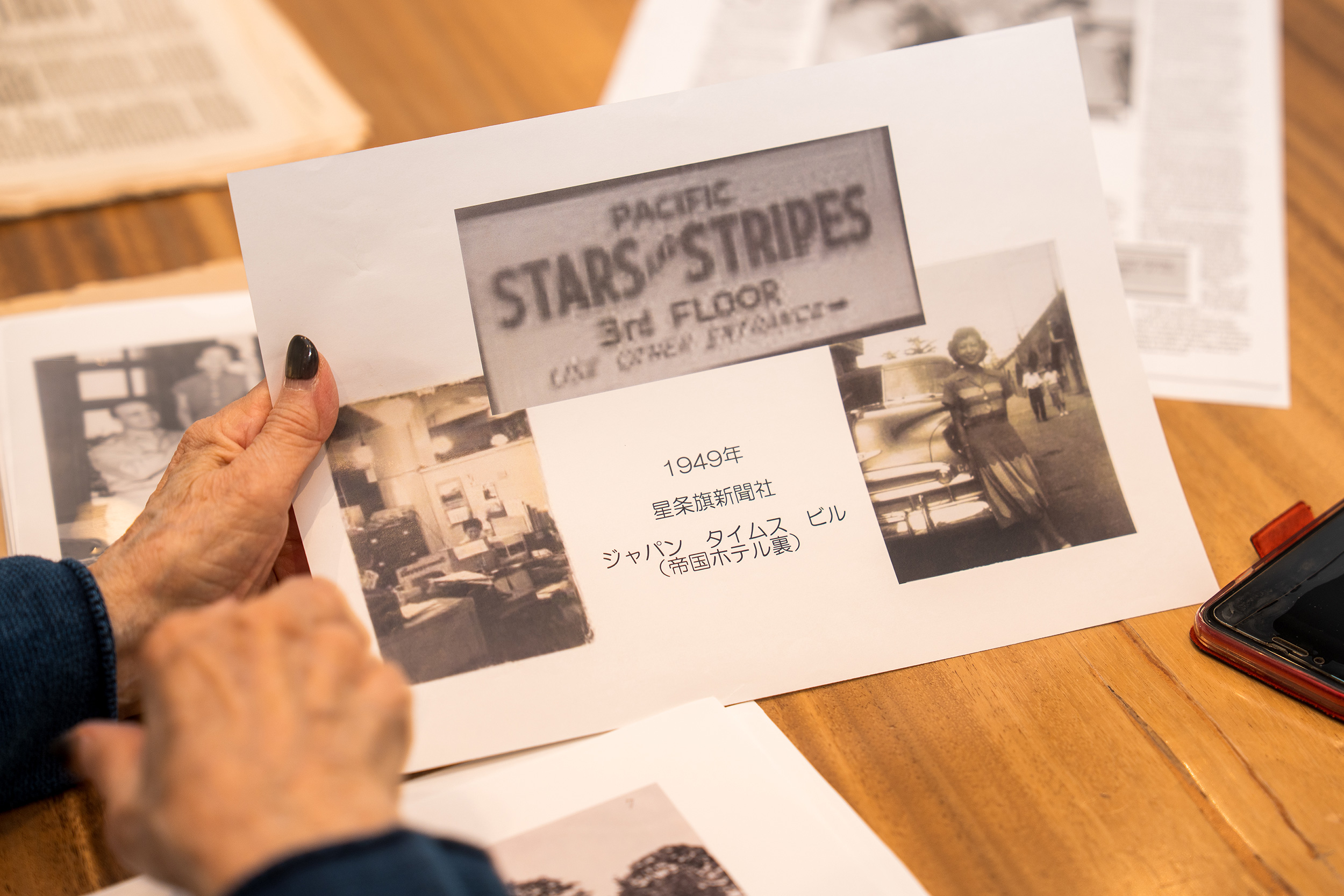
The Stars and Stripes editorial office, then a tiny room on the third floor of the old Nippon Times building, was buzzing with news-hungry reporters who relied on their young female assistant to open doors in Japan. “Everybody went out of their way to make me feel at home,” she said, adding that as the years passed, she and her colleagues became a family. Toshi, who hardly took a vacation, shared a farewell note from the office. It says: “Our Girl Friday, and Saturday, Sunday, Monday, Tuesday, Wednesday and Thursday – from every Guy at the Stripes.”
Work commitments meant Toshi was able to evade the marriage plans hatched by her family. “I resisted my parents because I loved my work too much,” she said.
Apart from interpreting, she arranged interviews and advised reporters on how to blend into Japanese society. The list of famous Americans she met included the actor John Wayne and singer Harry Belafonte, who came to Japan to entertain U.S. troops. Even though the Stars and Stripes was not part of the Japanese press club system, she organized interviews with government agencies, members of the Imperial Family, the author Yukio Mishima and film director Akira Kurosawa.
Her bosses also gave her a free hand to expand the library, which she stocked with books and research material. It was later named Toshi Cooper Library in her honor.
Her bosses also arranged for her to take part in a one-year scholarship to Wesleyan University. In 1970, aged 45, she and Gary decided to marry and moved to Delaware. Her husband, then 28 years old, had covered the Vietnam War for the Stars and Stripes. In 1966, his photos won an award from the National Press Photographers Association. “We both loved peace and wanted to pursue that goal together,” she said.
Asked about the secret behind her happy and long life, Toshi broke into her familiar smile. “There is no particular reason,” she said. But she recalled the pleasure she gained from her career, and the happiness that came from having the freedom to “take my own decisions and gain respect for that”. And then there is her diverse network of friends. “Those friendships enriched my life,” she said.
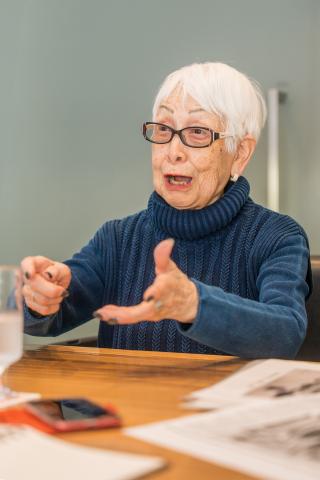
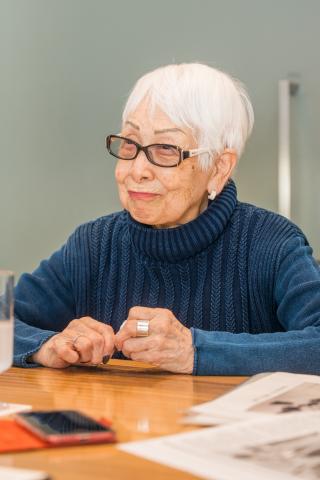
Toshi’s charisma and charm still shine through as brightly as they did during those tumultuous days after the war. As a newly reinstated associate member, she hopes to make regular visits to the FCCJ, attend events and, of course, explore the library.
Suvendrini Kakuchi is Tokyo correspondent for University World News in the U.K.
