


Issue:
February 2026
The departure of Lei Lei and Xiao Xiao is symbolic of worsening ties between China and Japan under PM Takaichi
Two giant pandas left Ueno Zoo for China at the end of January, the first moment since diplomatic ties were normalized in 1972 that Japan has not hosted a single panda, leaving fans bereft and a country searching for other diversions to mask a deeply imperfect bilateral relationship.
Sino-Japanese relations have seldom been without historical tension, but the traditional approach - at least by political leaders in Tokyo - has been caution. So when Prime Minister Sanae Takaichi told a Diet committee in early November that a Chinese blockade or invasion of Taiwan could trigger a Japanese military response, the rules of engagement quickly changed. Suddenly, “bears” on both sides of the East China Sea roamed freely.
China reacted by curtailing tourism, cancelling meetings and concerts, demanding the return of cultural relics, launching military drills in the Taiwan Strait, and implementing export controls on over 900 dual-use items. Its diplomats began an intensive campaign to pressure Takaichi to recant. Beijing’s ire was focused on her use of the phrase “survival-threatening situation” in regard to Taiwan, which appeared similar to World War II occupational rhetoric.
Chinese Foreign Minister Wang Yi, who spoke at the FCCJ when he served as ambassador to Japan some 20 years ago, called Takaichi’s remarks “shocking” and accused Japan of openly challenging Chinese sovereignty. Despite new FCCJ invitations to diplomats from both China and Japan, neither has accepted during the latest standoff.
Even before the new row, Takaichi had vowed to hike Japan’s defense spending to 2% of GDP by the end of this fiscal year and upgrade Japan’s security strategy. Rather than blinking at Chinese umbrage, she held back from issuing a formal retraction of her comments, but did repeat Tokyo’s support for Beijing’s “One China” policy.
Her approach played well at home, with support levels for her cabinet at an impressive 67% in late January, according to the Nikkei business paper. An emboldened Takaichi dissolved the lower house of parliament the same month, setting up an election on February 8 election that will either be an endorsement of her policies, including on the Taiwan issue, or – in a less likely scenario – deal her Liberal Democratic Party another blow at the ballot box.
Bilateral ties were relatively firm until November last year. According to Reuters, two-way trade rose in December, as China purchased imports worth $16.4 billion in December, the second-highest monthly figure since September 2022. Analysts say the trend is likely to reverse, particularly as exports of rare earth minerals – critical for Japanese electric vehicles and semiconductors – and metals were subject to tighter controls by Beijing from January.
Chinese visitors to Japan rose 30% in 2025 to 9.1 million – nearly a quarter of the total – but travel firms here believe the number will fall this year. The trend already appears to have taken hold, with inbound visitors from China down 45% in December compared to the same month the previous year. In a sign of further strain on bilateral ties, flights to Japan for the upcoming Lunar New Year are expected to fall over 40%, amid warnings by Beijing against travel, according to analysts who spoke at the FCCJ.
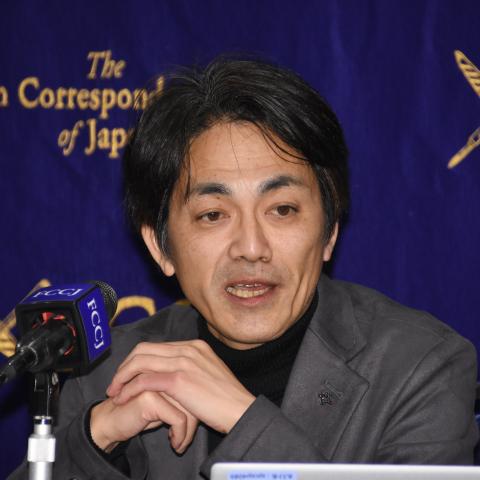
Masayuki Masuda, head of the China division at the National Institute for Defense Studies, predicted that the row would intensify. “Beijing cannot easily offer any compromise solution without withdrawal of Takaichi’s statement,” he said at a briefing in January. “China will use military pressure to deliver a very, very effective message to Tokyo … and military exercises will likely increase going forward.”
John Chuan Tiong Lim, research fellow at the Institute for Advanced Studies on Asia at Tokyo University, said there had been numerous disputes since diplomatic ties were normalized more than 50 years ago, adding that a quick resolution of the latest falling-out could be similarly elusive.

“Since the establishment of diplomatic ties in 1972, Japan and China have frequently experienced diplomatic conflicts, with relations typically improving the following year,” Lim said. China “will probably not stop (the dispute) before April, when (U.S.) President Donald Trump visits Beijing. Instead, they will likely improve from the APEC Summit in Shenzen in December.”
Japan and China have accused the other of violating airspace around the Senkaku islands, which lie west of Okinawa and 170 km from Taiwan. Chinese vessels ventured into waters around the islands - which are also claimed by China, where they are called the Diaoyu – nearly every day in 2025.
“The situation we are seeing has some similarities to the Senkaku crisis … since that period, Japan has been making a significant range of preparations,” Masuda said, including efforts to reduce its economic dependence on China.
The U.S. reiterated its commitment to Japan’s defense, including its sovereignty over the Senkakus, in November. "What is important now is to continue deepening security cooperation among Japan, the United States, and South Korea," Masuda said.
While Japan will continue to support Taiwan’s survival as a democratic, self-governed island, it will be cautious about moving closer to its former colony.
“Takaichi’s administration will not change anything towards Taiwan,” Lim said. “But bad China-Japan times make Japan-Taiwan ties harder.”
Domestic and international media focused on the four-year-old panda twins Lei Lei and Xiao Xiao as they prepared to leave Japan for their new home in China's Sichuan Province. Lucky lottery winners flocked to Ueno Zoo to watch the pair frolic and chew bamboo, perhaps pausing to lament a lost era of Sino-Japanese collaboration.
Dan Sloan is president of the FCCJ.
