
Issue:
September 2026
Prime Minister Kakuei Tanaka played the role of the villain in the Lockheed affair but the scandal was born much earlier, from the fusion of the LDP’s bad karma and America’s profit-first capitalism.
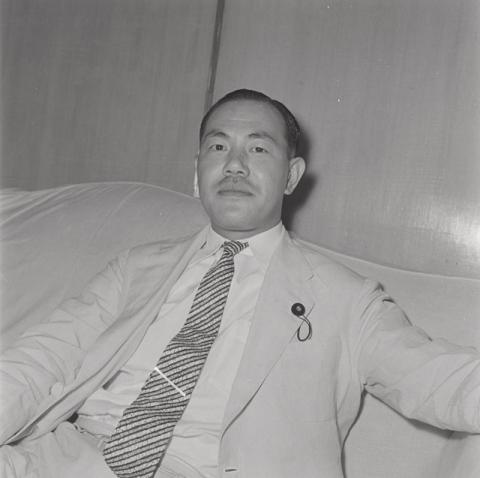
In December 1957, an American businessman stepped off a plane onto the tarmac at a chilly Tokyo International Airport in Haneda. Exhausted from the long flight from Los Angeles, the man was in his mid-50s and wore a serious expression behind his glasses that gave the impression he was someone of integrity.
It was rare for an American to visit Japan on business just before Christmas, but he had a compelling reason. The man was on a mission to sell a plane. The success or failure of this endeavor might determine the future of his company. So, he had given up his vacation with his family and come to Tokyo.
His name was J. Kenneth Hull, an executive at the U.S. aircraft manufacturer Lockheed. The product he wanted to sell was the supersonic F-104 Starfighter. He could never have imagined that, some 20 years later, he would help ignite the biggest political scandal in postwar Japan.
In February 1976, the U.S. Senate Subcommittee on Multinational Corporations, chaired by Senator Frank Church, under the Foreign Relations Committee, revealed that Lockheed Aircraft Corporation had channeled more than 3 billion yen on covert operations in Japan. The outlays included bribes to right-wing fixer Yoshio Kodama and high-ranking government officials, in a campaign to sell the Tristar (L-1011) commercial aircraft to All Nippon Airways (ANA).
Marubeni, the trading company acting as Lockheed’s agent, had created receipts for the slush funds under the code name “peanuts.” In July 1976, the Tokyo District Public Prosecutors Office stunningly arrested former Prime Minister Kakuei Tanaka, for crimes committed while in office. Tanaka has since been regarded as the embodiment of plutocracy and the most corrupt politician in postwar Japan. The Lockheed scandal remains a black mark in the history of Japanese politics to this day.
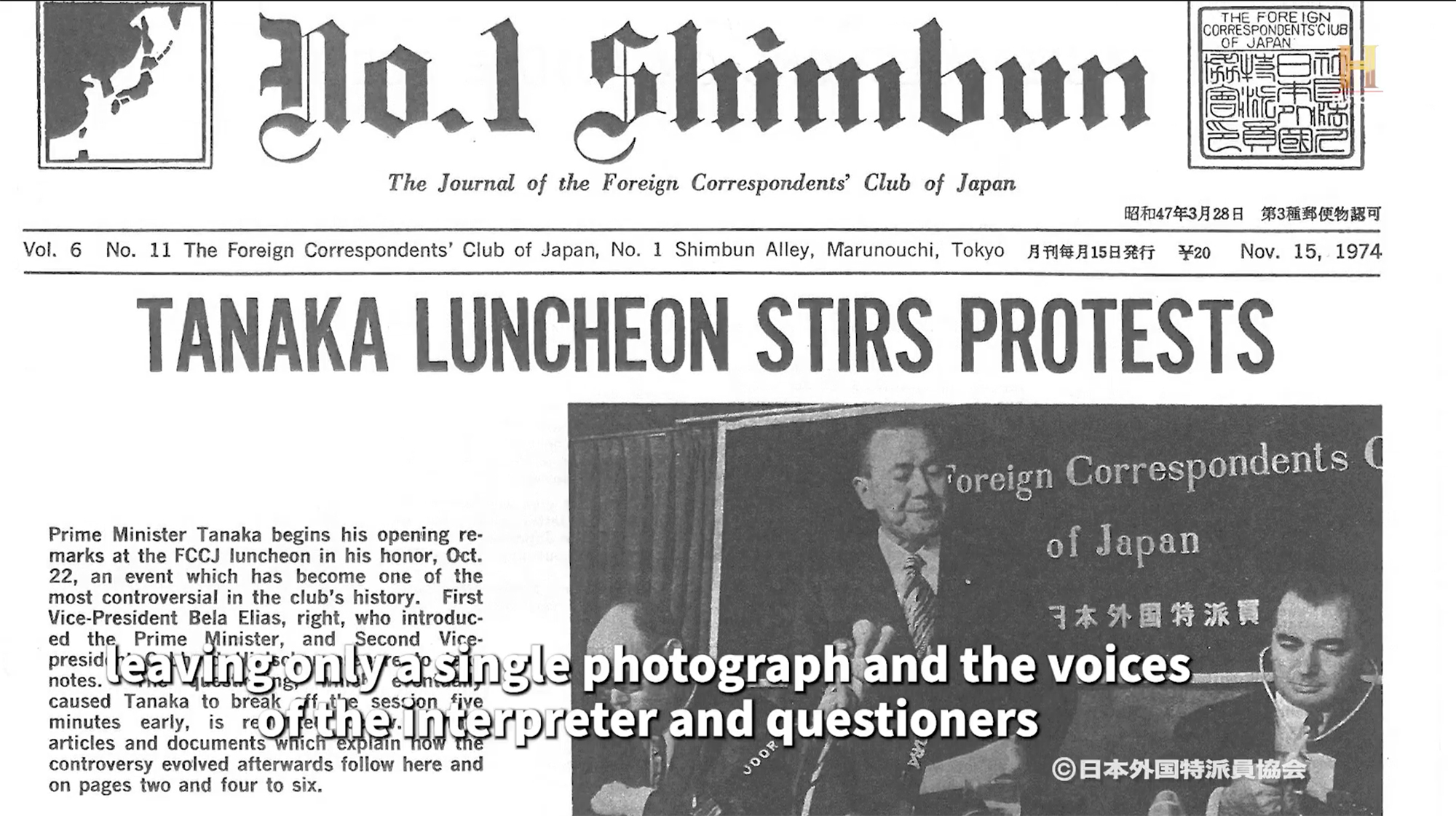
However, focusing solely on Tanaka and Tri-Star misses the essence of the scandal. The morning after the illegal payments were exposed in the U.S. Senate, a scrum of reporters visited Tanaka’s home in Mejirodai, Tokyo. One was Kotaro Nogami, a reporter for Kyodo News. According to Nogami’s memoir, *Seiji Kisha* (Political Reporter), the reporters asked about the high-ranking officials who had received the money. Tanaka reportedly replied with quiet but decisive voice: “‘This will become clear very soon. It’s something that has been going on for a long time.’”
One person who understood the meaning of these words was Kenneth Hull. Two days after Hull had arrived in Japan, on Christmas Eve, discussions began at a meeting of the Japanese government’s Defense Council regarding the Air Self-Defense Force’s next-generation main fighter jet. More than ten years had passed since the end of the war, and Japan’s economic recovery was well underway. Large-scale purchases of fighter jets were anticipated, and this was dubbed the “100-billion-yen sales war.”
Yet, objectively, Lockheed was at the back of the pack. Other U.S. aircraft manufacturers were also aggressively marketing their wares, and among them, Grumman’s F-11 Super Tiger was a formidable rival. Like the F-104, it had a top speed of Mach 2 but differed in price and takeoff and landing distances. Ultimately, in April 1958, the Defense Council—chaired by Prime Minister Nobusuke Kishi—informally decided to adopt Grumman’s fighter jet. Lockheed did not give up.
Two months later, Hull met with Kodama through an interpreter. Kodama was said to be a fixer extraordinaire, with extensive connections ranging from political circles to the business world and even the yakuza, and to wield significant influence over the ruling Liberal Democratic Party (LDP). With his help, thought Hull, the government’s decision might be reversed.
Born into poverty in Fukushima, Kodama was an aggressive ultranationalist. During the war, he established the company “Kodama Agency” in Shanghai, China, to procure supplies for the Japanese military. In reality, procurement meant mostly looting from the local Chinese population. After the war, he was arrested by the General Headquarters (GHQ) as a Class A war criminal but later released and used the vast fortune he had repatriated from China to support the formation of the Liberal Party, which merged with the Democratic Party in 1955, creating today’s LDP.
At around the time that Lockheed was approaching government officials, Kodama’s power in Japanese politics was at its peak.
Kodama didn’t disappoint. In August 1958, the Lower House’s Audit Committee decided to take sworn testimony from officials of the Defense Agency and the Defense Council regarding the selection of fighter aircraft. Until the following spring, the circumstances leading to the decision to select Grumman had been relentlessly scrutinized. Furthermore, the Secretary General of the Defense Council stated that after Grumman was selected, he received a phone call from Ichiro Kono, chairman of the LDP’s General Council, who told him, “I want you to do the right thing for Lockheed as well.” The lobbying had begun.
In June of the following year, 1959, the F-11 project was canceled. That summer, a government mission visited the United States to re-examine each aircraft model, and a report was submitted to the government. In November, the National Defense Council decided to adopt the F-104.
Although Grumman had initially been tentatively selected, the contract was canceled and it went to Lockheed instead. Even at the time, rumors of political maneuvering circulated. The opposition Japan Socialist Party went so far as to decide to summon Kenneth Hull to testify before the Diet. It wasn’t until much later than Lockheed admitted to sending cash overseas.
In May 1977, a year after Tanaka was arrested, Lockheed’s Special Review Committee published a report on payments related to overseas sales. The report included payments to “a third party in Japan” that began as early as June 1958, during the F-104 sales campaign. By January 1969, a total of 629 million yen had been paid, all in Japanese yen at the recipient’s request. The California headquarters purchased yen through Deak & Co., an American foreign exchange trader.* The identity of the recipient of the funds was kept confidential even within the company.
In addition, a bank account was opened at the Bank of America branch in Hong Kong under the names of employees. Yen was procured there and transported to Japan. Through this route, 138 million yen was sent to Tokyo over a four-year period beginning in 1964.
Yoshio Kodama’s name does not appear in this report. However, it contains the phrase “a marketing consultant,” which is believed to refer to him. Nor does the report state whether part of the money that went to him was distributed to Kishi or to Kono. The Lockheed report stated that confidentiality was key “since the consultant’s effectiveness would be destroyed if his relationship with Lockheed became known.” Marubeni became a sales agent for Lockheed in 1958. It was during this period that the connections between the individuals and organizations involved in the Lockheed scandal began to form.
At the time, Kakuei Tanaka was only in his early 40s and had served as Minister of Post and Telecommunications in the Kishi Cabinet. He was the youngest cabinet minister since the war and rapidly climbed the greasy ladder of political power. It is unclear whether he was involved in the selection of fighter jets. But his statement that it had been “going on for a long time,” muttered when the Church Committee exposed the bribery scheme in the 1970s, suggested he at least knew the rumors of bribery.
So why did Lockheed go so far as to pay such huge bribes to secure sales in Japan in the first place? I found the answer in documents belonging to former Lockheed chairman Robert E. Gross at the Library of Congress in Washington, D.C. He was the man who sent Hull to Tokyo to sell fighter jets to the Self-Defense Forces. It became clear that Gross’s greatest concern was the company’s poor performance and slumping stock price.
After World War II, the Cold War between East and West began, and the U.S. and the Soviet Union faced off, each possessing huge arsenals of nuclear weapons. But in the mid-1950s, signs of a thaw began to emerge. In September 1959, Soviet Premier Nikita Khrushchev became the first Soviet leader to visit the United States, where he delivered a speech at the United Nations General Assembly in New York, calling for global disarmament. He also met with President Dwight D. Eisenhower, and through these events, an atmosphere of peaceful coexistence began to emerge between the two sides.
Two months after the F-104 was selected, Gross sent a letter to a shareholder who was worried about the prospects of Cold War disarmament. “I believe it is all a question of degree and time,” said Gross. “For example, if you were to take Mr. Kuruschev, and to some degree our own government’s statements, at face value and were literally to have 75 to 100 percent disarmament the calendar years of 1960 and 1961, I would say it would have a disastrous effect upon Lockheed. I would add that it would have a catastrophic effect on practically every big company in America.”
Other shareholders also asked Gross about the impact of disarmament. Here is his response.
“…if we had literally the full disarmament that Mr. Khrushchev and even Mr. Eisenhower at times talk about, the defense business would disappear, and the companies so engaged would either be destroyed or would have to find other fields very quickly…” “Although I personally favor some disarmament and, of course, hope for world peace, I feel that stark realism denies these possibilities…”
Détente was a potential nightmare for the military industry, including Lockheed. If tensions between the U.S. and the Soviet Union eased, orders for warships, fighter jets, and missiles would decline. The company’s revenue would drop, and its stock price would fall. Chairman Gross had been receiving letters from shareholders across the U.S., expressing dissatisfaction with the slumping stock price and dividend cuts.
If the domestic market was shrinking, the only option was to sell overseas. In that regard, Japan was an attractive prospect. If Lockheed’s aircraft were selected as the next-generation main fighter, it would be a massive deal. If it took hiring a right-wing power broker and a former Class-A war criminal as a consultant, or paying bribes to get the deal, so be it. So long as it protected the company’s employees and shareholders, it was no big deal. On the very day the National Defense Council decided to adopt the F-104, Lockheed’s stock price rebounded on the New York market that evening.
In October 1960, Gross visited Japan with his wife. The purpose of the visit was to meet with key government officials and inspect the factory of Mitsubishi Heavy Industries and Kawasaki Heavy Industries, which manufactures the fighter jets under license. During his stay, Gross made a stop in Kyoto and stayed at a hotel near Mt. Hiei. Gazing at the beautiful mountain with its autumn foliage, he must have felt a great sense of satisfaction. After returning home, he wrote a letter to a shareholder stating, “The last six months of 1960 taken by themselves were extremely profitable...”
Thus, the origin of the Lockheed scandal lay not in the TriStar commercial airliner, but in a sales war over fighter jets. The scandal was born from the fusion of the LDP’s karma and America’s profit-first capitalism.
In principle, when the scandal came to light, the investigation should have been able to trace the matter all the way back to the Kishi administration. Lockheed’s accounting firm, Arthur Young & Co., had already noticed questionable cash payments as early as around 1960. But what would have happened if they had pursued the matter publicly? It could have turned into a far greater scandal, potentially shaking not only the LDP but also the U.S.-Japan security system. If that had happened, the Soviet Union would have been the one to benefit.
Half a century ago, in July 1976, Tanaka was branded as the most corrupt politician in postwar Japan. Yet, he single-handedly shouldered the dirty secrets of the Lockheed scandal, playing the role of the villain, a move that ultimately saved the Western bloc during the height of the Cold War.
Eiichiro Tokumoto is a writer living in Tokyo.
