


Issue:
September 2026 | Cover story
Japan’s minister in charge of harmoniously coexisting with foreigners seems to embody an increasingly xenophobic national mood.
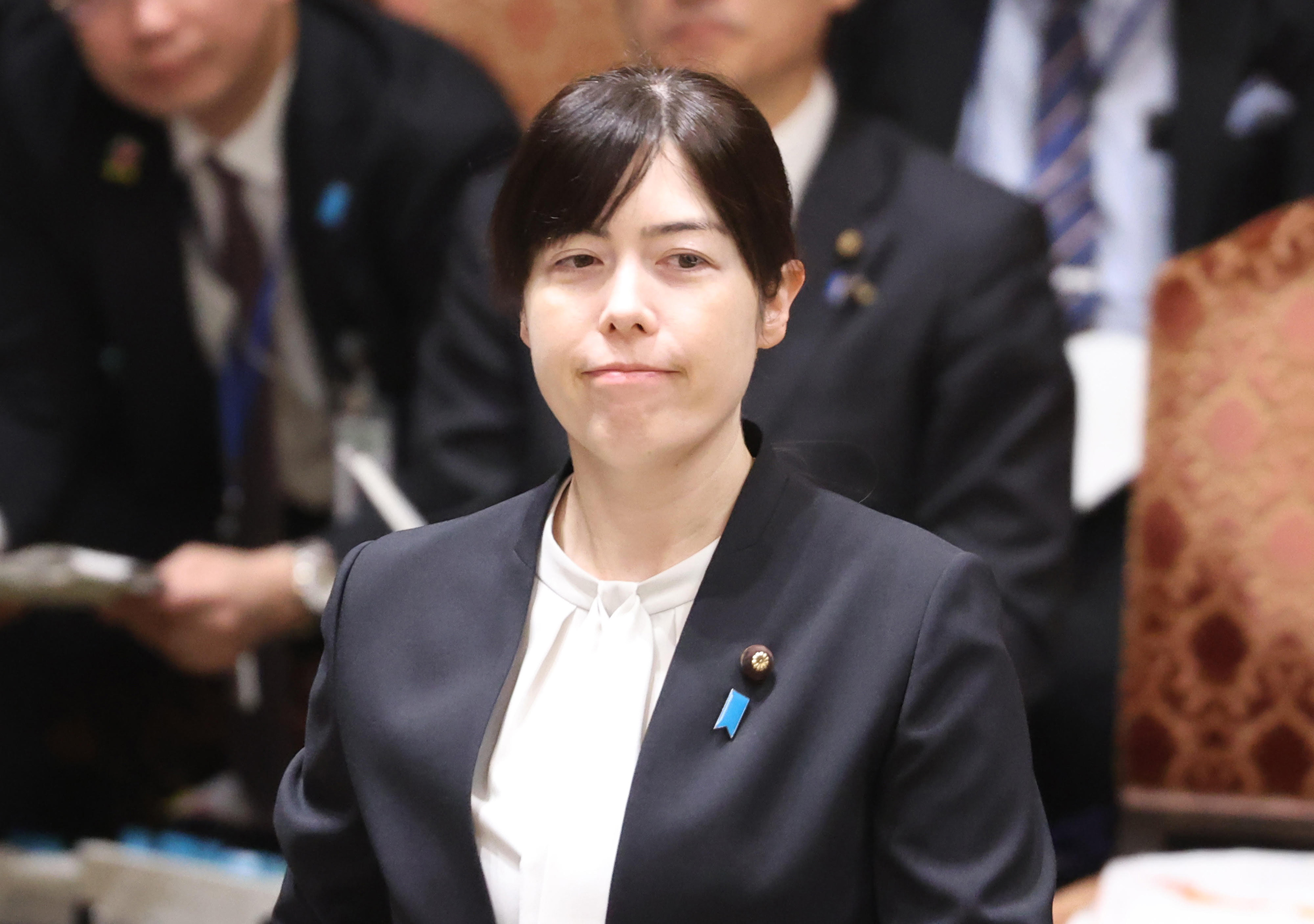
At her inaugural press conference* last October, Kimi Onoda was keen to show there was a new sheriff in town. In terse and clipped language, Onoda amplified the message of Prime Minister Sanae Takaichi that foreigners in Japan are getting on everyone’s nerves.
“Crimes and disruptive behavior by some foreign nationals, as well as inappropriate use of public systems, are causing anxiety and a sense of unfairness among Japanese citizens,” Onoda said. Foreigners who aren’t willing to obey Japanese rules should “consider leaving”.
That tough talk was not just rhetoric. Takaichi’s government has since announced a new crackdown on illegal overstayers and demanded that the Ministry of Justice strictly enforce immigration rules.
Last month, the government adopted an ordinance that will hike the fees charged for renewing or changing foreign residency in Japan from ¥6,000 to ¥75,000. The cost of applying for permanent residency status will multiply 20-fold, to ¥200,000.
This comes with what The Asahi Shimbun calls a “sweeping overhaul” of rules for permanent residency by foreigners, designed to curb their use of public money. Foreign applicants for permanent residence will have to show that their household income consistently exceeds the average for their Japanese counterparts. Onoda has instructed bureaucrats to “make sure Japan’s systems are not turned into life hacks for foreigners”.
As the public face of these changes, Onoda seems to embody the chilly, even xenophobic new political mood. Reporters note her clipped, unsmiling demeanor in press conferences. She speaks quickly with little nuance. When she doesn’t like a question, she simply repeats the phrase “nothing to comment”. She has declined repeated invitations to come and discuss her policies with the FCCJ, Asia’s oldest foreign correspondents’ club.
At weekly press conferences with the Japanese media, Onoda is part bureaucratically-managed Japanese politician, part Trumpian defiance. Her meetings with journalists are heavily scripted, with questions given in advance and answers prepared by her staff. She speaks in the tone of a harried school principal and gives every impression, said one reporter, that she “dislikes journalists”.
In a video clip that subsequently went viral, Onoda snapped at a reporter who asked about the rights of permanent residents in Japan. “Be careful with your words. Japan does not have permanent residency rights,” she said. “It is a permit, granted after meeting the requirements, not a right. “Calling it a right leads to misunderstanding. Please be careful when you speak about it.”
The changing political zeitgeist is reflected in Onoda’s ungainly job title. In addition to being minister for economic security, Onoda is officially in charge of managing Japan’s “well-ordered and harmonious coexistence with foreign nationals”, suggesting that foreigners are not really part of Japanese society but a problem to be managed and solved.
All this has made Onoda a hero to conservatives and arguably the most contentious member of Takaichi’s cabinet, though she is in some ways an unlikely nationalist. Young (43), female and herself mixed-race, she was born in Chicago to a Japanese mother and an Irish-American father, who abandoned her mother when she was pregnant with Onoda’s sister. The family moved to Okayama Prefecture, where she grew up without a father. After she launched her political career, it emerged that she had failed to officially renounce her double Japan-US citizenship.
In a 2021 speech to Columbia Business School, unironically titled “The Importance of Diversity”, Onoda recalled a childhood troubled by poverty and bullying. She said her “persecution” began in nursery school where she was chased and “beaten up” by children yelling, “Dirty foreigner! Go back to America!” At first, Onoda said she accepted this treatment before realizing it was fueled by “racial difference”. “Fortunately I was taller and stronger than the other kids and…fought back.”
Onoda’s unusual resume has fuelled no small amount of bad pop psychology. For some, her political philosophy can be traced to her deadbeat father and her uncomfortable childhood – the bullied kid who grows up to bully, in the words of one Internet meme*. Onoda has herself addressed these charges, calling demands that she be “foreigner friendly” just because she is part foreigner, “ridiculous”.
“I am a member of the Japanese Diet. Just because you belong to a minority does not necessarily mean you have to adapt your way of thinking that is typical of this minority.”
Put like that, Onoda sounds not dissimilar to rightwing politicians in the US and Europe who demand that immigrants assimilate in their host countries and not act as a minority group demanding special rights. Blaming outsiders for domestic problems is, after all, one of the oldest political tricks in the book. The difference is the relatively small number of permanent foreign residents in Japan. Non-Japanese, mostly Chinese, Vietnamese and Koreans, make up about 3% of Japan’s population. The number of “illegal aliens” - about 68,000 - is tiny for a nation of 120 million.
Meanwhile, Japan’s Specified Skilled Worker (SSW) visa program has been expanded to address growing labor shortages. The Japanese Cabinet has hiked the SSW Type 1 visa ceiling to 820,000 workers for FY2024 to FY2028, well over double the original cap established during the program’s first five years (2019–2024). Onoda’s campaign appears performative to some, or at least to run counter to business demands. Jeff Kingston of Temple University, Japan calls her stance the “kleenex approach” to foreign labor: “use it and toss back”.
The sense that this traditionally homogenous country is being swamped is surely aggravated by the record 42.7 million international tourists who came in 2025. It is an uncomfortable fact for the Takaichi government, however, that the current target, set by a previous LDP government, is for 60 million tourists by 2030. Once that is topped, the figure is likely to be revised again – tourism is a major income earner and many regions in Japan want more visitors, not fewer.
One reason why the debate about Japan’s “foreigner problem” is so vexed is this dishonest political debate. Another is rampant disinformation. The Internet is awash with false, misleading or decontextualized posts blaming foreigners for everything from eating too much rice to kicking deer. An example came after Onoda visited Fuchu Prison in July, informing journalists that one in four inmates there are“nationals of other countries”. This hardened her belief in the need for “a stricter response to crimes committed by foreign nationals,” she said.
The legacy media filled in the detail that Onoda’s speech omitted. About 24 percent of the 1,727 inmates at the prison were indeed foreign nationals, largely because Fuchu is assigned to inmates who struggle to communicate in Japanese, assigning them interpreters. The percentage of foreign nationals in all Japanese prisons is 6.9 percent of the total, said The Asahi Shimbun.
Nevertheless, the claim that Japan is sinking under a wave of foreign crime went viral. A post with Onoda’s video was posted over four million times, inviting hundreds of xenophobic comments. To her credit, Onoda criticized the misinterpretation of what she said a few days later, calling it “extremely regrettable” that so many people react after “seeing only the headline”. But at that stage it was too late.
David McNeill is professor of communications and English at University of the Sacred Heart in Tokyo, and co-chair of the FCCJ’s Freedom of the Press Committee. He was previously a correspondent for the Independent, the Economist and the Chronicle of Higher Education. Karyn Nishimura is a correspondent for the French daily newspaper Libération and Radio France.
