


Issue:
September 2026
Changing the Japanese Media
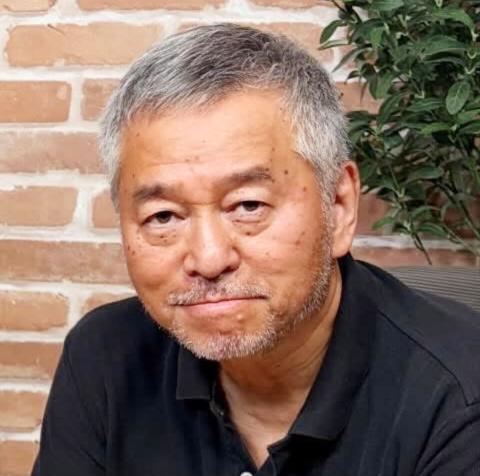
Teddy Jimbo set up Videonews.com in 1999, an independent, subscriber only online news producer, following a journalism career that included several years with AP News Agency. Jimbo’s company was a pioneer in the then fledgling market for online news. Today, its two-hour weekly special is probably the longest-running internet program in the world. Videonews.com is supported by 30,000 subscribers.
Q: Tell us about why you started Videonews.com
I thought Japan ought to have at least one truly independent news organization. Japan’s existing news media nominally profess independence from government and freedom of the press, but in reality they receive a whole range of privileges from the state—the kisha club system, the resale price maintenance system for newspapers, and so on—and at their core they are in what can only be called a collusive relationship with the government. As a result, their coverage tends to steer clear of anything that is truly inconvenient for the government or the ruling party. Reporting that serves the needs of civil society, or that takes the side of the vulnerable, is also critically lacking. The spread of the internet made it far easier than before to create a new medium, so I felt there was simply no choice but to do it.
Q: Who are your competitors?
The biggest obstacle to our business is the barrier in the news market set up by the existing major media. In Japan, a small handful of large outlets monopolize access to government and corporate information through the kisha clubs, making it difficult for weekly magazines, foreign correspondents, freelancers and others to obtain information. So our first challenge is something taken for granted in other democracies: simply being able to cover the government like any normal news organization.
Beyond that, Videonews was probably the earliest of the new media to launch, and many others have followed since. But for the reasons I’ve described, no fair competitive market exists in Japan, so few manage to sustain themselves. Most new outlets are forced to withdraw within five years. I don’t really think of my fellow independents as competitors. They’re comrades in trying to blow a hole in an unfair news market.
Q: Have you had any scoops?
The Great East Japan Earthquake of 2011 stands out: the established media held back from entering the disaster zone for fear of the nuclear accident, so we practically had the field to ourselves. While we were on the ground reporting the devastating conditions, the mainstream media were gathering their information from the kisha clubs at METI and TEPCO in Tokyo. Naturally, our reports reached far more viewers than theirs.
Q: The online news market is pretty crowded in the US and Europe but far less so in Japan – why is that?
Because Japan has no fair news market. Producing good journalism alone isn’t enough to compete on equal terms with the established media when access to sources is restricted. It’s also very hard to make the business pay, so it’s only natural that anyone with real business sense wouldn’t dream of entering Japan’s unfair news market.
Q: You’re sometimes critical of journalism and the mainstream journalism in Japan – what does it get wrong? And what does it get right?
The fundamental problem is that Japan’s major media are deeply enmeshed with the government. The headquarters of every major newspaper stands on former state-owned land sold to them by the government at bargain prices, and they run large, highly profitable real estate businesses on that land. Through the kisha clubs, they monopolize access to the government among themselves. Newspapers enjoy generous protection under the resale price maintenance system, and broadcasters receive their licenses directly from the government; in exchange for accepting government interference, they are guaranteed priority allocation of new frequencies whenever BS or CS bands are opened up. In a word, they are in a deeply collusive relationship with the state. Under such conditions, genuinely holding power to account is impossible. And because there is no real competition among the privileged kisha-club media, much of Japanese news reporting strikes me as extremely low-grade, childish stuff.
My assessment is that Japan’s old media, having been granted all these privileges and having colluded with the government, may be financially stable, but they can neither report freely nor report to a high standard.
Q: One of the reasons you wanted to start Videonews.com was to change journalism in Japan. Have you succeeded?
We’re still only at the very beginning. Changing Japan, and changing Japan’s media, will take a great deal more time. And unless Japan’s media change, the Japanese people cannot know what their real choices are, and are robbed of the chance to change. That’s why I regard the project of building new news media in Japan as a 100-year national undertaking.
It’s taking time, but I think Japanese audiences are gradually starting to recognize Videonews as that kind of institution. Of course, 30,000 is far too small, and I want to grow it quickly into a medium with 100,000 or a million subscribers. But there’s no point in rushing. If it can’t be achieved in my generation, then it will take the next, or the one after that—this is a project that absolutely must be seen through.
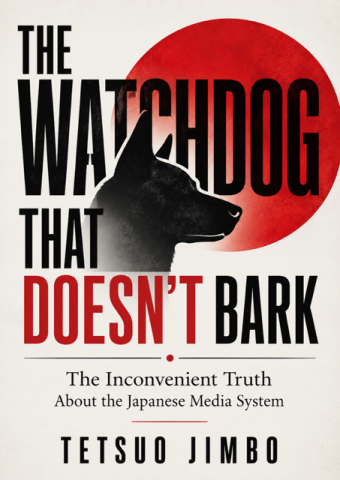
Teddy Jimbo’s new book, The Watchdog That Doesn’t Bark, is scheduled for release on October 26th. Versions of the book will also be published in Japanese, Korean and Chinese. The attached book cover is still provisional and not final.
